

Maybe the Earth once had a ring like Saturn.



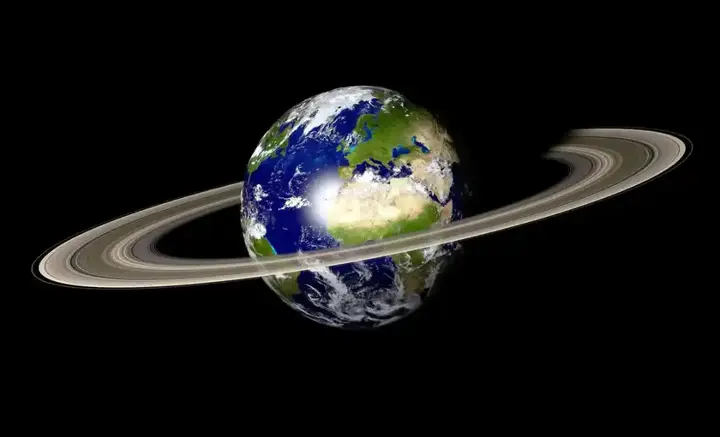
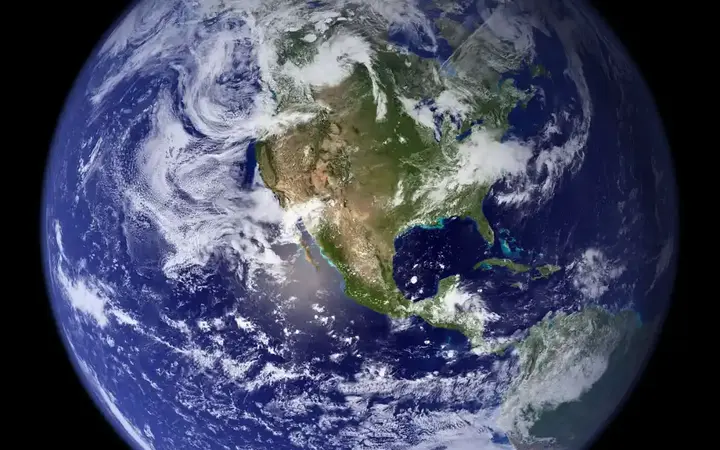
Scientists have proposed a fascinating new idea: Earth may have once had an annular system, similar to Saturn's. These rings may have formed about 466 million years ago, during a turbulent era marked by intense meteorite bombardment known as the Ordovician High Effect. This period was marked by significant environmental changes, and the presence of rings may provide insight into the dynamics of our planet at the time and its interactions with cosmic forces. This thought-provoking theory stems from a recent study led by Professor Andy Tomkins of Monash University, who devoted years to investigating geological evidence and astronomical data. This discovery could transform our understanding of Earth's geological evolution and its role within the solar system.
Recommend


Show key points
- Scientists propose that Earth may have once had a ring system similar to Saturn’s, formed around 466 million years ago during a period of heavy meteorite activity known as the Ordovician High Effect.
- A cluster of 21 craters found within 30 degrees of the equator defies traditional impact theories, suggesting a possible ring of debris from a disintegrated asteroid.
- The hypothesis is supported by geological and astronomical evidence, analyzed through advanced GIS mapping of stable continental regions like Western Australia and North America.
- ADVERTISEMENT
- Professor Andy Tomkins and his team theorize that as meteorite debris from the ring system fell to Earth over millions of years, it contributed to noticeable layers of material in Ordovician sedimentary rock.
- The potential ring system may have partially blocked sunlight, which could have triggered significant global cooling events such as the Hernanti Ice House.
- The study opens new avenues in understanding Earth's geological evolution and the potential climatic and biological impacts of extraterrestrial phenomena.
- This theory not only challenges long-held beliefs about Earth's past but also raises intriguing possibilities of similar ring systems existing at other times in planetary history.
Earth's rings may explain the craters caused by the collision
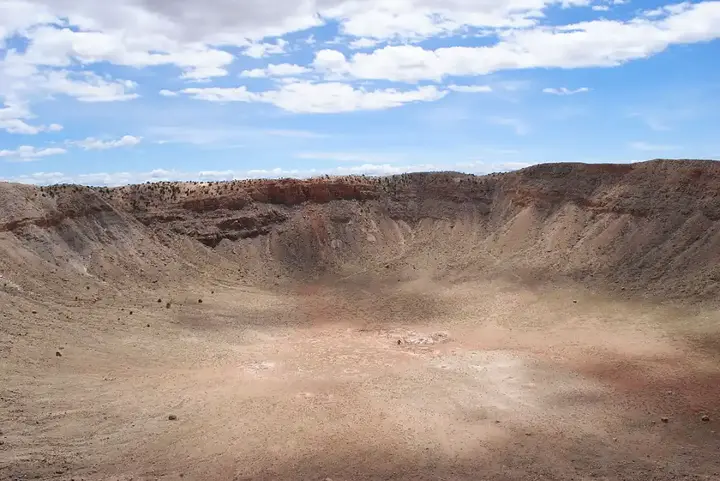
The research team based its hypothesis on the interesting positions of 21 craters resulting from an asteroid collision with Earth, all within 30 degrees of the equator. This is a strange discovery because the craters produced by the impact are usually randomly distributed around the world. However, in this case, more than 70% of the Earth's mass was outside this tropical region during the Ordovician period, making the clustered craters an anomaly that standard geological theories cannot easily explain. The team's idea is that this unusual pattern of collisions may be the result of a large asteroid colliding with Earth up close. As it approaches the planet, the asteroid has crossed Roche's Earth boundary – the point where tidal forces become so strong that they could tear apart a celestial body. This would have led to the formation of a ring of debris around Earth, similar to the rings we see around gas giants like Saturn today. Tomkins noted that "over millions of years, material from this ring gradually fell to Earth, resulting in a significant increase in meteorite collisions observed in the geological record. We also see that the layers in sedimentary rocks from this period contain huge amounts of meteorite debris.
Understanding the Ordovician period
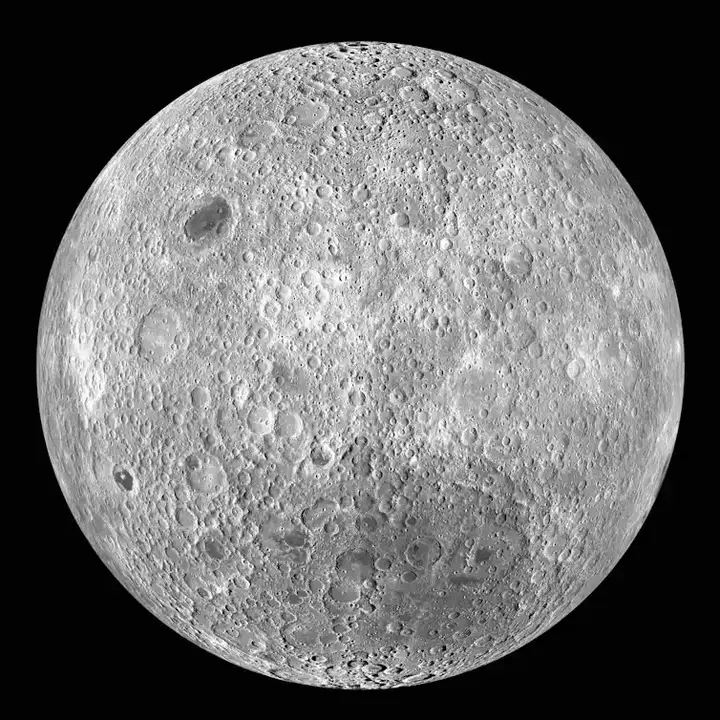
The Ordovician period occurred about 485 to 444 million years ago. It was a time when a lot had changed on Earth. Many new marine life species evolved during this time, including the first fish. There were also a lot of animals without spines, such as trilobed and early shellfish. As a result, oceans were teeming with life, and coral reefs began to form, creating homes for many different marine creatures. The land itself changed a lot during the Ordovician period. Initially, it was warm, like the tropics, but by the end of this time, there was a large ice age, which led to a dramatic drop in sea levels, leading to widespread extinctions. Despite these challenges, the Ordovic period paved the way for future evolutionary developments and left a lasting impact on the history of life on Earth.
Link to a global cooling event
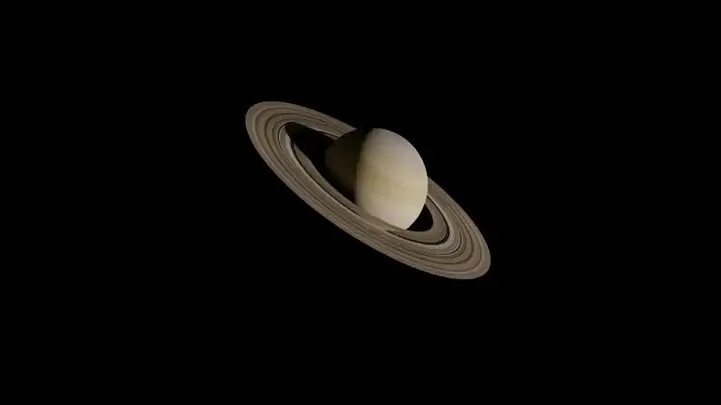
But the effects of this discovery go beyond abstract geology. The researchers speculate that this ring system may have had significant climate impacts, especially contributing to a global cooling event known as the Hernanti Ice House. This period, which occurred near the end of the Ordovician period, is known as one of the coldest times in the last 500 million years. The idea is that the ring system may have cast a shadow on Earth, blocking sunlight and causing temperatures to drop. Professor Tomkins explained: "The idea that the ring system may have affected global temperatures adds a new layer of complexity to our understanding of how extraterrestrial events shape Earth's climate.
How the study was conducted
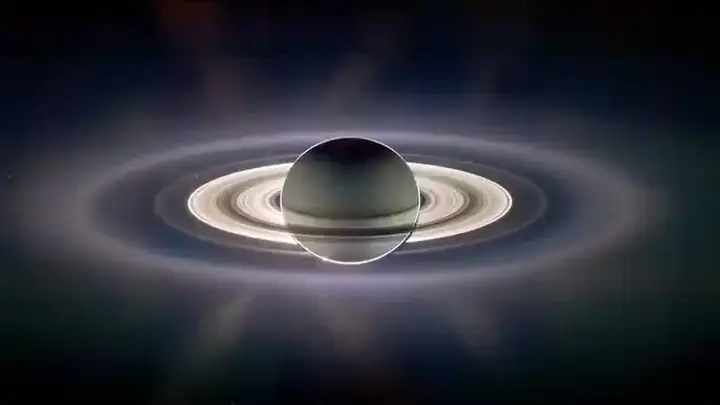
To reach these conclusions, the team used the Geographic Information System (GIS) to analyze the distribution of Ordovician impact craters. They focused on stable and undisturbed cartons – the old, stable parts of the continental crust – which were geologically capable of preserving craters from that era. By excluding areas buried under sediment or ice or affected by tectonic activity, the researchers identified areas such as Western Australia, Africa, North American Craton and parts of Europe as the most likely places to find these ancient craters. Although only 30% of the suitable land area is located near the equator, all craters identified from this period have been found in this area. The odds of that happening are like throwing a three-sided coin and getting the same face 21 times. It is this highly unlikely distribution that has led the researchers to consider the possibility of the Earth's ring system in the first place.
If the Earth has rings: why this is important
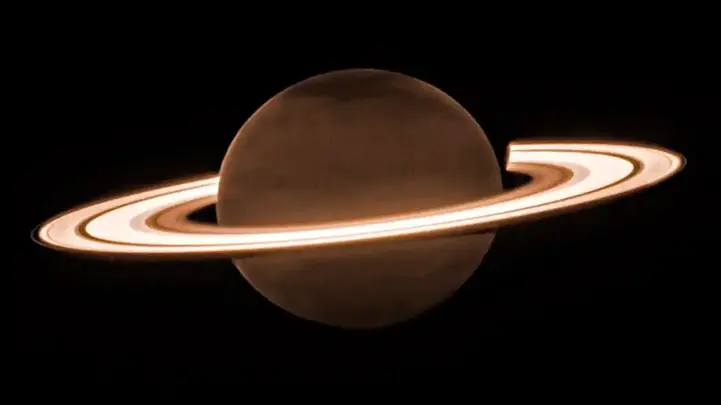
Not only does this discovery rewrite a chapter of Earth's history, it opens up a whole new book. The idea that the Earth may have had an annular system resembling Saturn raises fascinating questions about how such features affect not only the climate of our planet but also the evolution of life itself. Could there have been other ancient ring systems at different points in Earth's history? How may have shaped the environment in ways we are just beginning to understand? While the idea of a ringed Earth may sound like science fiction, it is rooted in careful research and a willingness to dissect established theories. This study, published in Earth and Planetary Science Letters, offers a new perspective on the dynamic interactions between our planet and the wider universe.
![]()
How a failed experiment led to Einstein's first big revolution
The Michaelson-Morley experiment tried to detect the mysterious ether believed to carry light—but found nothing. This surprising result helped spark Einstein’s radical idea: light doesn’t need a medium, and its speed is always constant. That bold insight laid the foundation for the revolutionary theory of special relativity. more- ADVERTISEMENT
![]()
Neolithic revolution
The Neolithic Revolution more- ADVERTISEMENT
![]()
The AI Revolution: The Impact of Artificial Intelligence on the Labor Market
AI has shaken the job market, replacing routine tasks and saving hours of work. From graphic design to marketing, many roles have evolved or vanished. Still, it’s not the end for humans—AI creates new job opportunities and pushes people to grow, although competition and job security have become tougher than ever. more- ADVERTISEMENT
![]()
NASA rover discovery points to ancient microbial life on Mars
NASA's Perseverance rover is uncovering exciting clues that Mars may have once supported microbial life, especially with organic molecules found in rocks like "Cheyava Falls." Landing in the ancient Jezero Crater lakebed, its mission opens doors to deeper space exploration and the search for life beyond Earth. more- ADVERTISEMENT
![]()
The 5 oldest ancient human monuments in Egypt
The 5 oldest ancient human monuments in Egypt more- ADVERTISEMENT
![]()
The best ChatGPT alternatives, including what is free
ChatGPT is an advanced language AI revolutionizing communication and creativity with human-like conversations and text generation. Alongside it, impressive free alternatives like Google's Bard, Jasper Chat, Bing AI, and Perplexity AI offer unique features—from creative writing to fact-based search—making AI tools more accessible, powerful, and tailored to user needs. more- ADVERTISEMENT
![]()
How to price your product? Best Pricing Strategies
Finding the right price for your product is key to profit and customer satisfaction. Try different strategies—like cost-based, value-based, or psychological pricing—and stay flexible. There's no one-size-fits-all method, but aligning your price with customer needs and market factors is the smart move. more- ADVERTISEMENT
![]()
Beyond Burj Khalifa: Uncovering the Spirit of Dubai through its Metro
Dubai Metro isn’t just a ride—it’s a futuristic journey! From holding world records to themed stations and even a music festival, it blends innovation with culture. Just don’t fall asleep onboard, or you’ll be fined AED 300! more- ADVERTISEMENT
![]()
Sand and fog skies: a harsh introduction to Mauritania
Nouadhibou may appear harsh and chaotic, yet its dusty markets and joyful children reveal a community full of resilience and warmth. Despite poverty and challenges, the city radiates human spirit and hope, offering visitors an unforgettable glimpse into a life built on adaptation and cooperation. more- ADVERTISEMENT
![]()
Things people with emotional intelligence never do
Emotional intelligence helps people understand and manage emotions, leading to better relationships, improved teamwork, and stronger mental health. It can be developed through self-reflection, mindfulness, and active listening. Emotionally intelligent people avoid impulsive actions and build balanced lives with better decision-making and communication. more- ADVERTISEMENT