

The 5 oldest ancient human monuments in Egypt



Egypt has long captivated the world with its timeless monuments, towering pyramids, and cryptic hieroglyphs — but beneath the golden sands lies an even deeper story: the very roots of human civilization.
In this article, we journey beyond the tourist trail to uncover the five oldest human excavation relics ever found in Egypt. Each artifact is a silent witness to an age before the dynasties — a time when ancient humans first carved their presence into the Nile Valley. Prepare to step into a world where bones, tools, and forgotten art tell stories that predate the pyramids themselves.
The age of man relative to the age of the Earth
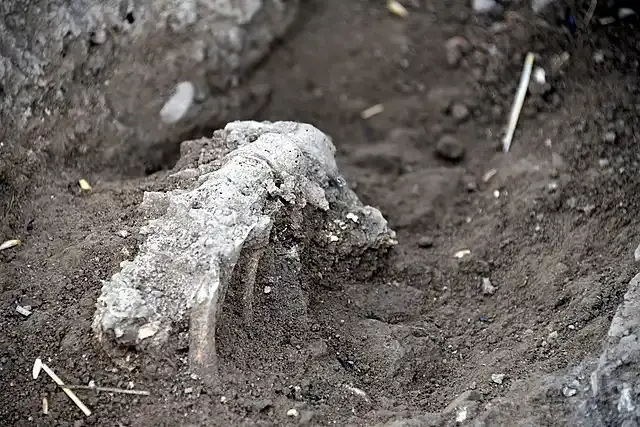
Opinions always differ about the period in which man inhabited the earth, as geological studies indicate that the earth is more than four billion years old, while the age of human existence on Earth is barely approaching 230,000 years, and the amazement does not stop at this point, but also about the fact that the difference between the age of man's existence on Earth and the oldest civilization known to mankind did not appear until more than 220,000 years after the existence of man on Earth, but some scientists They attribute this giant difference to the fact that writing and history on materials that can withstand the conditions that the earth is going through and remain steadfast came late with the civilizations in the Near East and Egypt, and this does not necessarily mean that man did not know civilization throughout that period until the last ten thousand years of his life on earth, but perhaps it means that those civilizations did not withstand the factors that faced them on earth, even if they once existed.
Recommend


The most important and oldest five human monuments found in Egypt
It contains many important and distinct monuments in the history of mankind, as mentioned above, which to this day still raise the astonishment of scientific communities such as the skull, which proves that the ancient Egyptians knew the treatment of cancer with surgical interventions that are being researched and a similar group these days, and these are five examples of ancient human traces in Egypt from prehistoric times without chronological order.
1.Two mountain mummies
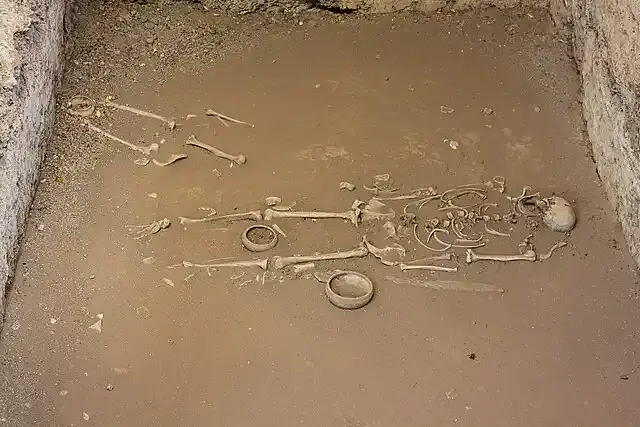
It is a group of 6 mummies dating back to the predynastic era, specifically since approximately 3400 BC, that is, before the unification carried out by King "Narmer" of the two countries of Egypt and the establishment of the first dynasty according to the history of Maniton Samannoudi. The group contains mummies belonging to men and women, and the civilization to which this group is attributed is a Neolithic civilization that was located in the region of "two mountains" near Abydos in southern Egypt. What distinguishes this group of mummified mummies is that they are the oldest complete mummies found and that they were buried in the sand directly in the position of the fetus.
2. Ammartia Scepter
The scepter dates back to the Amarti civilization (Umrah - Naqada I), which was also in southern Egypt dating back to the fourth millennium BC, and the scepter is all made of wood except for the cylindrical upper part and is very similar to the scepter or "funnel" that was held by King "Narmer" in his famous painting.
3.Clay head
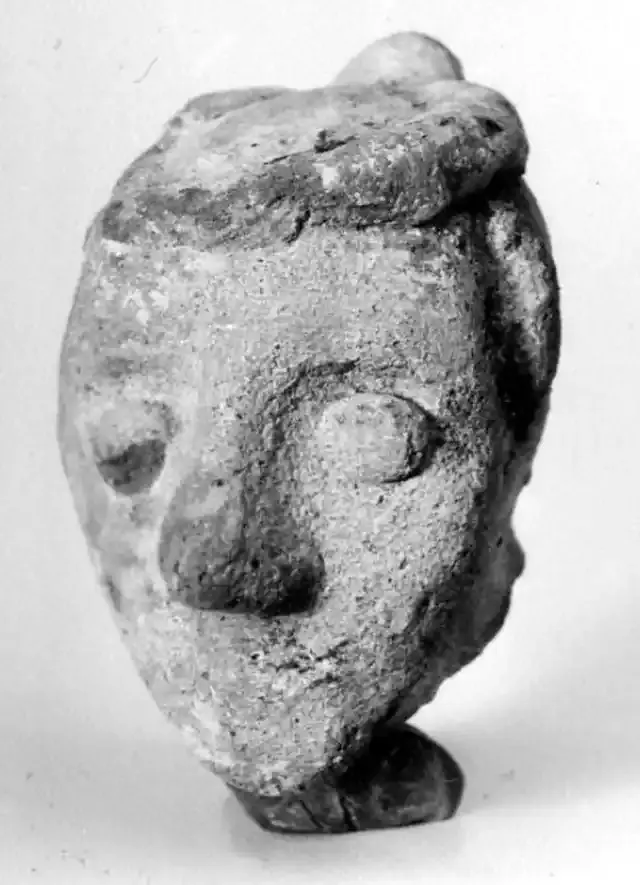
A primitive clay statue dating back to the civilization of Marash Bani Salama from the north of Egypt, specifically in an area belonging to the Giza Governorate now, as for the history of this head, it dates back approximately to the middle of the fourth millennium BC and perhaps a little more, and it is now displayed in the Egyptian Museum in Tahrir in the Egyptian capital, Cairo. Scorpion King Funnel
Funnel or pin fighting King Scorpion II, who is believed to have been the last king of southern Egypt before the unification carried out by King "Narmer" in 3200 BC
5.Skull No. 236
It is a skull that is being researched these days, which proves that the ancient Egyptians knew surgical intervention to treat cancer and dates back approximately to the fourth millennium BC and appears on the skull traces of surgeries undergone to get rid of a malignant tumor was threatening the owner of this skull, which was estimated to be between 30 to 35 years before his death.
Fleeing monuments from loss in the folds of history
It is certain that dealing with all those years and the natural factors that erase many important traces in human lives has never been easy, and this explains the lack of traces that tell us about the form of life in the eras called "prehistoric times" in which writing and documenting events play the difference between the many remaining traces of the civilizations that existed before and after them.
One of the most important places in the world that witnessed that era and contains among its treasures a lot that it has not allowed until the present moment is "Egypt", and it has many monuments that indicate human existence since ancient times.
![]()
How food and pH affect the action of drugs in the body
How food and pH affect the action of drugs in the body more- ADVERTISEMENT
![]()
The Other Side of the Business World - 3 Movies You Must Watch
These dramas dive into the dark side of business, exposing greed, betrayal, and ethical compromise. From Zuckerberg's ambition in *The Social Network* to *Boiler Room*’s stock fraud and *The Founder*’s ruthless empire building, they reveal how success can come with a moral cost. more- ADVERTISEMENT
![]()
Time travel through remote Lewis Island in Scotland
Time Travel Through Scotland’s Remote Isle of Lewis more- ADVERTISEMENT
![]()
What is the coldest place in the solar system?
The coldest natural spots in our solar system might be double-shaded craters at the Moon’s south pole, with temperatures around 25 K—colder than Pluto. These craters avoid all sunlight, trapping extreme cold for billions of years and possibly preserving water ice and other volatile compounds. more- ADVERTISEMENT
![]()
The Seven Years' War: A Global Conflict Defining a New Era
The Seven Years' War, fought from 1756 to 1763, was the first true global war, reshaping power across Europe, North America, and beyond. It marked Britain's rise as a colonial giant and set the stage for revolutions to come, with Frederick the Great and key battles leaving lasting impacts. more- ADVERTISEMENT
![]()
A system to remember everything: clear, simple, and effective
Want to remember everything better? Use systems like visualization, mnemonics, and spaced repetition. Methods like the Loci technique or tools like mind maps can make memory work smoother. It's not complicated—find what fits you and make learning easier and less stressful. more- ADVERTISEMENT
![]()
Valuable life skills gained from mountaineering
Mountaineering is more than climbing; it’s a journey that builds resilience, self-reliance, and teamwork. It teaches us to accept failure, embrace challenges, and grow through every step. The real reward isn’t reaching the summit, but gaining the strength and wisdom needed to navigate life itself. more- ADVERTISEMENT
![]()
The best ChatGPT alternatives, including what is free
ChatGPT is an advanced language AI revolutionizing communication and creativity with human-like conversations and text generation. Alongside it, impressive free alternatives like Google's Bard, Jasper Chat, Bing AI, and Perplexity AI offer unique features—from creative writing to fact-based search—making AI tools more accessible, powerful, and tailored to user needs. more- ADVERTISEMENT
![]()
How to reduce risk and keep your business stable?
Effective risk management helps protect your business assets, improve decision-making, and avoid costly disruptions. By identifying, assessing, and addressing potential risks, you can ensure smoother operations and even uncover new opportunities. Regular updates, employee involvement, and proper tools can keep your risk strategy strong and your business steady. more- ADVERTISEMENT
![]()
5 electronic games to develop your skills and intelligence
Discover how video games like SimCity, Stardew Valley, and Gorogoa can sharpen your mind, boost creativity, and help with planning and decision-making—all while having fun. Not all games are just for play; some are powerful tools for personal growth and learning. more- ADVERTISEMENT