

What is the coldest place in the solar system?



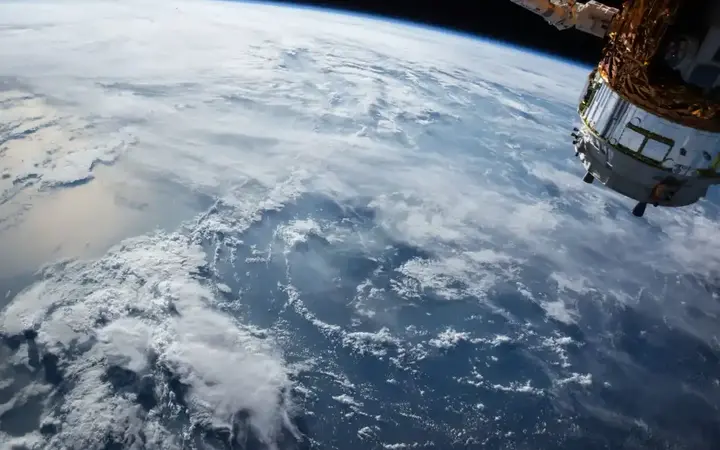
The space is very cold. The core temperature of outer space is 2.7 Kelvin—minus 454.81 degrees Fahrenheit, or minus 270.45 degrees Celsius—meaning it's just above absolute zero, the point at which molecular motion stops. But this heat is not constant throughout the solar system. The so-called "empty" space — although not actually empty — is much colder than, say, planets, moons or asteroids, because there is (practical) nothing that absorbs energy coming from the sun. So, except for normal "empty" space, what is the coldest place in the solar system? And how do temperatures there compare to those on Earth?
Show key points
- Outer space has an extremely low temperature of just
- 7 Kelvin, barely above absolute zero, due to the near absence of matter that can absorb or retain heat.
- Scientists measure space temperatures mainly through detecting infrared and microwave radiation or estimating based on solar exposure.
- ADVERTISEMENT
- Accurate measurement of space temperatures is complex and relies heavily on assumptions and imperfect models, making all temperature values estimations.
- Research indicates that the double-shaded craters at the Moon's south pole may be the coldest known natural locations in the solar system.
- These lunar craters remain so cold because their floors are permanently shielded from both direct and reflected sunlight as well as thermal radiation.
- Estimates suggest these moon craters can reach temperatures as low as 25 K, which is colder than Pluto's average surface temperature of 4
- 4 K.
- The Oort Cloud might be even colder than the Moon’s craters, although its classification as part of the solar system is debated.
Space measurement
First, let's take a moment to consider exactly how cosmic temperatures are measured. Ian Crawford, professor of planetary science and astrobiology at Birkebeck, University of London in the UK, told Live Science in an email: "Temperatures can be measured by monitoring the intensity of infrared and microwave radiation emitted from surfaces. In the absence of such measurements, temperatures can be estimated based on the amount of sunlight they receive." However, taking cosmic measurements is not always simple. According to Don Polako, professor of astronomy at the University of Warwick in the UK, "There is nothing clear in astronomy, mainly because you are always watching, rather than interacting." So, although there are accurate ways to measure temperatures in space, there will always be room for improvement. "Temperatures are estimates," Polaco said. The numbers you calculate depend on how well your assumptions really are and how detailed the physical model you are using." So, with these points in mind, what is the coldest place in the solar system, at least according to current data? Maybe it's Pluto, given its distance from the sun? In fact, the coldest place may be closer to home.
Recommend


To the moon
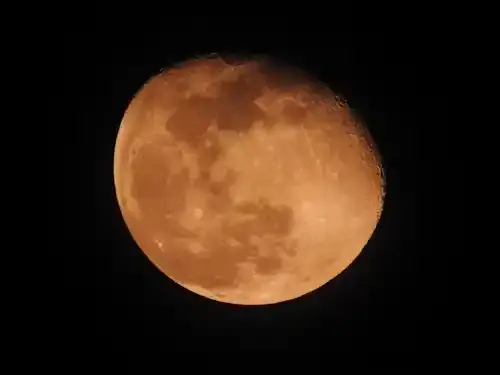
In 2009, the Lunar Reconnaissance Vehicle, a NASA robotic spacecraft designed to help scientists better understand conditions on the moon, provided data suggesting that the "shaded craters" at the moon's south pole may be the coldest place in the solar system. This theory was later reinforced by graduate student Patrick O'Brien and his advisor Shane Byrne, planetary researchers at the University of Arizona. During a lecture at the 2022 Lunar and Planetary Science Conference, O'Brien and Byrne suggested that "twice-shaded lunar craters" may indeed be "the coldest locations in the solar system." According to O'Brien and Bern, a crater can be considered shaded twice if it is "protected not only from direct solar lighting but also from secondary heating sources," such as "solar radiation reflected from nearby bright spots as well as thermal radiation emitted from those warm roofs." Polaco added that the "double-shaded" nozzles "have high enough edges so that sunlight does not reach the floor of the nozzle," which is why they are so cold. O'Brien and Byrne's research suggests that because these "permanently shaded areas" have been "protected" from solar lighting for billions of years, their craters may contain "fine cold traps" that contain "not only water ice, but also more volatile compounds and elements," such as carbon dioxide, carbon monoxide, dinitrogen and argon. According to O'Brien and Bern, these craters are estimated to have a temperature of about 25 K (minus 414.67 F, or minus 248.15 degrees Celsius), but they may be colder. Crawford is confident in the validity of the research. "I'm sure this is the coldest temperature in the indoor solar system [from Mercury to Mars] and also colder than Pluto's estimated average surface temperature," he said. Pluto's average surface temperature, in context, is 40.4 K, which is equivalent to -386.95 F or -232.75 degrees Celsius, according to NASA. However, Crawford said these double-shade lunar craters may not be as cold as the Oort cloud, an icy space debris sheath located far from Neptune's orbit. He noted that the distinction depends on whether we include the Oort cloud when discussing the solar system. The Oort cloud is both "the most remote region in our solar system" by NASA, but it is also "outside" our solar system.
Earth Comparisons
On Earth, even the coldest and harshest temperatures in Antarctica are much higher than the craters of the Moon or the Oort Cloud. The coldest Earth's temperature ever recorded — recorded on July 21, 1983, at Russia's Vostok research station in Antarctica — was minus 128.6 F (minus 89.2 Celsius), according to the World Meteorological Organization's World Weather and Climate Archive. However, scientists have artificially created lower temperatures than those that occur naturally on Earth, in lunar craters or even in the Oort cloud. Last year, a team of German researchers broke the record for the coldest temperature reached in a laboratory: an extremely cold temperature of minus 459.67 F (minus 273.15 degrees Celsius), which they achieved by "dropping magnetized gas 393 feet (120 meters) below a tower." But when it comes to naturally occurring temperatures, the darkest and darkest parts of our moon are highly likely to have the lowest temperature in our solar system – depending, of course, on how you choose to rank the Oort cloud.
![]()
Shocking fact: the moon is moving away from the earth!
The Moon is slowly drifting from Earth—about 3.8 cm a year—thanks to tidal friction. This tiny shift, tracked since NASA's Apollo missions, may eventually lengthen our days. Don't worry though; the Moon won't escape. It'll settle into a stable distance over time. more- ADVERTISEMENT
![]()
Are electric cars actually making sales? Which countries are leading the way?
Electric vehicles are growing fast, with countries like Norway and China leading the way. Backed by government incentives and better tech, they offer lower costs and cleaner air. While challenges like high production costs remain, EVs are becoming a smart, eco-friendly choice for the future. more- ADVERTISEMENT
![]()
3 Important Novels You Should Read
3 Important novels that you should read more- ADVERTISEMENT
![]()
Why are there 24 hours a day and 60 minutes an hour?
Ever wondered why clocks have 12 hours? It traces back to ancient Egyptians and Babylonians who used finger joints to count and stars to track time. Their clever systems shaped the 24-hour day and 60-minute hour we still use today. Time, it turns out, is a gift from history! more- ADVERTISEMENT
![]()
The biggest mystery in geology - when plate tectonics began to reshape the Earth
On February 6, 2023, a powerful earthquake struck the eastern Mediterranean, shifting the Anatolian Peninsula by 11 meters and killing nearly 60,000 people. This disaster highlights how tectonic plate movements reshape Earth's surface and cause devastating quakes by releasing built-up pressure at plate boundaries. more- ADVERTISEMENT
![]()
The most impressed Japanese techniques in modern times
Japan keeps surprising the world with weird yet useful inventions—like heated toilet seats and noise-canceling forks. One standout? Healthcare robots that assist the elderly, making life easier and healthcare smarter. Also, karaoke, born in Japan, totally changed entertainment. It's clear: Japan knows how to mix fun, tech, and innovation. more- ADVERTISEMENT
![]()
Do you know why hair becomes white with age and not skin?
White hair can show up early due to genetics, stress, vitamin B12 deficiency, or smoking. While aging is a natural cause, lifestyle and health factors also play a role. Sometimes, treating underlying issues like thyroid problems or vitamin deficiencies may help restore hair color. more- ADVERTISEMENT
![]()
Life lessons that I realized after the age of forty and wished I had learned them at twenty: Is it too late to arrange your life in the forties?
Life Lessons I Realized After I Turned 40 That I Wish I Learned at 20- Is it Too Late to Get Your Life Together in Your 40s more- ADVERTISEMENT
![]()
A book that may interest you - stop pleasing others
A book that might interest you - Stop People Pleasing more- ADVERTISEMENT
![]()
How to learn German for free in 6 months
Learning German opens doors to job and study opportunities in Germany, Austria, and Switzerland. With dedication—three hours a day—you can reach intermediate level in six months. YouTube channels like Deutsch mit Mira, German with Mr. Shehata, and Khaled Bozan make learning fun and accessible for everyone. more- ADVERTISEMENT