

The biggest mystery in geology - when plate tectonics began to reshape the Earth



On the sixth of February of last year 2023, a large rift appeared in the eastern Mediterranean, and the Anatolian Peninsula suddenly descended to the southwest by 11 meters relative to the Arabian Peninsula. Nearly 60,000 people in Syria and Turkey have died in one of the most devastating and tragic earthquakes of modern times. An earthquake like this occurs because the Earth's crust is divided into moving tectonic plates. In fact, the forces behind plate tectonics play a role in determining almost everything on Earth, from their climate to the evolution of life on them. In this article, we show the origin and evolution of plate tectonics, their role in reshaping the Earth, and how earthquakes are generated by their motion.
Recommend


Show key points
- On February 6, 2023, a massive earthquake in the eastern Mediterranean shifted the Anatolian Peninsula 11 meters southwest, resulting in almost 60,000 deaths in Turkey and Syria.
- Plate tectonics, driven by Earth's internal heat and mantle convection, shape the planet's surface and contribute to the formation of mountains, ocean basins, and earthquakes.
- Earth's lithosphere is broken into several tectonic plates that float atop a semi-liquid mantle layer, constantly moving due to geothermal energy.
- ADVERTISEMENT
- Plate boundaries are of three types—divergent, convergent, and transform—each creating distinct geological features and events such as rift valleys, mountain ranges, and earthquakes.
- Earthquakes occur when accumulated pressure at plate boundaries is suddenly released, sending seismic waves from the focus point that cause ground shaking.
- There are three major types of seismic waves—primary (P), secondary (S), and surface waves—each differing in speed, movement, and potential damage.
- Despite their destructive power, earthquakes play a vital role in the Earth’s natural geologic processes by helping relieve tectonic stress and contributing to the rock cycle and landscape development.
Plate tectonic puzzle:
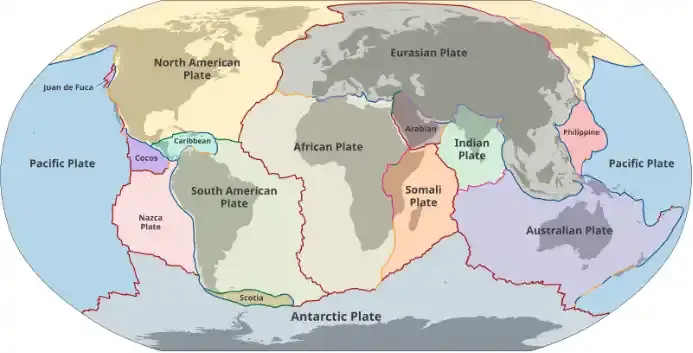
Despite their importance, plate tectonics remained somewhat a mystery. In fact, the Earth's surface is constantly moving, driven by dynamic processes occurring deep inside the planet. Earth's outer shell, known as the lithosphere, is divided into several large, solid pieces called plate tectonics. These sheets float on the semi-liquid elastic shell underneath. The movement of these plates is responsible for the formation of mountains, ocean basins and other geological features. They also lead to earthquakes.
Birth of plate tectonics:
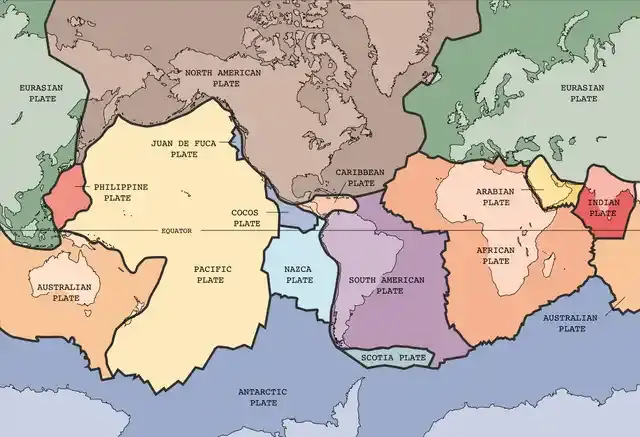
The story of plate tectonics begins with the early history of Earth, about 4.5 billion years ago. After the planet formed, it gradually cooled, and a hard crust began to form on its surface. Earth's early crust was not a single continuous crust, but was broken into fragments by intense volcanic activity, asteroid collisions, and the planet's internal heat. About 3 to 3.5 billion years ago, these fragments began to merge and form larger, more stable pieces. This period marked the beginning of the formation of plate tectonics. The exact timing of the activity of entire plate tectonics is still debated among scientists, but evidence from ancient rocks suggests that by then, tectonic processes similar to those we see today were already in operation. The driving force behind the movement of plate tectonics is the internal geothermal heat; radioactive elements decompose and the remaining heat from the planet's formation generates enormous heat energy inside the Earth. This heat causes the mantle, a layer of hot, semi-hard rock beneath the crust, to flow slowly. This mantle movement creates convection currents with which the tectonic plates above them pull.
Movement of plate tectonics and remodeling of the Earth:
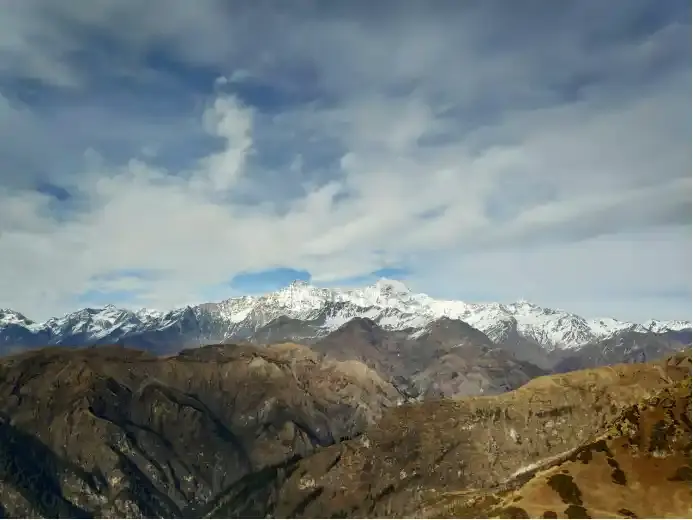
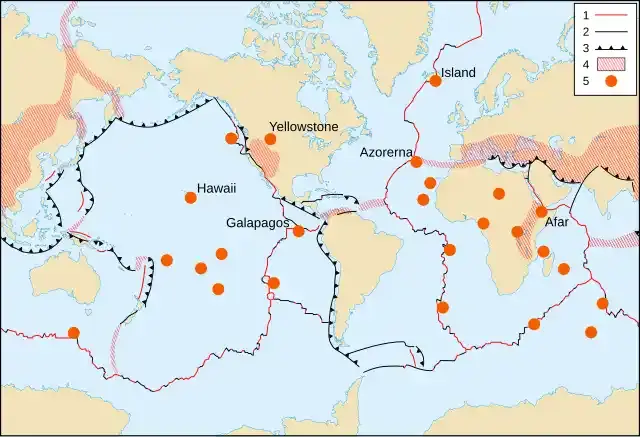
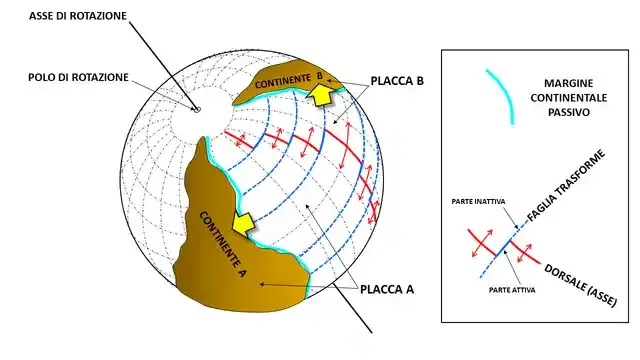
When plate tectonics move, they affect each other in different ways, creating many topography. These interactions occur primarily at the boundaries of the confluence of the plates. There are three main types of plate boundaries: divergent, convergent, and metamorphic.
1- Divergent boundaries: At divergent boundaries, tectonic plates move apart from each other. This process occurs mostly along the central oceanic ridge, where a new oceanic crust forms as magma rises from the mantle and hardens. When the plates separate, they create new rift valleys and oceanic basins. The Mid-Atlantic Chain, where the Eurasian and North American plates diverge, is an example of a divergent border.
2- Convergent boundaries: At converging boundaries, plates move towards each other. When two plates collide, one plate is often forced to enter under the other in a process called subduction. This kind of interaction between plates can create some of the Earth's most dramatic features, such as mountain ranges, volcanic arcs, and deep ocean trenches. The Himalayas, formed as a result of the collision of the Indian and Eurasian plates, are an example of mountains formed as a result of converging borders.
3- Conversion boundary: At the conversion border, the plates slide over each other horizontally. However, their slide is not smooth due to friction between the plates, which leads to pressure accumulation. When this pressure is released, earthquakes occur. The movement of the Anatolian plate in relation to the Arabian Peninsula plate is a famous example of the limits of transformation.
Origins of earthquakes:
Earthquakes are one of the most direct and dramatic consequences of the movement of plate tectonics. Earthquakes occur when pressure accumulated along the boundaries of plates or faults is suddenly released. This release of energy causes the earth to shake, often with devastating effects. The origin of an earthquake is known as the focal point, which is the point within the Earth where pressure is released, and the point on the Earth's surface just above the focus is called the epicenter. The energy released during an earthquake travels in the form of seismic waves, which can be detected by seismometers around the world.
There are three main types of seismic waves:
1- Primary waves (P waves): They are the fastest seismic waves and the first to be discovered by seismometers. They are compressive waves, meaning they move through the Earth by compressing the material passing through them.
2- Secondary waves (S waves): slower than primary waves and reach seismometers after them. They are shear waves, that is, they move the Earth up and down or side to side, perpendicular to the direction of the wave's travel.
3- Surface waves: These waves travel along the surface of the earth and are usually responsible for most of the damage during an earthquake. These waves move slower than the previous two, but can have a larger amplitude, causing more intense vibrations. The intensity of earthquakes is measured by the Richter scale, which is a logarithmic scale, meaning that each integer increase represents a tenfold increase in seismic wave amplitude and about 32 times the release of energy.
The role of earthquakes in the evolution of the Earth:
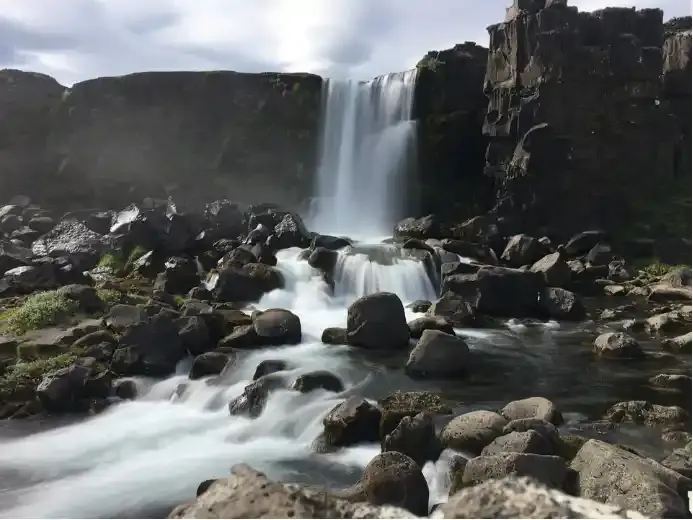
Earthquakes play an important role in the geological processes of the Earth. While they are often seen as destructive events, they are also a natural and essential part of Earth's tectonic activity. Earthquakes help release accumulated stresses along faults and plate boundaries, preventing the build-up of larger stresses that could lead to more catastrophic events. Furthermore, earthquakes contribute to the rock cycle by breaking them down, creating pathways for liquids such as water and magma to move through the Earth's crust. These processes can lead to the formation of mineral deposits and geothermal energy resources, and even contribute to landscape formation over geological time scales.
The Earth's surface is constantly reshaped by the movement of tectonic plates. This dynamic process, which began billions of years ago, has given rise to continents, mountains, ocean basins and other terrain that defines our planet. The movement of tectonic plates is also the main cause of earthquakes, which occur when pressure accumulated along the boundaries of plates is suddenly released. Understanding the origins and behavior of plate tectonics and earthquakes not only helps us appreciate the dynamic nature of the Earth, it also helps us manage and mitigate the risks associated with living on an ever-changing planet.
![]()
The AI Revolution: The Impact of Artificial Intelligence on the Labor Market
AI has shaken the job market, replacing routine tasks and saving hours of work. From graphic design to marketing, many roles have evolved or vanished. Still, it’s not the end for humans—AI creates new job opportunities and pushes people to grow, although competition and job security have become tougher than ever. more- ADVERTISEMENT
![]()
How to overcome obstacles and detect obstacles
Mindshift is all about changing your mindset to grow and overcome life’s challenges. By shifting from a fixed to an evolving mindset, facing fears, and using critical and creative thinking, you unlock hidden talents and new possibilities. It’s not easy, but with effort and support, it’s truly worth it. more- ADVERTISEMENT
![]()
Why does my mood change when I'm hungry?
Feeling hungry can mess with your mood—fatigue, anger, confusion—all thanks to low glucose. As levels drop, stress hormones like cortisol and adrenaline kick in, making you irritable. Even fish get aggressive when hungry! So grab a healthy snack, keep calm, and maybe save your relationships along the way. more- ADVERTISEMENT
![]()
The best professional advice (in life) one can get
Choosing the right career can be tough, but combining self-assessment, research, and goal-setting with expert guidance makes the path clearer. Tools like MBTI and career mentors help align your job with your values, making your professional journey both successful and fulfilling. more- ADVERTISEMENT
![]()
Tafilalet Village: Exploring Morocco's Berber Life
Tafilalet, a hidden gem in Morocco, blends ancient Amazigh heritage with stunning desert landscapes. Visitors can explore traditional mud architecture, experience authentic Berber hospitality, and enjoy local cuisine like tagine and dates. It's a perfect escape for those seeking adventure, culture, and a taste of simple, traditional life. more- ADVERTISEMENT
![]()
Islamic Hijri calendar – its history, uses and possible improvement
The Hijri calendar, rooted in the 622 CE migration of Prophet Muhammad, holds deep spiritual and cultural meaning for Muslims. It guides key religious practices like Ramadan and Eid. While traditional sightings vary, astronomical calculations offer hope for more accurate and unified observances across the global Muslim community. more- ADVERTISEMENT
![]()
Personal Success: Practical Steps Towards Achieving Goals
Personal success is about finding happiness in your own growth and goals, not just wealth or fame. It's a journey shaped by your values, efforts, and ability to adapt. Success comes from setting clear goals, staying motivated, and learning from every step along the way. more- ADVERTISEMENT
![]()
Solar panels in the Sahara desert could boost renewable energy but harm global climate
Turning deserts like the Sahara into massive solar farms could power the world and even green the land, but it may also trigger unexpected global climate shifts—like droughts in the Amazon and more hurricanes—making the solution more complex than it seems. more- ADVERTISEMENT
![]()
Nine mythical places that may have already existed: tracing the line between myth and reality
From Atlantis beneath the waves to El Dorado's golden allure and Shambhala's spiritual sanctuary, these legendary places continue to spark wonder. Though their existence remains unproven, ongoing discoveries and ancient clues keep the hope alive, blending myth with mystery in humanity’s quest for hidden truths. more- ADVERTISEMENT
![]()
Habits that make you smarter
Becoming smarter isn’t about talent—it's about building habits that boost your brain. Exercise, mindfulness, learning new skills, and reading can sharpen your mind. Add good sleep, social interaction, and goal setting, and you're on your way to a smarter, healthier you. Intelligence grows with consistent practice. more- ADVERTISEMENT