

Solar panels in the Sahara desert could boost renewable energy but harm global climate



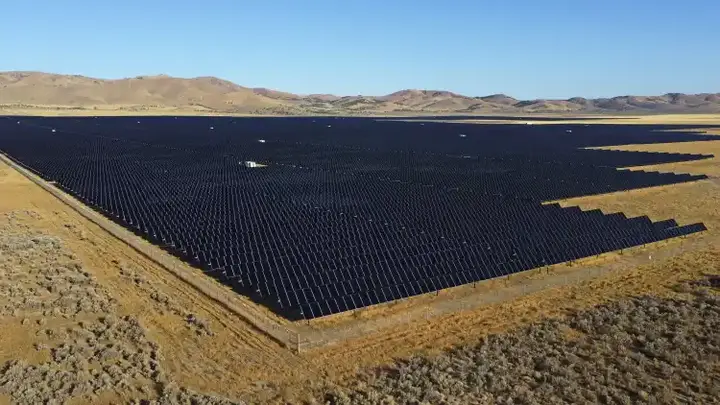
The world's harshest deserts may be the best places on earth to harvest solar energy – the most abundant and cleanest source of energy we have. Deserts are wide, relatively flat, and rich in silicon – the raw material from which the semiconductors from which solar cells are made – never lack sunlight. Indeed, the ten largest solar power plants around the world are all located in deserts or dry areas.
Show key points
- Deserts, with their vast, sun-drenched and silicon-rich landscapes, are ideal locations for harvesting solar energy.
- Transforming the Sahara into a massive solar farm has the theoretical potential to generate four times the current global energy demand.
- Although solar panels absorb large amounts of sunlight, only about 15% is converted into electricity, with the rest turning into heat that can alter local climates.
- ADVERTISEMENT
- Large-scale solar farms reduce surface reflectivity, triggering feedback loops that could increase desert rainfall and allow vegetation to spread.
- Historical evidence from the African wet period suggests that such environmental changes could potentially re-green the Sahara.
- However, climate models indicate that large solar farms may cause global climate disruptions, including droughts in the Amazon and intensified storms in other regions.
- The long-term impacts of desert solar farms are complex and interconnected, stressing the need for comprehensive Earth system modeling before large-scale implementation.
The researchers imagine that it may be possible to transform the world's largest desert, the Sahara, into a giant solar farm, capable of meeting four times the current global energy demand. Plans have been drawn up for projects in Tunisia and Morocco that will provide millions of households in Europe with electricity. While the black roofs of solar panels absorb most of the sunlight that reaches them, only a fraction (about 15%) of that incoming energy is converted into electricity. The rest returns to the environment in the form of heat. The panels are usually much darker than the ground they cover, so a large area of solar cells will absorb a great deal of extra energy and emit it in the form of heat, which affects the climate.
Recommend


Greener desert
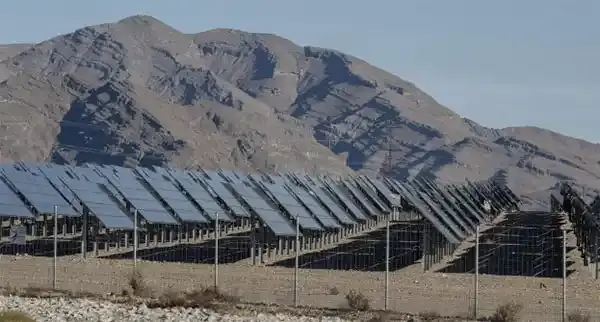
A 2018 study used a climate model to simulate the effects of low whiteness on the earth's surface in deserts due to the installation of large solar farms. Whiteness is a measure of how well surfaces can reflect sunlight. For example, sand is more reflective than solar panels and therefore has a higher whiteness. The model revealed that when a solar farm reaches 20% of the total area of the desert, it leads to a feedback loop. The heat emitted by dark solar panels (compared to highly reflective desert soils) creates a sharp temperature difference between the land and the surrounding oceans which ultimately lowers surface air pressure and causes humid air to rise and condense in raindrops. As monsoon rainfall increases, plants grow and the desert reflects less sun energy, as plants absorb light better than sand and soil. As there are more plants, more water evaporates, creating a wetter environment that causes the plants to spread.
This scenario may seem fanciful, but studies show that a similar feedback loop kept much of the Sahara desert green during the African wetness period, which ended only 5,000 years ago. So, a giant solar farm can generate abundant energy to meet global demand and at the same time transform one of the most hostile environments on earth into a habitable oasis. Sounds perfect, doesn't it? Not quite. In a recent study, we used an advanced Earth system model to examine how desert solar farms interact closely with the climate. Our model takes into account the complex reactions between the interacting spheres of the world's climate - the atmosphere, ocean, land and its ecosystems. It showed that there may be unintended impacts in remote parts of land and ocean that offset any territorial benefits to the Sahara itself.
Drought in the Amazon and hurricanes in Vietnam
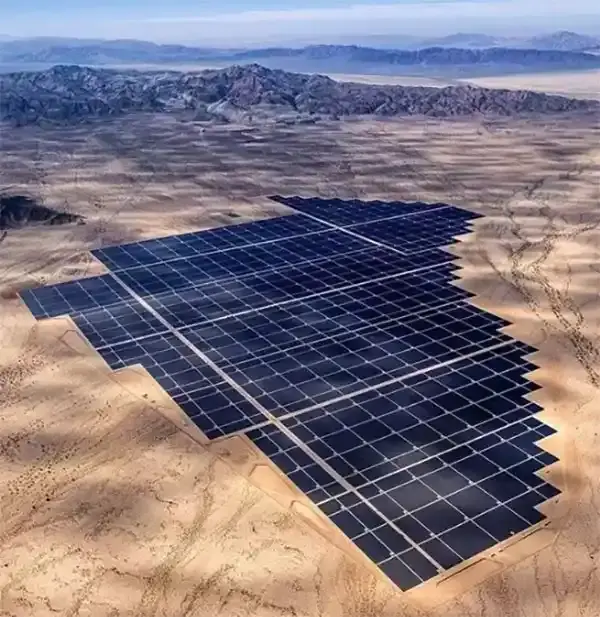
Covering 20% of the Sahara with solar farms raises local temperatures in the desert by 1.5°C according to our model. At 50% coverage, the temperature increase is 2.5°C. This warming is eventually spread around the world by atmospheric and ocean movement, raising the global average temperature by 0.16°C to cover 20%, and 0.39°C to cover 50%. However, the shift in global temperatures is not uniform – polar regions will warm more than the tropics, increasing the loss of Arctic sea ice. This could accelerate warming, as melting sea ice reveals dark water that absorbs more solar energy. This massive new source of heat in the Sahara Desert is reorganizing air circulation and the global ocean, affecting rainfall patterns around the world.
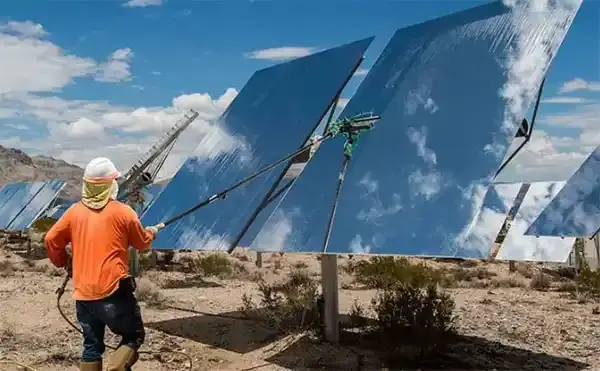
The narrow range of heavy rainfall in the tropics, which accounts for more than 30% of global rainfall and supports the rainforests of the Amazon basin and Congo, is shifting north in our simulations. For the Amazon, this causes drought with less moisture arriving from the ocean. Almost the same amount of extra rain falling on the Sahara Desert due to the effects of solar panels on surface blackout is lost from the Amazon. The model also predicts more tropical cyclones hitting the coasts of North America and East Asia. Some important processes are still missing from our model, such as dust emitted by large deserts. Desert dust, carried by the wind, is a vital source of nutrients for the Amazon and the Atlantic Ocean. So a greener desert may have a greater global impact than our simulations suggested. We are just beginning to understand the potential consequences of creating huge solar farms in the deserts of the world. Solutions like these may help society shift away from fossil energy, but Earth system studies like ours underscore the importance of considering the many interrelated responses to the atmosphere, oceans, and Earth's surface when examining their benefits and risks.
![]()
Discover the Impossible: Turning Deserts into Dense Forests – Dream or Reality?
Desert greening is turning deserts into lush forests using smart water techniques, solar and wind farms, and fertile soil solutions like pyrogenic carbon. Projects like the Sahara Forest Project aim to fight drought, boost agriculture, and even combat climate change, turning drylands into thriving ecosystems. more- ADVERTISEMENT
![]()
The most important technical terms that everyone should know
Knowing technical terms isn’t always necessary—but if you want to dive deeper into tech or work in the field, it’s essential. Technologies like AI, IoT, VR, and 3D printing are transforming daily life, industry, and healthcare, bringing both exciting possibilities and challenges like privacy and security. more- ADVERTISEMENT
![]()
The Rise of Civilization: How Bread Dough Shaped Human History
Bread dough began as a humble mix of grains and water but evolved into a symbol of civilization, shaping cultures and economies. From Egypt’s sacred loaves to modern artisan creations, it blends tradition with innovation, remaining a staple that connects humanity through time and taste. more- ADVERTISEMENT
![]()
The city of Rimini on the Adriatic coast with its Roman history
Rimini blends beachside charm with rich history—from ancient Roman arches to Renaissance castles. Wander through art-filled streets, savor local pasta and fish soups, and explore unique spots like the Jampalonga Library or Fellini's first home. By the sea or in town, Rimini never stops giving. more- ADVERTISEMENT
![]()
Which determines whether it smells good or bad?
Your nose can detect thousands of scents thanks to millions of odor receptors, shaping your experiences and memories. Smells trigger emotional responses, connect to past events, and even signal danger—like the foul scent of rotten eggs. From birth, our genes and experiences guide how we react to different odors. more- ADVERTISEMENT
![]()
5 financial habits to improve your finances better than 99% of people
Pay yourself first, spend less than you earn, and avoid emotional decisions—these simple habits can boost your financial health and set you apart. Small steps like saving 10% of your income and thinking before spending pave the way toward lasting financial stability and a more secure, stress-free future. more- ADVERTISEMENT
![]()
Real books prominent in self-development - including by an Arab specialist
Tired of theory-heavy self-help books? Try these three practical ones instead: Emma Bauer’s guide builds strong human connections with real-life tips, Mohamed Taha’s poetic book inspires change with depth and emotion, and Stéphane Garnier’s fun take shows how cat behavior can teach us joy, confidence, and better relationships. more- ADVERTISEMENT
![]()
The most fascinating discoveries we have made to explore Jupiter
Jupiter’s Great Red Spot, a massive storm lasting centuries, and the mysterious, possibly liquid core make it a planet full of extremes. Its moons—especially Europa with its hidden ocean—offer exciting clues about extraterrestrial life. With Juno and upcoming missions, the future of exploring this gas giant looks thrilling. more- ADVERTISEMENT
![]()
My strategies for developing business confidence
Asking for a raise taught me a powerful lesson: confidence and self-advocacy matter. Despite battling impostor syndrome and anxiety, I learned to challenge my inner critic, celebrate my wins, and take risks. That one bold step led to growth, success, and a stronger belief in myself ever since. more- ADVERTISEMENT
![]()
Things people with emotional intelligence never do
Emotional intelligence helps people understand and manage emotions, leading to better relationships, improved teamwork, and stronger mental health. It can be developed through self-reflection, mindfulness, and active listening. Emotionally intelligent people avoid impulsive actions and build balanced lives with better decision-making and communication. more- ADVERTISEMENT