

Is time travel possible? Astrophysicist explains the science behind science fiction



Have you ever dreamed of time travel like characters in science fiction movies do? For centuries, the concept of time travel has captured people's imaginations. Time travel is the concept of navigating between different points in time, just as you move between different places. You may have seen in the movies characters using special machines, magic devices, or even jumping in a futuristic car to travel backwards or forwards through time.
Show key points
- Time travel, long a staple of science fiction, is a captivating concept involving movement between different points in time.
- According to the second law of thermodynamics, time in our universe appears to move in a single direction and may not be reversible.
- Einstein’s theory of relativity reveals that time can pass at different rates, depending on how fast someone is moving.
- ADVERTISEMENT
- Astronaut Scott Kelly aged slightly slower than his twin brother during his time aboard the International Space Station due to high-speed orbital travel.
- Theoretical concepts like wormholes may offer a possible method for time travel, though they remain undetected and currently unfeasible for human travel.
- Time travel paradoxes, such as the grandfather paradox, raise big questions about the logical consistency of altering past events.
- Telescopes allow scientists to look into the past by observing light that has traveled for billions of years from distant stars and galaxies.
But is this just a fun idea for movies, or can it actually happen?
The question of whether time is reversible remains one of the biggest unsolved questions in science. If the universe follows the laws of thermodynamics, this may not be possible. The second law of thermodynamics states that things in the universe either remain the same or become more disturbed over time.
Recommend


It's a bit like saying you can't break eggs apart after they've been cooked. According to this law, the universe cannot completely return to what it was before. Time can only move forward, like a one-way street.
Time is relative
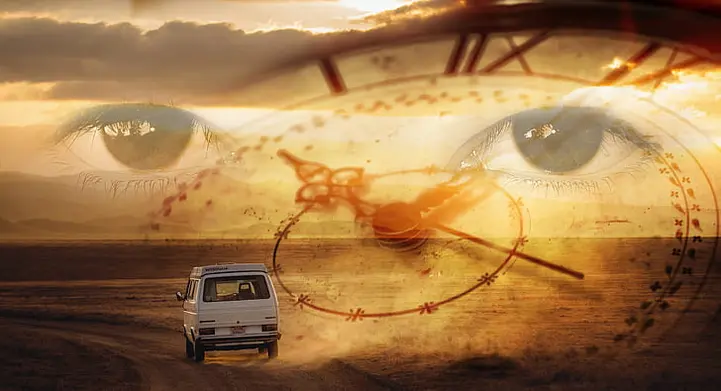
However, the special theory of relativity of physicist Albert Einstein suggests that time passes at different rates for different people. A person traveling at speed on a spacecraft moving at a speed close to the speed of light - 671 million miles per hour! - He will live a slower time than anyone on Earth.
People haven't yet built spaceships that can move at speeds close to the speed of light, but astronauts visiting the ISS orbit Earth at speeds approaching 17,500 miles per hour. Astronaut Scott Kelly spent 520 days on the International Space Station, and as a result he grew older a little slower than his twin brother — and fellow astronaut — Mark Kelly. Scott was six minutes younger than his twin brother. Now, because Scott has been traveling much faster than Mark for several days, he is 6 minutes and 5 milliseconds younger than him.
Some scientists are exploring other ideas that might theoretically allow time travel. One concept involves wormholes, or virtual tunnels in space, that can create shortcuts to journeys across the universe. If someone can build a wormhole and then figure out a way to move one end of it at a speed close to the speed of light – such as the virtual spaceship mentioned above – the moving limb will age more slowly than the fixed end. The person who entered the moving limb and exited the wormhole through the fixed limb will come out in their past.
However, wormholes remain a theory: scientists have not yet been able to detect them. It also seems that it would be very difficult to send humans through a wormhole space tunnel.
Paradoxes and failed dinner parties
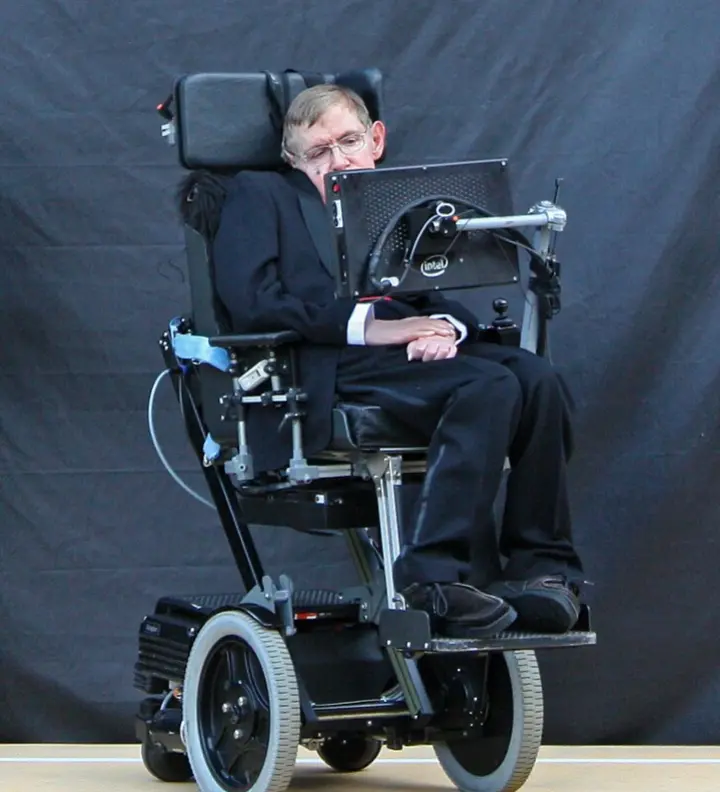
There are also paradoxes associated with time travel. The famous "grandfather paradox" is a hypothetical problem that can arise if someone travels through time and accidentally prevents their grandparents from meeting. This would create a paradox as you were never born, raising the question: How could you have traveled time in the first place? It is a mind-boggling mystery added to the time travel puzzle.
It is known that physicist Stephen Hawking tested the possibility of time travel by holding a dinner party that invitations indicating the date, time and coordinates were sent only after it happened. He hoped that his call would be read by someone who lives in the future and has the ability to travel through time. But no one showed up.
"The best evidence we have that time travel is not possible, and will not be, is that we have not been invaded by hordes of tourists from the future," he noted.
Telescopes are time travel machines
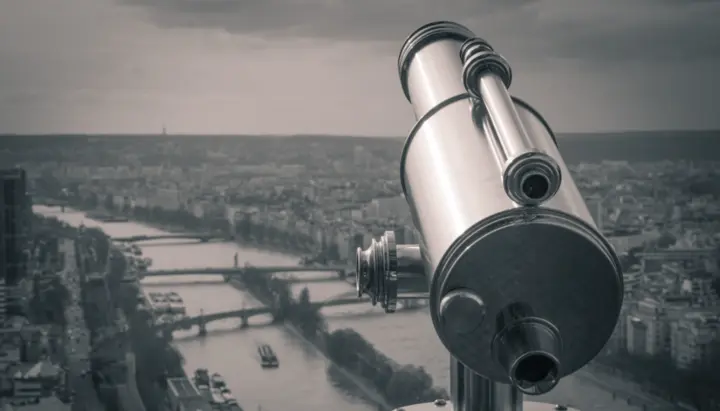
Interestingly, astrophysicists armed with powerful telescopes possess a unique form of time travel. When they look at the vast expanse of the universe, they gaze at the universe's past. Light from all galaxies and stars takes time to travel, and these rays carry information from the distant past. When astrophysicists observe a star or galaxy through a telescope, they don't see it as it is at present, but rather as it existed when light began its journey to Earth millions to billions of years ago.
NASA's newest space telescope, the James Webb Space Telescope, looks at galaxies that formed at the beginning of the Big Bang, about 13.7 billion years ago.
Although it's unlikely that we will have time machines like those in movies anytime soon, scientists are constantly researching and exploring new ideas. But for now, we'll have to enjoy the idea of time travel in our favorite books, movies and dreams.
![]()
Hospice of the King's Assistant... Masterpieces of art and color harmony in Kermanshah
The King’s Assistant Hospice in Kermanshah, a Qajar-era gem, shines with vivid tiles and graceful arches. Built for religious ceremonies and tribal reconciliation, it also holds tales of conflict, peace, and deep-rooted Persian hospitality. Today, it stands as a museum and a beautiful reminder of cultural and spiritual legacy. more- ADVERTISEMENT
![]()
Turkey: The country that heals hearts and steals souls
From Istanbul’s magic to Cappadocia’s dreamy skies, Turkey stirs the soul with ancient wonders, warm-hearted people, and unforgettable beauty. More than a destination, it's a journey through time and emotion that stays with you long after you’ve gone. more- ADVERTISEMENT
![]()
Habits that distinguish men from boys
Habits that distinguish men from boys more- ADVERTISEMENT
![]()
How exactly to spend your money to maximize happiness, according to the latest science
How exactly to spend your money to maximize happiness, according to the latest science more- ADVERTISEMENT
![]()
The cave beneath Pembroke Castle and the fate of the early Britons
A hidden cave beneath Pembroke Castle has revealed ancient secrets, including animal fats and tools that trace the journey of early Britons from hunters to farmers. This incredible find brings new light to prehistoric life and the evolving habits of those who lived beneath the castle centuries before it was built. more- ADVERTISEMENT
![]()
We paint it wrong: the sun is not orange
The sun isn’t just orange—it’s a masterpiece of shifting colors. From pale reds and soft blues at dawn to radiant whites at noon, its beauty changes with time and weather. Films and culture fooled us, but nature tells a richer, truer story full of color and mystery. more- ADVERTISEMENT
![]()
Shocking fact: the moon is moving away from the earth!
The Moon is slowly drifting away from Earth—about 3.8 cm each year—due to tidal friction. This subtle shift has been proven through laser technology since 1969. While it won't escape Earth’s gravity, the distancing affects Earth's rotation, making days longer and altering tides and seasonal temperatures. more- ADVERTISEMENT
![]()
Agadez Historic Centre, a fascinating African heritage site in Niger
Agadez, known as the "Gateway to the Desert," stuns visitors with its towering 27-meter clay minaret—the tallest in the world—and its rich blend of Tuareg culture, desert architecture, and caravan trade history. Its historic center, a UNESCO World Heritage Site, showcases enduring traditions and earthen beauty. more- ADVERTISEMENT
![]()
The history of the city of Samarra ... Iraq's Hidden Gem
Samarra, once a grand Abbasid capital, still stands with its iconic spiral minaret and rich Shia heritage. Though chosen as the capital of Islamic civilization in 2020, the city remains dusty and neglected, holding untold stories within its historic ruins. more- ADVERTISEMENT
![]()
6 Things Expats Wish They Knew Before Moving to Hong Kong
Hong Kong’s street food scene is full of delicious surprises—think egg pancakes, wonton pasta, and authentic fish balls at wallet-friendly prices. If you’re feeling fancy, don’t miss the city’s Michelin-starred dim sum spots. more- ADVERTISEMENT