


The cave beneath Pembroke Castle and the fate of the early Britons



In the historical landscape of Britain, ancient castles are dotted with each holding the secrets of the past within its stone walls. Pembroke Castle, a majestic castle in Wales, is one such site. Recent explorations have revealed a cave beneath the castle that may offer new insights into the fate of the early Britons. This rich discovery promises historical and archaeological significance, shedding light on the lives of the people who inhabited this area thousands of years ago.
Show key points
- A hidden cave was recently discovered beneath Pembroke Castle during routine maintenance, sparking a wave of archaeological interest.
- The cave predates the castle by thousands of years and shows signs of human use dating back to the prehistoric era.
- Pembroke Castle, a Norman stronghold built in 1093, has significant historical relevance, including being the birthplace of Henry VII.
- ADVERTISEMENT
- Archaeologists found tools, pottery, and animal fat residues in the cave, pointing to its use by early Britons for daily domestic activities.
- Analysis of animal fat remains suggests a transition from wild to domesticated sources, mirroring the shift from hunting to farming.
- Stratified layers within the cave reveal usage spanning from the Mesolithic through the Iron Age, reflecting evolving cultural practices.
- Ongoing and future excavations aim to uncover more evidence about early British diets, social behaviors, and settlement patterns.
1. Discover the cave under Pembroke Castle.
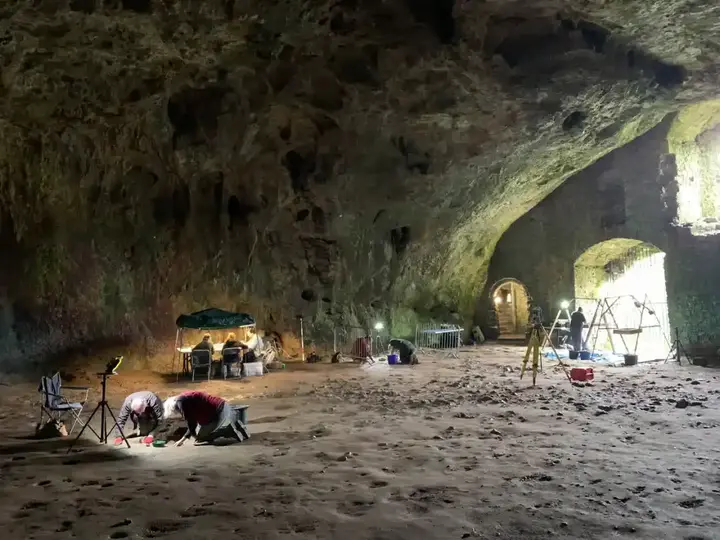
In a remarkable turn of events, archaeologists discovered a previously unknown cave beneath Pembroke Castle. This cave, which has been hiding for centuries, was discovered during routine maintenance work. The entrance, which was hidden by rubble and enlarged vegetation, remained unnoticed by historians and archaeologists alike, making its discovery a dramatic breakthrough.
Recommend


2. History of Pembroke Castle Cave.
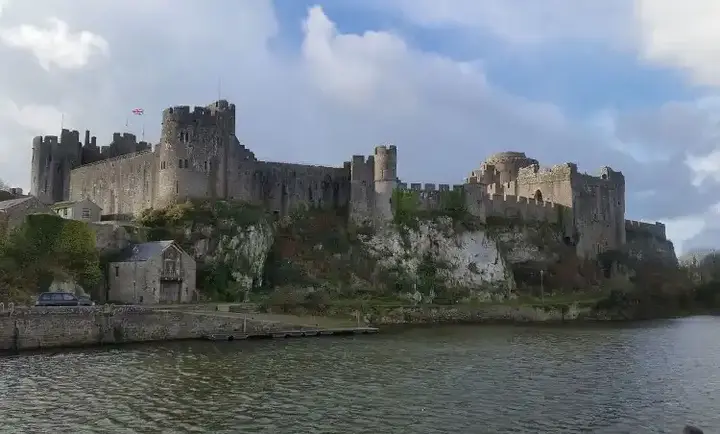
The history of the cave beneath Pembroke Castle is intertwined with the castle's past. The castle, dating back to the eleventh century, was built on a strategic promontory overlooking the Pembroke River. However, the origins of the cave predate the castle by several thousand years. Preliminary examinations indicate that it was used by humans during the prehistoric era, making it a site of great archaeological importance.
3. History of Pembroke Castle.
Pembroke Castle itself is a monument of medieval architecture, built by the Normans in 1093. It played a crucial role in the defence of South Wales and was associated with many historical events, including the birth of Henry VII, the first Tudor monarch. The strategic importance of the castle and its continuous occupation over the centuries make it an archive of rich historical narratives.
4. Evidence of the presence of the first Britons in the cave.
Archaeologists inside the cave have discovered a collection of artifacts that indicate its use by the early British. These include flint tools, pottery fragments, and animal bones. However, the most interesting finds are animal fat remains on the cave's walls and floor, suggesting that the cave may have been used for cooking or other household activities.
These findings provide a window into the lives of early Britons. The transition from a hunter-gatherer society to a more stable agricultural society is a key stage in British prehistory. Evidence of domesticated animal fats also suggests that the inhabitants of this cave were part of this transformative period, contributing to understanding how the early Britons adapted to their environment and developed new ways of living.
5. Interpret the fats found in the cave of Pembroke Castle.
6. Schedule of use of the cave.
Stratification of sediments within the cave provides a time frame for understanding its use over time. Radiocarbon dating of organic matter in different layers revealed a timeline spanning several thousand years. The first layers, dating from the late Mesolithic period (circa 6000 BCE), show evidence of hunting and fruit-gathering activities, including the use of wild animal fats. The transition to the Neolithic period (c. 4000 BC) was marked by the introduction of domesticated animal fats, indicating a shift towards agricultural practices.
As the Bronze Age progressed (c. 2500 BC), the use of the cave became more organized, with more permanent fireplaces and evidence of sustainable household activities. The Iron Age (which began around 800 BC) brought further changes, with increasing evidence of complex cooking methods and possibly collective feasting practices, as indicated by the diversity and abundance of animal fats.
7. Interpretation and broader implications.
The presence of domesticated animal fat in the cave is an important sign of the transition from nomadic to sedentary lifestyles. This shift is critical to understanding the broader patterns of human evolution and community development in early Britain. The identification of various animal fats and their pyrolysis products indicates a thorough understanding of cooking and food preservation techniques among cave dwellers.
Evidence on cooking methods, including roasting and boiling, suggests a degree of sophistication in cooking and dietary planning. This is confirmed by the presence of pottery pieces that were used in cooking and storing food. The evolution of these practices over time reflects the ability of the early Britons to adapt and be adept in their quest for sustenance and stability.
8. Future research and its implications
The cave beneath Pembroke Castle opened a new chapter in the study of the early Britons. Future research will focus on detailed excavations and analyses to uncover more artifacts and biological waste. These investigations will help build a more comprehensive picture of the region's prehistoric population, diet, social structure, and interactions with their environment.
Conclusion.
The cave beneath Pembroke Castle emerged as an important site for understanding Britain's early history. The discovery of animal fats and other artefacts provides invaluable clues about the lives of early Britons, highlighting their eating habits, technological advances, and social structures. With further research, this cave will undoubtedly continue to reveal the secrets of a bygone era, enriching knowledge of the ancient inhabitants of the British Isles.
![]()
Medical foods in Vietnam: amazing, embarrassing, and puzzling
In Vietnam, food is more than nourishment—it's tied to ancient beliefs. One odd belief warns against pairing chicken with lemon mint leaves, thought to cause leprosy-like symptoms. Though not dangerous, it may cause discomfort. Traditional dietary therapy blends food with yin-yang balance, offering deeper awareness of health and lifestyle. more- ADVERTISEMENT
![]()
How to reduce risk and keep your business stable?
Effective risk management helps protect your business assets, improve decision-making, and avoid costly disruptions. By identifying, assessing, and addressing potential risks, you can ensure smoother operations and even uncover new opportunities. Regular updates, employee involvement, and proper tools can keep your risk strategy strong and your business steady. more- ADVERTISEMENT
![]()
Debate about colors: does matter or brain determine?
Color isn’t just a property of objects—it’s a mix of light, brain interpretation, and even emotion. The dress debate proved we don’t all see the same thing, and for some animals, "red" doesn’t even exist. Turns out, what we see may be more illusion than reality. more- ADVERTISEMENT
![]()
How to overcome your fear of flying
How to overcome your fear of flying more- ADVERTISEMENT
![]()
The biggest mystery in geology - when plate tectonics began to reshape the Earth
On February 6, 2023, a powerful earthquake struck the eastern Mediterranean, shifting the Anatolian Peninsula by 11 meters and killing nearly 60,000 people. This disaster highlights how tectonic plate movements reshape Earth's surface and cause devastating quakes by releasing built-up pressure at plate boundaries. more- ADVERTISEMENT
![]()
Alert from the Northern Lights: Sun's activity is at its highest level in 23 years with the Northern Lights
July 2024 saw a surge in sunspots—the most since 2001—boosting chances of stunning Northern Lights shows across North America. A G2 geomagnetic storm is expected this week, possibly lighting up skies as far south as New York and Idaho. Keep an eye out for those glowing waves! more- ADVERTISEMENT
![]()
Tsunami Survival Guide: Crucial Tip to Stay Safe
The "Tsunami Survival Guide" offers vital tips on how to detect early warnings, prepare emergency kits, and plan safe evacuation routes. It emphasizes the importance of quick action, staying informed, and knowing where to seek refuge to increase your chances of survival during this powerful natural disaster. more- ADVERTISEMENT
![]()
How periods of consistency guided me to the goal: your actions are your compass
How Periods of Consistency Guided Me To Purpose- Your actions are your compass more- ADVERTISEMENT
![]()
What makes the global demand for Arabic grow?
Arabic is booming globally, reflecting pride, rich culture, and growing global influence. With rising demand in business, media, internet, and diplomacy, Arabic is becoming essential in today’s world, offering vast opportunities for communication, jobs, and cultural exchange. more- ADVERTISEMENT
![]()
Discover the Impossible: Turning Deserts into Dense Forests – Dream or Reality?
Desert greening is turning deserts into lush forests using smart water techniques, solar and wind farms, and fertile soil solutions like pyrogenic carbon. Projects like the Sahara Forest Project aim to fight drought, boost agriculture, and even combat climate change, turning drylands into thriving ecosystems. more- ADVERTISEMENT