

Shocking fact: the moon is moving away from the earth!



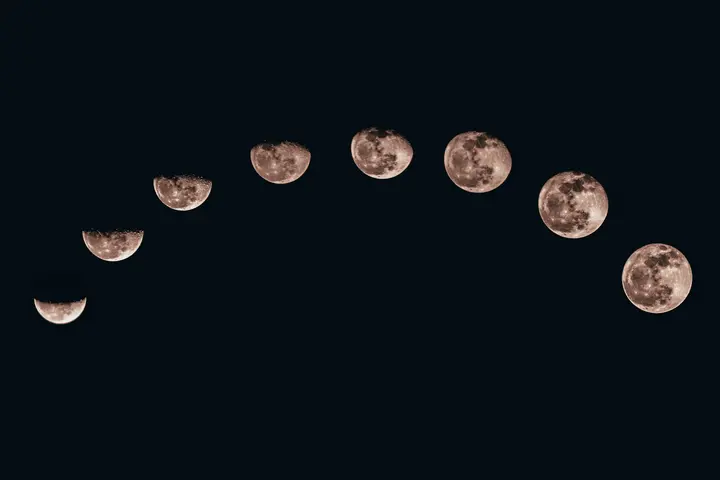
It's a fact: the moon is moving away from Earth, but does this amount to the moon escaping (or escaping) from its orbit? Scientists investigate the possible causes of this event through our geological past and other methods. Find out how this will affect our planet.
Show key points
- The Moon is gradually moving away from Earth at a rate of approximately
- 8 centimeters per year, a process first detected with laser measurements starting in 196
- This lunar recession is largely attributed to tidal friction, which slows Earth's rotation and transfers angular momentum to the Moon, pushing it farther from the planet.
- ADVERTISEMENT
- Edmund Halley was the first to observe signs of the Moon’s increasing distance using historical eclipse records nearly three centuries ago.
- Geological evidence in sedimentary layers from Western Australia supports the theory of lunar distancing and reflects patterns linked to ancient Milankovic cycles.
- The Milankovic cycles, specifically Earth's axial precession, not only affect climate trends but also indicate that the Moon was previously closer to Earth when this cycle occurred more frequently.
- As the Moon continues to drift away, Earth’s rotation will slow down, causing longer days and leading to more extreme seasonal temperatures.
- Despite the Moon moving away, scientists confirm it won't escape Earth's gravity entirely; eventually, a stable orbital distance will be reached.
The Moon's distance from our planet is imperceptible to the human eye.
If you think that the Moon orbits the Earth without changing its course and that it will continue to do so for thousands of years to come, today you will know that this is actually not true. Our natural satellite is gradually moving away from the planet, and we've been able to see this since 1969, when NASA installed reflective panels on the moon during the Apollo missions. Since then, laser beams have been released from Earth, enabling accurate determination of the annual rate at which the moon moves away from us.
Recommend


The first scientist to notice this peculiarity was Edmund Halley nearly 300 years ago, who, after studying ancient eclipse records, was able to come to this conclusion. This decline is thought to be due to tidal friction in the oceans, which affects the speed of the Earth's rotation: by slowing it down, the resulting angular momentum loss (burst) is compensated for in the moon's acceleration, making it move further and farther away.
It has now been shown that the moon moves away from Earth at a rate of about 3.8 cm per year. Researchers at Utrecht University and the University of Geneva have implemented various methods to determine the moon's past. The decline of the moon has been studied several times: in addition to various theories, there are some new developments. The last signals are found in the layers of ancient rocks on Earth.
The relationship between sediments and Milankovic cycles
Scientists in Western Australia have found 2.5 billion years old geological evidence. In the sedimentary layers of the Karijini National Park, which had been deposited on the ocean floor and are now present in the earth's crust, regular periods of rocks of different thickness and shades have been identified. These differences in rock patterns may be associated with the "Milankovich cycles".
In addition to affecting Earth's climate over long periods of time, Milankovic cycles influence the moon's distance, specifically through the climate precession. The motion of the Earth, or the direction of the Earth's axis of rotation around itself, has changed over time. As the study shows, the role of this proactive motion is currently 21,000 years, but this period was shorter in the past when the moon was closer to Earth.
How does lunar distancing affect Earth?
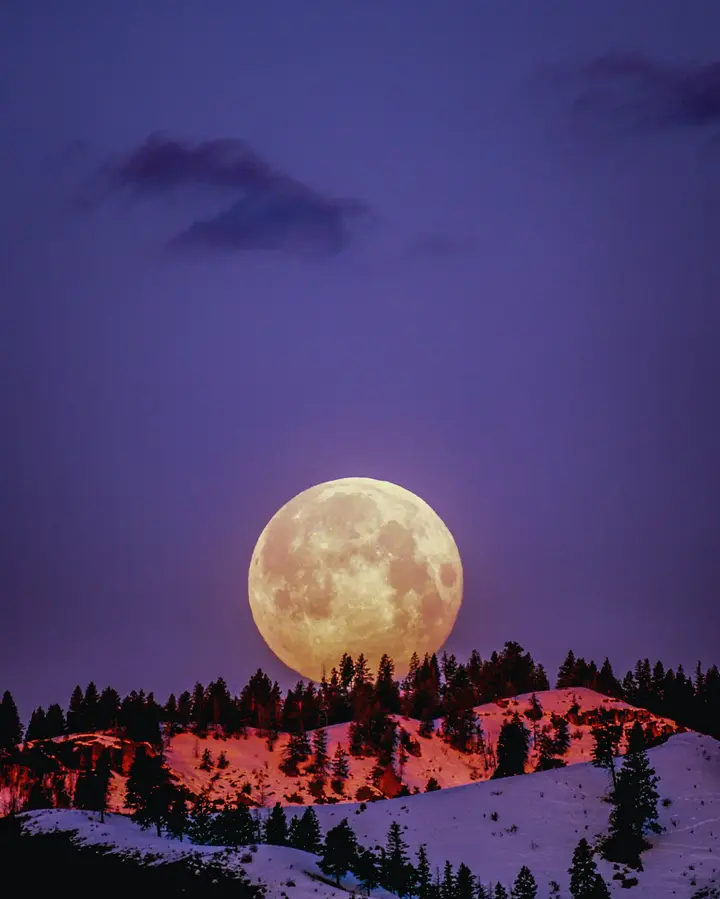
First, as the Earth's rotation speed decreases, the days on Earth will become longer and longer. On the other hand, winters will be colder and summers hotter. Because of the low impact of the moon's gravity on the planet, the tides will not be as strong, however, they will still exist, albeit slightly, due to the influence of the sun.
NASA says sea level rise due to climate change, coupled with the impact of the lunar nodal cycle, will cause a significant increase in the amount of flooding by 2030.
One thing is certain: you don't have to worry about the moon's absence, because it will never escape Earth's gravity. At a certain point, the Moon and Earth will reach equilibrium and the Moon will stop moving away.
![]()
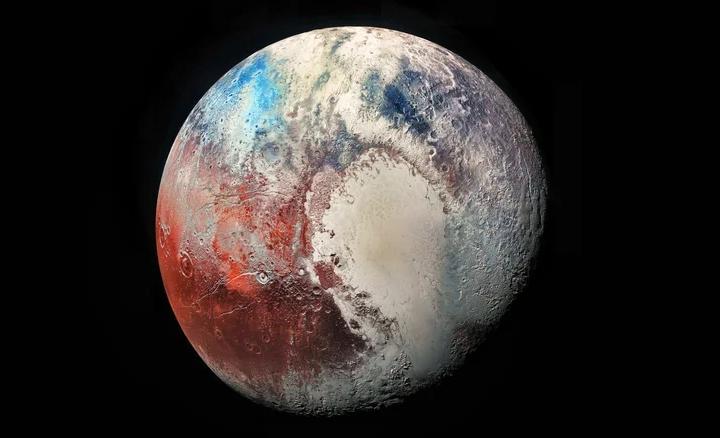
Why was Pluto kicked out of the nine planets?
Pluto, once the smallest and most distant planet, was removed from the solar system’s planet list in 2006 due to its tiny size, unusual orbit, and failure to meet new planetary criteria. Yet, Pluto remains a fascinating mystery, full of potential secrets that could reshape our understanding of the cosmos. more- ADVERTISEMENT
![]()
Does pregnancy accelerate "biological aging"?
A study in the Philippines found that pregnancy may speed up biological aging in women, with each pregnancy linked to about 4 to 4.5 months of aging. This effect wasn't seen in men, and varied depending on context. Researchers hope these insights might guide future anti-aging treatments. more- ADVERTISEMENT
![]()
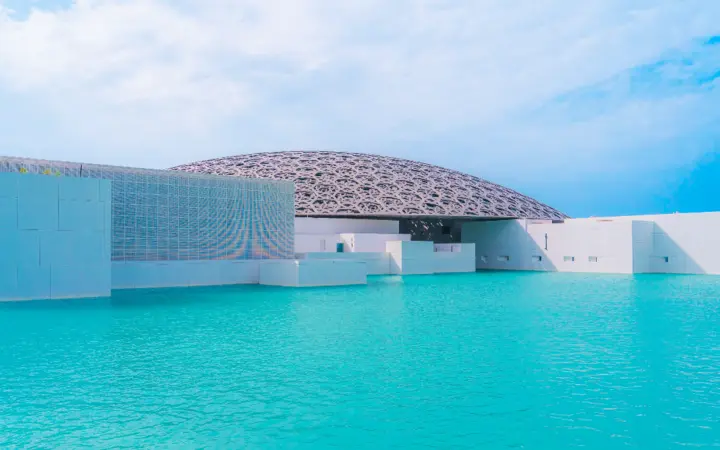
Louvre Art Museum in Abu Dhabi
Louvre Abu Dhabi blends global art with Arab heritage under a stunning dome that filters sunlight into artistic “rays of light.” With its current Post-Impressionism exhibition featuring van Gogh and Cézanne, and outdoor Art Here show for regional artists, it’s a unique, inspiring destination for creative exploration. more- ADVERTISEMENT
![]()
Topkapi Palace ... The largest palaces of Istanbul in Turkey
Topkapi Palace, once home to Ottoman sultans, dazzles with over 12,000 porcelain pieces and secretive chambers. Known as the "Palace of Happiness," it’s now a UNESCO World Heritage Site and ranks among Europe's most visited museums, drawing millions into its rich blend of history, culture, and architectural beauty. more- ADVERTISEMENT
![]()
Extracting rocks that originated in Earth's mantle may reveal the secrets of the planet's history
Mantle rocks are like ancient time capsules, revealing secrets of Earth’s deep past. Their unique chemistry and minerals help scientists uncover how the planet formed, how volcanoes and tectonic plates work, and how Earth’s atmosphere and oceans evolved over billions of years. more- ADVERTISEMENT
![]()
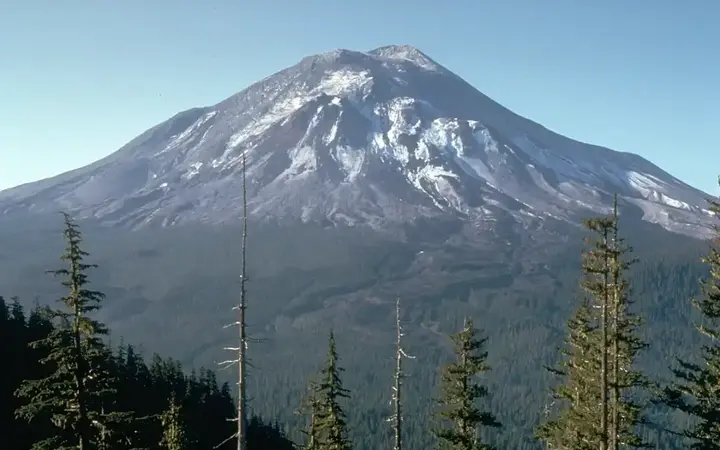
Mount St. Helens blast and rebirth
Mount St. Helens, once shattered by a deadly eruption in 1980, now stands as a powerful symbol of nature's recovery. From barren ash fields to thriving ecosystems, it shows how life returns. Today, it draws visitors eager to witness Earth’s healing and learn from its remarkable transformation. more- ADVERTISEMENT
![]()
The Other Side of the Business World - 3 Movies You Must Watch
These dramas dive into the dark side of business, exposing greed, betrayal, and ethical compromise. From Zuckerberg's ambition in *The Social Network* to *Boiler Room*’s stock fraud and *The Founder*’s ruthless empire building, they reveal how success can come with a moral cost. more- ADVERTISEMENT
![]()
The best economical graphics cards for gaming and content creation - available in the Arab world
Looking for strong gaming and content creation performance on a budget? The NVIDIA GeForce GTX 1660 Super and RTX 3050 stand out for 1080p, while the AMD RX 6700 XT and NVIDIA RTX 3060 Ti shine at 1440p. Great value options packed with smooth performance and essential features like ray tracing. more- ADVERTISEMENT
![]()
What is deepfakes? And is it possible to know it?
What is deepfakes? And is it possible to know it? more- ADVERTISEMENT
![]()
Our cosmic neighborhood may be ten times larger than we thought.
A massive discovery suggests our Milky Way may belong to a cosmic structure far bigger than we thought—possibly ten times larger than the Laniakea supercluster. Galaxies travel like rivers in a gravity basin, flowing toward the enormous Shapley concentration, challenging everything we thought about the universe’s scale. more- ADVERTISEMENT