


Eid in Saudi Arabia: The most famous customs of Saudis celebrating holidays



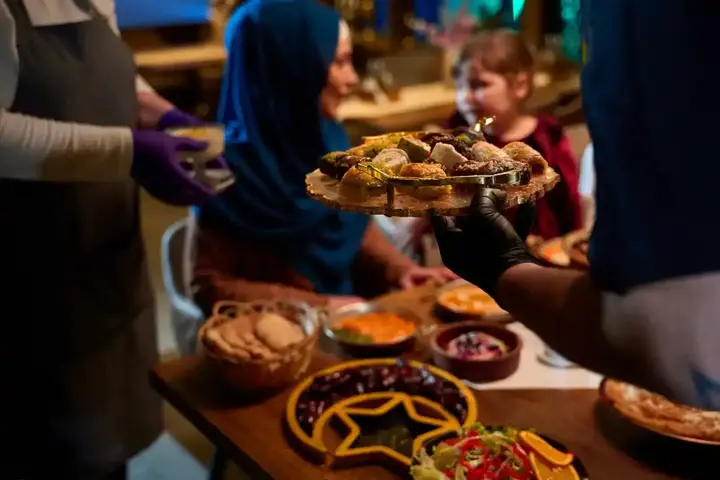
Holidays in all countries of the world are closely linked to the culture and traditions of their people. Religious holidays, national holidays and other holidays have a special taste and taste that makes their memories engraved in memory in a way that is difficult to forget. The Kingdom of Saudi Arabia is one of the Arab countries where the official religion is Islam like the rest of its sister Arab countries. Like its sisters, Saudi Arabia celebrates Eid al-Fitr and Eid al-Adha and practices its own rituals, some of which are shared with other Arab countries and are distinguished by others. For example, the habits of visiting family and friends, participating in Eid prayers, distributing Eid to children, and of course eating distinctive sweets baked goods, and preparing luxurious tables from special Eid food are all common customs. Between the lines of this article, the most famous customs of celebrating holidays in Saudi Arabia, which may give you an overview of its heritage, culture and special taste, which has been passed down through generations to distinguish Eid celebrations in it.
Recommend


Show key points
- Holidays in Saudi Arabia hold deep cultural and religious significance, particularly through shared Islamic celebrations like Eid al-Fitr and Eid al-Adha.
- Preparations for Eid begin early, with street decorations, home adornments, and the organization of gifts, sweets, and festive games for children.
- Performing the Eid prayer in traditional attire followed by communal greetings and the sharing of sweets highlights the unity and spiritual essence of the holiday.
- ADVERTISEMENT
- The act of sacrifice during Eid al-Adha emphasizes charity and togetherness, as families share meals and enjoy a joyful breakfast filled with laughter and conversation.
- Visiting relatives and close friends is a key tradition, accompanied by exchanging greetings, offering traditional treats, and strengthening family bonds through shared feasts.
- Recreational outings to parks, beaches, cafes, and even other countries are common post-prayer activities, extending the festive spirit beyond religious obligations.
- Distinctive traditions like henna for women, Eid clothes for children, and community meals symbolize the blend of heritage and modernity in Saudi Eid celebrations.
1- Pre-Eid preparations
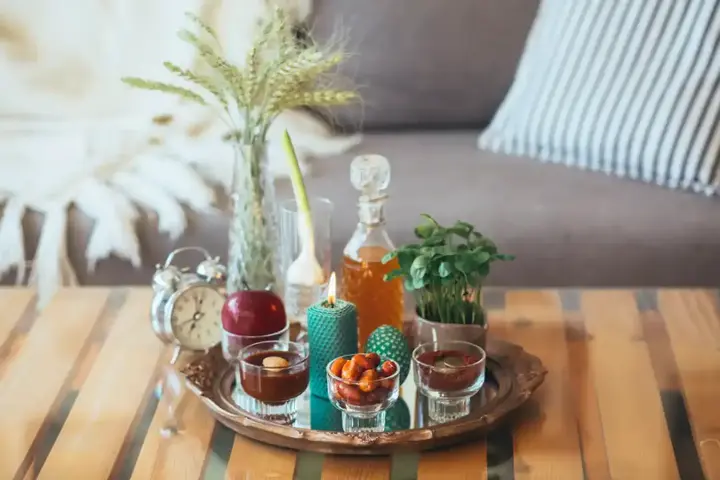
Cleaning and decorating the streets and preparing homes to receive Eid with decorations, Eid decorations and various congratulatory phrases, and preparing chocolates and various hospitality prepared to be offered to guests. A children's distribution corner is set up and decorated so that children feel special joy during the holidays. Gifts, distributions and new clothes are prepared, and some attend competitions and games for family members to participate in to blend heritage with modernity in Eid celebrations. As for girls and women, many of them go to grandmother's house or gather on Eid night to draw henna. Eidiyas are also prepared from money that is distributed to children and women and is also called the "Eid hovercraft" and is an integral part of Arab culture.
2- Eid prayer
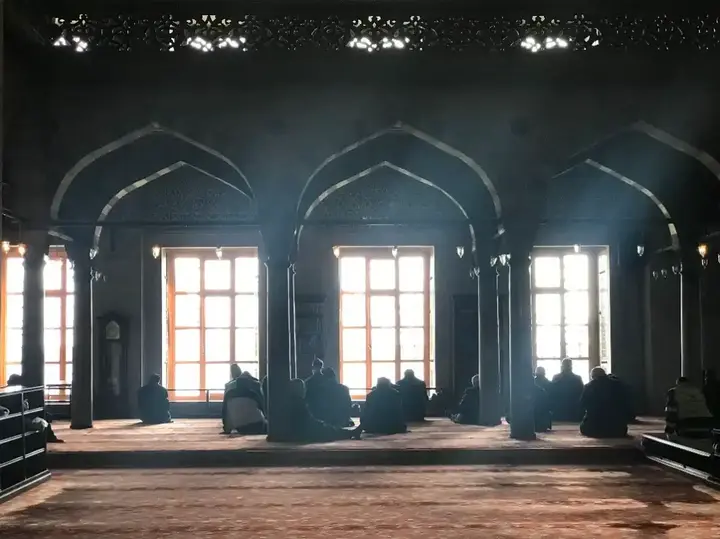
The Saudi citizen eats dates and coffee, then wears his Eid clothes, wears oud, and then goes to perform Eid prayers in the mosque. Listening to the Eid sermon and Eid prayers are habits that are etched in the memories of children and adults. The children then carry baskets and distribute dates and sweets to worshippers. Worshippers exchange Eid greetings with the famous phrase "May you celebrate it again and again", which means the call to stay for many years and celebrate Eid again and again, it is a call for goodness, blessing and health.
Many families choose to have their children wear traditional Saudi dress before going for Eid prayers and after returning from the mosque, children are allowed to exchange it for the new Eid uniform. It is the Saudi citizen's way of transmitting the civilization and culture of his society through generations and keeping traditions alive in the minds of children.
Some old neighborhoods follow the custom of gathering all the residents of the neighborhood in the square in large prepared tables and sharing a meal together. All families prepare homemade food and start eating together in an intimate atmosphere and invite passers-by and visitors to join them as well.
3- Sacrifice and eating Eid breakfast
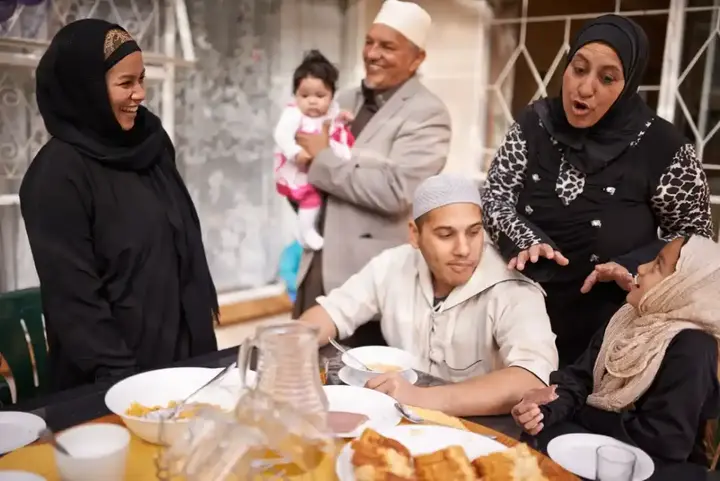
If Eid is Eid al-Adha, the family gathers to slaughter the sacrifice and distribute it to those who deserve it, and part of it is cooked for the people of the house. After the slaughter of the sacrifice, the family members gather on one table for a special breakfast and a special table specially prepared on the occasion of the celebration of Eid. Family members enjoy an atmosphere of joy and exchange conversations and laughter. It is a time to get rid of worries and welcome the happy Eid with a satisfied and happy heart.
4- Exchange of visits and greetings
One of the most common customs in Arab countries is the exchange of visits and greetings. Saudi citizens go out to visit family and friends, exchange Eid greetings, call for health, longevity and other good wishes. These greetings are not without Eid hospitality from cakes with dates, dibaza, maamoul and dates stuffed with nuts, caramel or chocolate, and hospitality is provided with coffee and Eid chocolate decorated with drawings and phrases expressing Eid. The ladies also gather to exchange greetings and festive joy in a private session at a family member's home.
The family then meets in the house of the head of the family in particular, as he lived in another city, and shares lunch of cooked sacrificial meat in special dishes such as manda, marqouq, kabsa, maraheef, musabib and mash on Eid al-Adha. On Eid al-Fitr, they cook arika, mabthoth, noodles, masoub and saqou, which reinforces family bonding, kinship and other Arab traditions that aim primarily to preserve family unity and cohesion.
5- Hiking
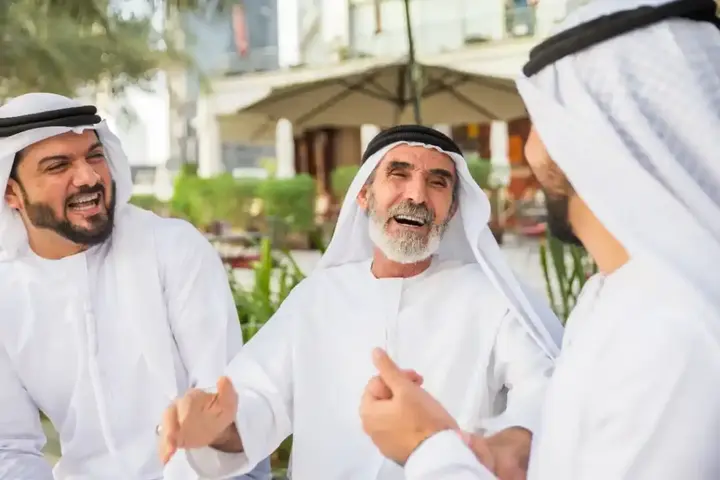
After performing prayers, which are the religious duty, visiting the family and sharing Eid food, which is the prisoners' duty, this is followed after the afternoon prayer, going out for a walk in public places and squares and completing the celebration of Eid. Rest houses with distinct views have recently spread where the Saudi citizen can visit them and enjoy recreational and sports activities. Also visit commercial centers, visit cafes or shop, take advantage of holiday offers, and buy eastern and western sweets. There is also a picnic on the beach and enjoying the various holiday celebrations and fireworks that go off in the sky of some cities such as Riyadh, which is one of the picnics that do not cost much and are suitable for picnic for large families. Since the holidays last for days in Saudi Arabia, the Saudi citizen can enjoy different activities daily and create unforgettable memories with family and friends. Some citizens prefer to spend the duration of the holidays by visiting other countries such as Malaysia or Egypt and enjoying celebrations with other Islamic cultures or traveling to a different and new place such as Italy, France or other countries with different cultures.
![]()
5 ways to change your mindset today
Only 8% of people actually reach their goals, and what sets them apart is their powerful mindset. Instead of chasing new skills, start by flipping negative thoughts and setting small, achievable goals. Massive change begins with consistent tiny steps—and yes, you can train your mind for success. more- ADVERTISEMENT
![]()
The solar system had nine planets. Maybe he's still doing it? Here's the latest space news today
Pluto’s “demotion” in 2006 marked the start of an exciting new chapter in space discovery, revealing a growing family of dwarf planets and pointing toward a possible mysterious ninth planet. With powerful tools like the James Webb Telescope, we’re closer than ever to uncovering strange new worlds—even beyond our solar system. more- ADVERTISEMENT
![]()
How to behave in a world of professional chaos: a guide to thriving amid uncertainty
Professional chaos can be your stepping stone to growth—embrace change, stay curious, build resilience, and nurture a flexible mindset. Surround yourself with a strong network, seek advice, and don’t forget to take care of yourself. Chaos isn’t the end—it’s the start of something new. more- ADVERTISEMENT
![]()
Success Guide – How to turn your presentation into an exciting story?
Success Guide – How to turn your presentation into an exciting story? more- ADVERTISEMENT
![]()
Due to lack of funding, old NASA may be on an unsustainable path
Underfunded, aging NASA may be on unsustainable path more- ADVERTISEMENT
![]()
The best professional advice (in life) one can get
Choosing the right career can be tough, but combining self-assessment, research, and goal-setting with expert guidance makes the path clearer. Tools like MBTI and career mentors help align your job with your values, making your professional journey both successful and fulfilling. more- ADVERTISEMENT
![]()
In the age of private spaceflight, who can become an astronaut?
Becoming an astronaut used to be only for elite military pilots, but now private companies like SpaceX and Blue Origin are sending people to space—some even win seats through contests. While space travel is still rare and expensive, the dream is slowly becoming more reachable for regular people. more- ADVERTISEMENT
![]()
Elon Musk's Brain Chip - Facts and Oddities
Elon Musk's Neuralink has stirred buzz with its brain chip, Brain-Link, aiming to let humans control devices with their minds. Though still experimental, early tests show promise—like a paralyzed person using it to control a computer—while sparking ethical concerns over privacy, safety, and equality. more- ADVERTISEMENT
![]()
If we look at Olympic stadiums since 1896, are they still in use?
Looking back at the Olympic venues since 1896 – are they still in use more- ADVERTISEMENT
![]()
5 golden tips to organize your time
Feeling overwhelmed by endless tasks? A weekly schedule can help! Prioritize important duties, delegate when possible, and don’t forget breaks—they recharge you. Limit screen time, shop smart with a list, and learn to say no when needed. Small habits make a big difference in managing time with ease. more- ADVERTISEMENT