

Giant volcanoes on Earth are waking up



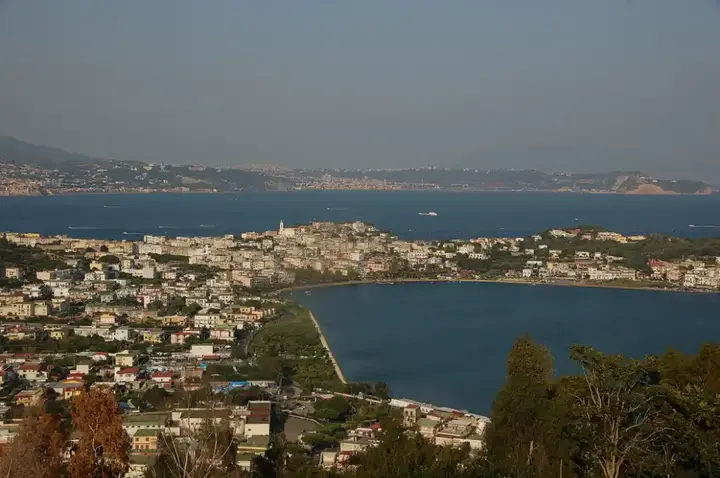
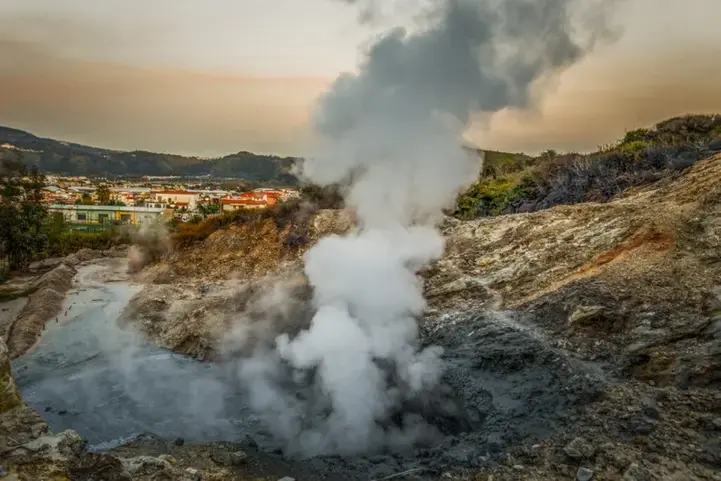
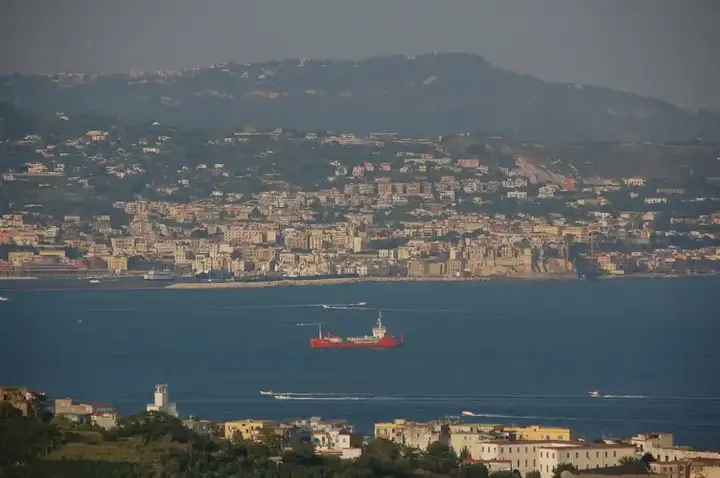
A volcano appears to be moving near the Italian city of Naples, and this has nothing to do with the impending existence of Mount Vesuvius. Another volcano is lurking nearby, one that is very difficult to spot, but may be more dangerous than its cousin next door. It is becoming increasingly turbulent. Instead of forming a peak, Campi Flegri features a giant crater 13 kilometers (8 miles) wide, or caldera, formed after massive eruptions during prehistoric times. It is the closest thing we have to a giant volcano in Europe and is located directly under the coastal city of Pozzoli, just west of Naples.
Show key points
- Campi Flegrei, a massive caldera near Naples, Italy, is showing signs of increased activity and may pose a greater threat than Mount Vesuvius.
- Unlike typical volcanoes with peaks, supervolcanoes like Campi Flegrei and Yellowstone have vast underground magma chambers and form wide craters.
- Yellowstone, Long Valley in California, and Toba in Sumatra are among the world's most dangerous supervolcanoes due to their ability to create massive global disruptions.
- ADVERTISEMENT
- A supervolcanic eruption can release thousands of cubic kilometers of magma, potentially wiping out everything within a 100-kilometer radius and causing global cooling.
- Studies show that a buildup to a massive eruption can take less than a year, as was the case with Long Valley 750,000 years ago.
- The magma beneath supervolcanoes stays molten due to constant heat and fresh magma inflow, which allows the crust above to swell without immediately erupting.
- Despite their rarity, supervolcanic eruptions represent a substantial long-term threat, making disaster preparedness and awareness critically important.
Restless giants
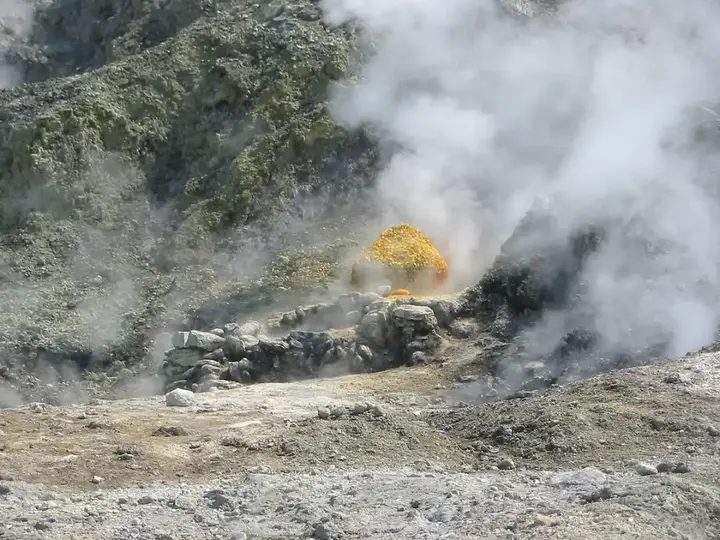
The Campi Flegre volcano may erupt in the coming months or years, or it may return to its slumber. But it is just one of a number of restless volcanic giants across the planet, some of which pale in size and strength to Naples in terms of the size and power of previous eruptions. Among these giants, Yellowstone volcano is the most famous giant and rarely comes out of the news. The earth rises above and falls, and small earthquakes periodically shake the area. The volcano, which has been the focus of several television documentaries and at least one drama, takes center stage whenever there is debate about where the next giant eruption will tear apart the Earth's crust. Yellowstone has erupted three times in the last 2.1 million years, most recently 640,000 years ago, each time leaving the caldera to dwarf those beneath Pozzoli, the largest of which was more than 80 kilometers (50 miles) wide. Formed in a massive eruption 750,000 years ago, Caldera Long Valley in eastern California has also been turbulent since 1980, and has been recognized by the U.S. Geological Survey as a very significant threat. Yellowstone and Long Valley are two of about 20 volcanoes known to be the source of massive volcanic eruptions in the past. That is, explosive explosions that spew at least 1,000 cubic kilometers (240 cubic miles) of magma in the form of ash, rocks, and debris. Other volcanoes include Taupo in New Zealand and Toba in Sumatra. There's a lot we know about supervolcanoes, most notably that their largest eruption is capable of wiping out everything within a radius of at least 100 kilometers (62 miles), while the vast amounts of sulfur gases rising into the stratosphere can trigger bouts of dangerous global cooling, known as volcanic winters.
Recommend


swollen with magma
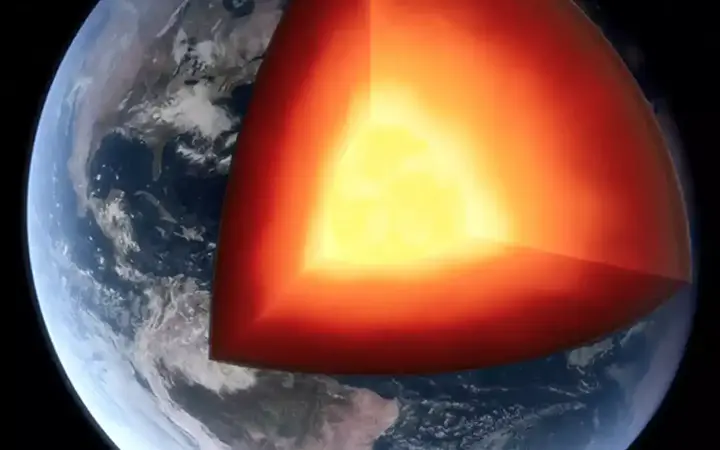
It feels like giant volcanoes are beginning to reveal more of their secrets, and de Silva and his team have uncovered many of them using an approach he called "supervolcano forensics." The massive magma body beneath the giant volcano is able to remain largely molten because fresh magma is constantly introduced into it from below. The reason magma does not erupt in small bursts is that the enormous amount of heat generated by magma keeps the surrounding rocks flexible. This means that the crust above can swell to accommodate new magma, but it does not break (as if it were colder and brittle), so the paths do not open easily to the surface. However, eventually, once the magma body becomes so swollen that it is between 10,000–100,000 cubic kilometers (2,400–24,000 cubic miles) in volume, the crust above becomes unstable. Circular cracks develop on the surface and spread downward until they intersect the magma body, at which point all the lava is released. The central mass of the crust determined by the circular faults pushes down under the action of gravity, acting according to De Silva like a piston, pushing magma upwards through the cracks and pushing it outward at supersonic speeds, and with tremendous violentness, from multiple locations along the cracks. Eventually, the central mass of the crust stops falling, ending the eruption and leaving behind a volcano crater.
Is it time to start worrying?
Since everything about giant volcanoes is so huge, you might think that the massive eruption buildup could take much longer. However, research conducted in Long Valley suggests that the accumulation of its largest eruption, about 750,000 years ago, may have taken less than a year. From a disaster preparedness point of view, this is very bad news, not least because a massive explosion could have a tremendous impact on society and the global economy. The eruption of at least 2,800 cubic kilometers (671 cubic miles) of ash, debris and gas from the Toba volcano in Sumatra about 74,000 years ago led to several years of extreme cooling, which, if it happened today, would likely destroy crops worldwide. Having less than 12 months to prepare for such an event would make it extremely difficult to put in place the necessary measures for food storage and rationing, which would be required to minimize the impact. But realistically, do we need to worry about a massive volcanic eruption in the near future? After all, these eruptions are extremely rare. This is a long-term medium, so there can easily be clusters of massive volcanic eruptions in time, separated by much longer periods without any of them.
![]()
Shocking fact: the moon is moving away from the earth!
The Moon is slowly drifting away from Earth—about 3.8 cm each year—due to tidal friction. This subtle shift has been proven through laser technology since 1969. While it won't escape Earth’s gravity, the distancing affects Earth's rotation, making days longer and altering tides and seasonal temperatures. more- ADVERTISEMENT
![]()
Golden hydrogen can change the course of the globe
Golden hydrogen, naturally formed deep underground, offers a clean, carbon-free energy source. It's abundant, renewable, and doesn't emit harmful gases, making it a game-changer for sustainable energy. Scientists are using AI to detect surface markers pointing to its presence, opening new frontiers in the search for eco-friendly fuel. more- ADVERTISEMENT
![]()
How can I stop wasting time?
Distractions like phones and social media eat up your time. Create routines, set priorities, and work in focused time blocks. Keep your phone silent, avoid multitasking, and believe in yourself to overcome procrastination. Small changes can make your days much more productive. more- ADVERTISEMENT
![]()
Career path in the age of technology: strategies for choosing the right specialty
Technology is reshaping careers, making it vital to align personal passion with future trends. Choosing the right major now demands strategic planning, continuous learning, and adapting to rapid changes. Fields like AI, cybersecurity, and data science offer great promise for those ready to embrace innovation and flexibility. more- ADVERTISEMENT
![]()
How to learn German for free in 6 months
Learning German opens doors to job and study opportunities in Germany, Austria, and Switzerland. With dedication—three hours a day—you can reach intermediate level in six months. YouTube channels like Deutsch mit Mira, German with Mr. Shehata, and Khaled Bozan make learning fun and accessible for everyone. more- ADVERTISEMENT
![]()
How food and pH affect the action of drugs in the body
How food and pH affect the action of drugs in the body more- ADVERTISEMENT
![]()
Are we living in the most peaceful era in history?
Western Europe may enjoy historic peace, but much of the world still faces war and unrest. While today's crime rates are lower, life in the past held a quiet beauty—slower, simpler, and with deep human connection. Modern life may be safer, but not necessarily more peaceful. more- ADVERTISEMENT
![]()
Unexplained phenomena - a list that drives you crazy!
Marfa lights, glowing mysteriously in Texas deserts, and intricate crop circles bent into fields with no clear cause, both baffle scientists and spark theories from the natural to the supernatural. The Bermuda Triangle, too, remains a hotspot of intrigue, with ships and planes vanishing, leaving only questions and fascination behind. more- ADVERTISEMENT
![]()
A piece of the earth's crust is missing, and scientists are discovering its whereabouts!
A piece of the earth's crust is missing, and scientists are discovering its whereabouts! more- ADVERTISEMENT
![]()
Lebanon's basketball team's success story despite economic turmoil
Lebanon’s basketball scene is thriving, with its national team and clubs like Riyadi and Hikmeh making waves internationally. Despite economic struggles, passionate support from the Lebanese diaspora keeps the sport alive, turning basketball into a powerful symbol of national pride and unity across the country and its communities abroad. more- ADVERTISEMENT