

Things You Probably Didn't Know About Roman Wrestlers



Not all gladiators were brought to the arena chained. While most of the first fighters were enslaved peoples and people who committed crimes, inscriptions on the graves show that by the first century CE, demographics began to change. Tempted by the excitement of battle and the roar of the crowd, dozens of free men began signing voluntary contracts with gladiators' schools in the hope of winning glory and prize money. These independent warriors were often desperate men or battle-skilled former soldiers, but some were upper-class nobles, knights, and even senators eager to show their warrior lineage.
Show key points
- Not all gladiators were enslaved, as many free men willingly joined gladiator schools seeking fame and fortune by the first century CE.
- Gladiator battles originally served as blood-soaked funeral rites meant to honor and purify the souls of elite Romans.
- Contrary to popular belief, gladiatorial combat did not always end in death and often followed strict rules, with referees stepping in to protect injured fighters.
- ADVERTISEMENT
- The famous "thumbs down" gesture may not have meant death, as ancient sources suggest various hand signals and cries determined a gladiator’s fate.
- Gladiators were divided into specialized categories based on fighting style and weaponry, such as the net-wielding retiarius or the chariot-riding essedarius.
- It was uncommon for gladiators to fight animals; that brutal task was usually performed by specially trained hunters called venatores or bestiarii.
- Roman emperors increasingly used grand-scale gladiator games and animal hunts as political tools to gain popularity and appease the masses.
1. They were not always enslaved.
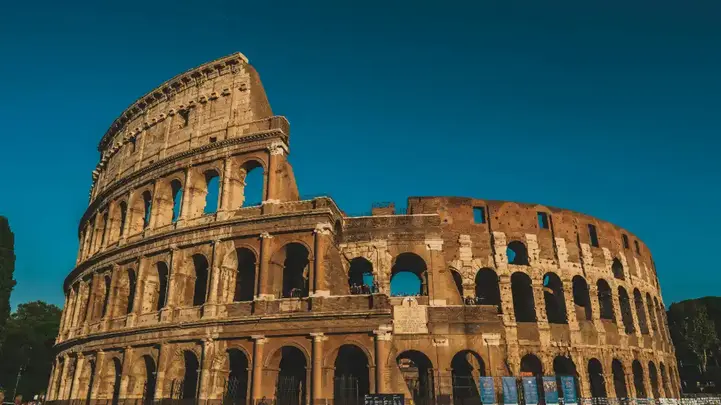
Not all gladiators were brought to the arena chained. While most of the first fighters were enslaved peoples and people who committed crimes, inscriptions on the graves show that by the first century CE, demographics began to change. Tempted by the excitement of battle and the roar of the crowd, dozens of free men began signing voluntary contracts with gladiators' schools in the hope of winning glory and prize money. These independent warriors were often desperate men or battle-skilled former soldiers, but some were upper-class nobles, knights, and even senators eager to show their warrior lineage.
Recommend


2. Gladiator battles were originally part of the funeral ceremony.
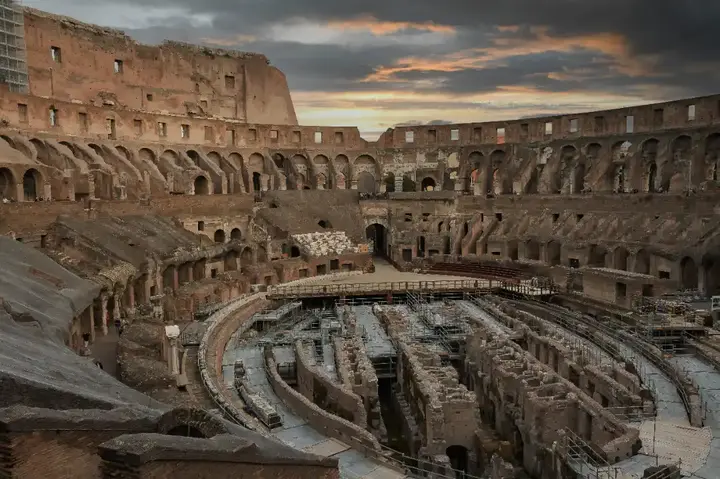
Many ancient historians described the Roman Games as imported from the Etruscans, but most historians now claim that gladiator battles began as a bloody ritual held at the funerals of wealthy nobles. When distinguished aristocrats died, their families held matches between slaves or sentenced prisoners as a kind of apocalyptic eulogy for the virtues a person had shown in life. According to Roman writers Tertullian and Festus, since the Romans believed that human blood helps purify the soul of a deceased person, these competitions may serve as a primitive alternative to human sacrifice. The scope of funeral games increased later during the reign of Julius Caesar, who organized matches between hundreds of gladiators in honor of his deceased father and daughter. The performances proved to be very popular, and by the end of the first century BC, government officials began hosting state-funded games as a way to curry favor with the masses.
3. They did not always fight to the death.
Hollywood movies and TV shows often portrayed wrestling matches as bloody for everyone, but most battles were conducted according to fairly strict rules and regulations. Competitions were usually one-on-one combat between two men of similar size and experience. The referees were watching the match and might stop the fight once one of the participants was seriously injured. The match could end in a draw if the audience was bored with a long and protracted battle, and in rare cases, both warriors were allowed to leave the arena with honor if they put in an exciting show to the audience. Because wrestlers were tasked with sheltering, feeding and training, their organizers hated to see them killed unnecessarily. Perhaps the trainers taught their fighters to wound, not kill, and perhaps the fighters took it upon themselves to avoid seriously harming their fellow guns. However, the life of a gladiator was usually brutal and short. Most did not live more than their mid-twenties, and historians have estimated that between one in five or one in ten fights resulted in the death of one participant.
4. Perhaps the famous "thumb down" signal did not mean death.
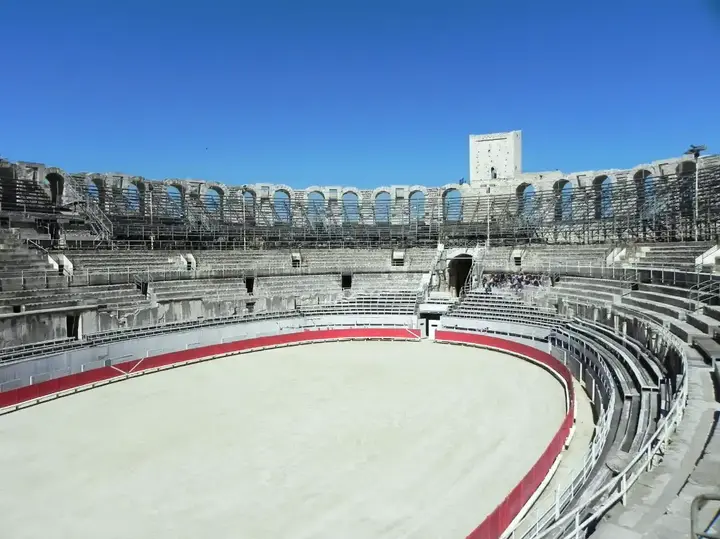
If a wrestler was seriously injured or laid down his weapon in defeat, his fate was left to the hands of the spectators. In competitions held at the Colosseum, the emperor had the final say on whether a slain warrior would live or die, but rulers and battle organizers often let people decide. Paintings and movies often show crowds pointing their thumbs down when they want to eliminate an insulting wrestler, but this may not be accurate. Some historians believe that the sign of death may actually have been a thumb up, while a fist closed with two fingers outstretched, a thumb down, or even a waving handkerchief may have signaled mercy. Whatever signal was used, it was usually accompanied by piercing cries such as "Let him go!" or "Kill him!" If the audience wanted to, the victorious wrestler would deal a horrific knockout blow by stabbing his opponent between the shoulder blades or through the neck to the heart.
5. They were organized into different categories and genres.
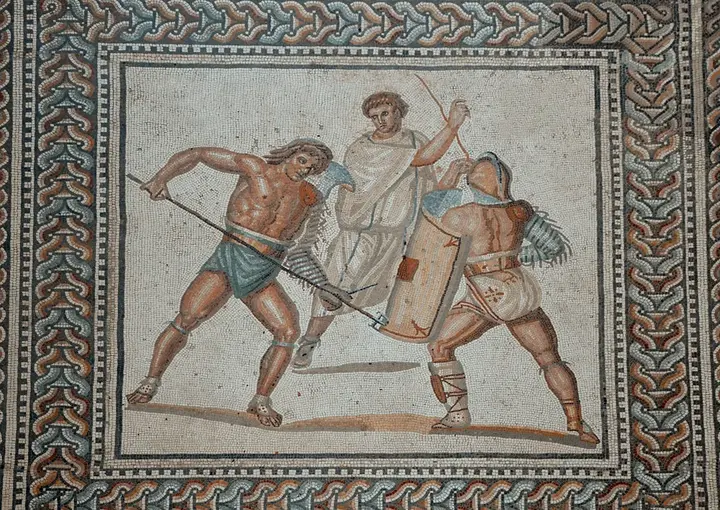
By the time the Colosseum opened in 80 AD, wrestling had evolved from freestyle fights to the death to a well-organized bloody sport. Fighters were placed in categories based on their record, skill level, and experience, and most of them specialized in a particular fighting style and a range of weapons. The most popular were the "thraeces" and "murmillones", who fought with a sword and shield, but there were also "equites", who entered the arena on horseback; the "essedarii", who fought from chariots; and the "dimachaerus", who probably carried two swords at once. Of all the popular types of gladiators, perhaps the most unusual was the "retiarius", which was armed with only a netting and a triangular spear. These warriors were trying to trap their opponents with their net before advancing towards them to kill them, but if they failed, they were left almost completely defenseless.
6. They rarely fought animals.
The Colosseum and other Roman rings are often associated with horrific animal hunting, but it was unusual for gladiators to participate. Engagement with wild beasts was reserved for Venatoris and Pistauri, special classes of warriors who were fighting against everything from deer and ostriches to lions, crocodiles, bears and even elephants. Animal hunting was usually the opening event of the games, and it was not unusual for dozens of unfortunate creatures to be slaughtered in one show. Nine thousand animals were slaughtered during a 100-day celebration marking the opening of the Colosseum, and another 11,000 animals were later killed as part of a 123-day festival held by Emperor Trajan in the second century AD. While most animals were slaughtered simply for sports, other animals were trained to do tricks or even pit them against each other in battles. Wild animals also served as a common form of culling. Convict criminals and Christians were often thrown into dogs, lions and hungry bears as part of entertainment that day.
![]()
Topkapi Palace ... The largest palaces of Istanbul in Turkey
Topkapi Palace, once home to Ottoman sultans, dazzles with over 12,000 porcelain pieces and secretive chambers. Known as the "Palace of Happiness," it’s now a UNESCO World Heritage Site and ranks among Europe's most visited museums, drawing millions into its rich blend of history, culture, and architectural beauty. more- ADVERTISEMENT
![]()
At each moment, there are about 2,000 thunderstorms occurring on Earth.
Thunderstorms are powerful and common, with up to 2,000 happening worldwide at any time. Florida sees the most in the U.S., while Venezuela’s Lake Maracaibo holds the record for lightning. Remember: if you hear thunder, go inside—lightning can be deadly, even from miles away. more- ADVERTISEMENT
![]()
The world of Arab game developers - independent and unknown successes
Arab games developers - Unknown independent Successes more- ADVERTISEMENT
![]()
Time travel through remote Lewis Island in Scotland
Time Travel Through Scotland’s Remote Isle of Lewis more- ADVERTISEMENT
![]()
The Search for the Lost Temple of Artemis: A Journey Through Time and Secrets
Hunting for the Lost Temple of Artemis-A Journey Through Time and Mystery more- ADVERTISEMENT
![]()
Why was Pluto kicked out of the nine planets?
Pluto, once the smallest and most distant planet, was removed from the solar system’s planet list in 2006 due to its tiny size, unusual orbit, and failure to meet new planetary criteria. Yet, Pluto remains a fascinating mystery, full of potential secrets that could reshape our understanding of the cosmos. more- ADVERTISEMENT
![]()
The dark side of remote work that no one talks about: it's not just about wearing sweatpants and flexibility
Remote work may seem dreamy, but loneliness, blurred boundaries, and snack-fueled sofa days can take a toll. You might miss office perks, relationships, and even your boss forgetting you exist. It’s not all bad—but it’s not all good either. Just remember to move, unplug, and please, wear pants on video calls. more- ADVERTISEMENT
![]()
Equations That Changed the World of Physics: A Historical View
Equations That Changed the World of Physics: A Historical View more- ADVERTISEMENT
![]()
Does pregnancy accelerate "biological aging"?
A study in the Philippines found that pregnancy may speed up biological aging in women, with each pregnancy linked to about 4 to 4.5 months of aging. This effect wasn't seen in men, and varied depending on context. Researchers hope these insights might guide future anti-aging treatments. more- ADVERTISEMENT
![]()
The history of the city of Samarra ... Iraq's Hidden Gem
Samarra, once a grand Abbasid capital, still stands with its iconic spiral minaret and rich Shia heritage. Though chosen as the capital of Islamic civilization in 2020, the city remains dusty and neglected, holding untold stories within its historic ruins. more- ADVERTISEMENT