


Equations That Changed the World of Physics: A Historical View



Physics, the fundamental science that seeks to understand nature and reality, has evolved through centuries of human thinking and experimentation. At its core, physics is about discovering the mathematical principles that govern the universe. Over time, some equations emerged that not only deepened the understanding of the natural world, but revolutionized the way of life. These equations, born out of the minds of some of history's greatest physicists, changed the course of science and technology, affecting everything from understanding time and space to the development of modern technology. This article will explore the history of physics, the main milestones in its development, the profound contributions of great physicists, and the equations that have left an indelible mark on the world.
Recommend


1. The birth of physics: from ancient philosophy to Newtonian mechanics.

The origins of physics can be traced back to ancient civilizations where thinkers such as Aristotle and Archimedes began to explore the nature of the material world. However, physics as we know it began to take shape during the scientific revolution in the sixteenth and seventeenth centuries. This period saw the emergence of a new approach to understanding the universe, based on observation, experimentation and mathematical reasoning.
Galileo Galilei's work laid the foundation for classical mechanics by showing the importance of empirical evidence in the study of motion. But it was Sir Isaac Newton who put it all together in his Mathematical Principles of Natural Philosophy (1687). Newton's three laws of motion and the law of universal gravity were not just equations – they were revolutionary ideas that united heaven and earth under one set of physical laws.
Main equation: Newton's law of general gravity.
This equation describes the gravitational force between two masses, m1 and m2, separated by a distance r, where G is the gravitational constant. This equation embodied the idea that the force that governs an apple falling to Earth is the same as that of planetary motion, radically changing the understanding of the universe.
2. The rise of thermodynamics and statistical mechanics.
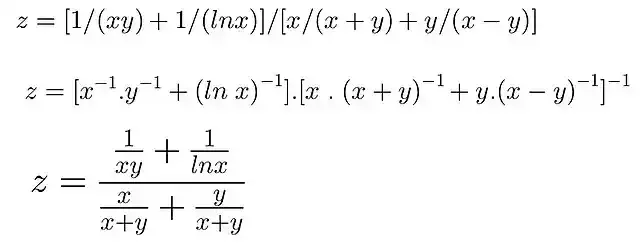
The nineteenth century brought a deeper understanding of energy and heat and their transformations, concepts that were necessary during the Industrial Revolution. The development of thermodynamics and statistical mechanics provided a microscopic and microscopic view of physical sentences respectively.
Major figures such as James Clerk Maxwell, Rudolf Clausius and Ludwig Boltzmann made significant contributions in these areas. Maxwell's equations, in particular, were a unification of electricity and magnetism, which led to the discovery of electromagnetic waves.
Main equation: the second law of thermodynamics (entropy).
The second law states that entropy (chaos) in an isolated system always increases over time. This principle has profound implications for understanding the direction of natural processes and the concept of irreversibility, and plays a crucial role in everything from the drivers to the ultimate fate of the universe.
3. The electromagnetic revolution and Maxwell's equations.
James Clerk Maxwell's work in the mid-nineteenth century led to a set of four equations describing how electric and magnetic fields are generated and interacted with each other and with charges and currents. These equations not only unified the fields of electricity and magnetism, but also predicted the existence of electromagnetic waves, which travel at the speed of light.
These four equations describe how electric (E) and magnetic (B) fields interact with charges (ρ) and currents (J). Maxwell's equations paved the way for modern communication and understanding of light as an electromagnetic wave.
4. The Birth of Relativism: Einstein's Revolutionary Ideas.
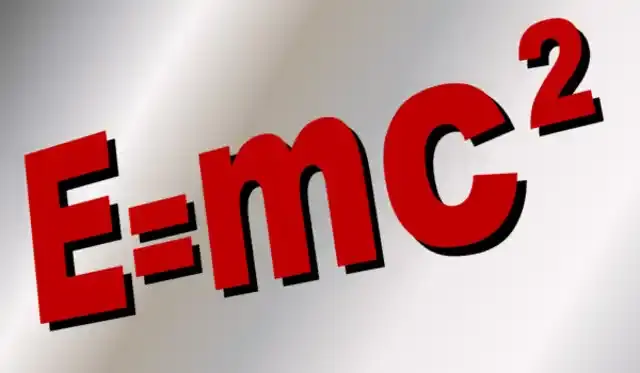
The beginning of the twentieth century saw the emergence of one of the most changeable ideas in physics: Albert Einstein's theory of relativity. This theory revolutionized the understanding of time, place, and gravity. Special relativity, which emerged in 1905, introduced a new framework for physics in the absence of gravity, while general relativity, formulated in 1915, redefined gravity as the curvature of space-time.
Main equation: Einstein's equation for general relativity.
This equation describes how matter and energy (through the stress-energy tensor Tμν) affect the curvature of spacetime (represented by the Rμν Rμν and the gμν metric tensor). This equation provided a new understanding of gravity, predicting phenomena such as the curvature of light due to gravity and the expansion of the universe.
This fundamental equation in quantum mechanics describes how the quantum state of a physical sentence changes over time. The wave function encodes ψ the probabilities of all possible outcomes of a sentence, and the Hamilton operator H^ represents the total energy of the system. The Schrödinger equation is central to the understanding of phenomena at the atomic and subatomic level.
6. Standard model: consolidation of fundamental forces.
In the second half of the twentieth century, physicists developed the Standard Model of Particle Physics, a theory that describes electromagnetic, weak, and strong forces. The work of physicists such as Sheldon Glashau, Abdeslam, and Stephen Weinberg led to the unification of electromagnetic and weak forces in electromagnetic theory, while strong force was described by quantum chromodynamics QCD.
Main equation: Lagranjian Standard Model.
This complex equation captures the interactions between all known particles and fundamental forces (except gravity). This equation describes how particles gain mass through the Higgs mechanism and how they interact via standard bosons. The standard model has been remarkably successful in explaining a wide range of experimental results and predicting new phenomena.
7. Beyond the Standard Model: The Pursuit of a Unified Theory
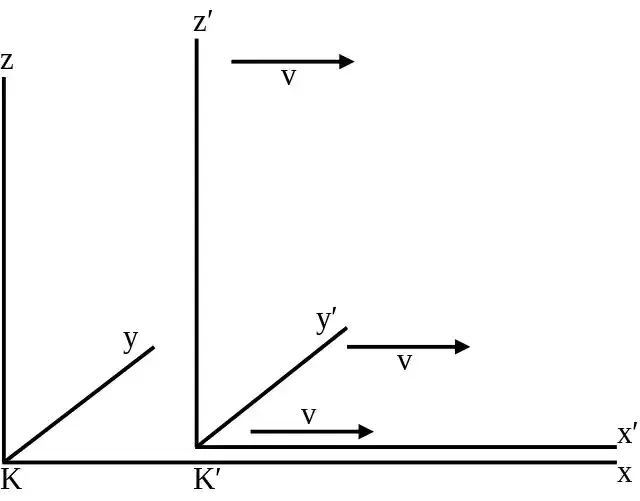
Despite its success, the standard model is incomplete. It doesn't include gravity, and it doesn't explain dark matter or dark energy. The quest for a unified theory that can reconcile general relativity with quantum mechanics continues to be one of the biggest challenges in physics. String theory, quantum cyclic gravity, and other theoretical frameworks are among the main candidate theories, but no definitive theory has yet emerged.
The main concept: the unification of physics.
The search for a unified theory, often referred to as the "theory of everything", aims to describe all fundamental forces and particles in one coherent framework. Although no such theory has been confirmed, the pursuit of standardization has prompted much development in theoretical physics over the past century.
The journey of physics is a testament to the power of human curiosity and mathematical logic. From Newton's laws to quantum mechanics and the standard model, the equations that shaped physics were not just mathematical structures but windows to the basic order of the universe. Each equation represents a leap forward in understanding, with profound implications for technology, philosophy, and humans' place in the universe. As the exploration of the unknown continues, the next equation, which will revolutionize the understanding of the universe, may be on the horizon, just waiting for our view of the universe to be redefined again.
![]()
6 Things Expats Wish They Knew Before Moving to Hong Kong
Hong Kong’s street food scene is full of delicious surprises—think egg pancakes, wonton pasta, and authentic fish balls at wallet-friendly prices. If you’re feeling fancy, don’t miss the city’s Michelin-starred dim sum spots. more- ADVERTISEMENT
![]()
Why do most restaurant and café projects fail?
Why Most Cafes & Restaurant Projects Fail? more- ADVERTISEMENT
![]()
LI-FI: where the Internet travels at the speed of light
LI-FI, created in 2011 by Prof. Harald Haas in Scotland, uses light instead of radio waves for data transfer. It offers ultra-fast speed and strong security, making it ideal for sensitive environments. Despite its promise, challenges like high costs and dependency on constant lighting limit its widespread use. more- ADVERTISEMENT
![]()
What is the coldest place in the solar system?
The coldest natural spots in our solar system might be double-shaded craters at the Moon’s south pole, with temperatures around 25 K—colder than Pluto. These craters avoid all sunlight, trapping extreme cold for billions of years and possibly preserving water ice and other volatile compounds. more- ADVERTISEMENT
![]()
Surprising fact: The environmental impact of beef outweighs cars
Surprisingly, beef production harms the environment more than cars, mainly due to cows’ methane emissions and the massive resources needed to raise them. From deforestation to acid rain, the impact is huge. Cutting down beef consumption, even slightly, makes a big difference for the planet. more- ADVERTISEMENT
![]()
How to create a small online store for online sales?
Starting an online store is a smart move to sell your products and reach more people. Begin small, focus on unique items, choose a catchy store name, and use easy platforms like Shopify or Wix. Good design, secure payments, solid marketing, and great service are key to your store’s success. more- ADVERTISEMENT
![]()
Sacred places in the Andes: 7 secrets of Machu Picchu
Machu Picchu isn't truly the lost city of the Incas, and it's not as forgotten as once believed—locals were living there when rediscovered. Many marvels are hidden underground, and if you're up for a sweaty climb, you can skip the pricey bus and enjoy epic views for free. more- ADVERTISEMENT
![]()
How to price your product? Best Pricing Strategies
Finding the right price for your product is key to profit and customer satisfaction. Try different strategies—like cost-based, value-based, or psychological pricing—and stay flexible. There's no one-size-fits-all method, but aligning your price with customer needs and market factors is the smart move. more- ADVERTISEMENT
![]()
The most expensive paintings that you could have painted yourself
The Most Expensive Paintings You Probably Could Have Painted Yourself more- ADVERTISEMENT
![]()
Real books prominent in self-development - including by an Arab specialist
Tired of theory-heavy self-help books? Try these three practical ones instead: Emma Bauer’s guide builds strong human connections with real-life tips, Mohamed Taha’s poetic book inspires change with depth and emotion, and Stéphane Garnier’s fun take shows how cat behavior can teach us joy, confidence, and better relationships. more- ADVERTISEMENT