

The moon is moving away from the earth. Will our day become 25 hours?



Earth and the Moon share a complex and dynamic relationship, evolving over billions of years. One of the most interesting aspects of this relationship is the moon's gradual move away from Earth, and the impact this has on the length of our planet's day. In this article, we show the relationship between these two factors and reveal a cosmic interaction story that goes back to a distant past, to the time when our solar system formed.
Show key points
- The Moon formed about
- 5 billion years ago when a Mars-sized object collided with Earth, ejecting debris that eventually coalesced into the Moon.
- Initially much closer to Earth, the Moon's strong gravitational pull influenced Earth's tides and rotation, leading to shorter days and tidal locking.
- ADVERTISEMENT
- Tidal forces between Earth and the Moon cause the Moon to gradually move away at a rate of about
- 8 cm per year while Earth's rotation slows down.
- Geological and fossil evidence, such as coral growth rings and sedimentary tidal patterns, confirm that Earth’s days have been lengthening over millions of years.
- If current trends continue, a day on Earth could stretch to 25 hours in about 200 million years, with weaker tidal forces due to the Moon's greater distance.
- Changes in the length of the day over time have influenced Earth's ecosystems, driving adaptations in life forms due to altered light and temperature cycles.
- The ongoing evolution of the Earth-Moon relationship illustrates the profound and interconnected dynamics of celestial bodies affecting planetary life and systems.
The phrase Earth and Moon constitute:
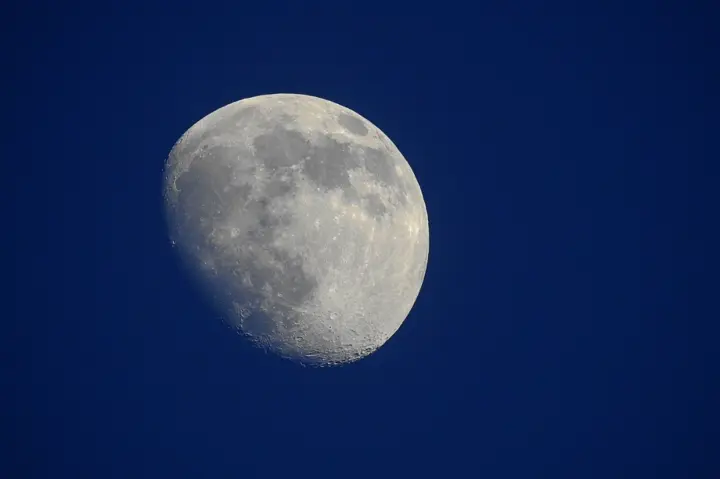
To fully appreciate the current dynamics between the Earth and the Moon, it is necessary to understand their origins. Today's most widely accepted theory of lunar formation is this: About 4.5 billion years ago, a Mars-sized object, often referred to as Thea, collided with Earth in its early days. The enormous energy generated by this collision caused a large amount of matter to be ejected into Earth's orbit, which eventually fused to form the moon. Initially, the Moon was much closer to Earth than it is today, and Earth's days were noticeably shorter, lasting only a few hours. The proximity of the moon caused strong gravitational reactions, leading to the phenomenon known as tidal lock. Over time, these gravitational forces continued to shape the relationship between Earth and its moon, affecting the moon's orbit and Earth's rotation.
Recommend


Tidal forces and moon drift:
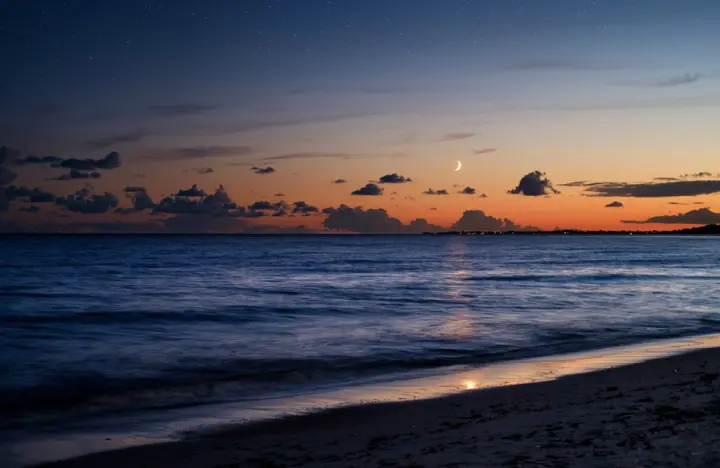
The primary motivation behind the moon's slow retreat from Earth is the tidal forces exerted on each other. The gravitational force of the moon causes Earth's oceans to swell, creating tidal forces. While most of us are familiar with the concept of tides along shores, the effects of these tidal forces extend far beyond ocean movements. As the Earth rotates, it pulls the tidal bulge slightly forward from the moon's orbit. This displacement creates a gravitational force on the Moon, pulling it forward in its orbit. According to Newton's laws of motion, as the moon is pulled forward, it gains energy, making it move into a higher orbit, gradually moving away from Earth at a rate of about 3.8 centimeters per year. At the same time, this process causes the Earth to lose part of its rotational energy, gradually slowing down the Earth's rotation and prolonging the day. This process is slow but measurable, with Earth Day increasing by about 1.7 milliseconds every century. Over millions of years, these small changes accumulate, leading to significantly longer days.
Geological and fossil evidence of the slowing down of the Earth:

Evidence of a slowdown on Earth Day can be found in the geological record. One of the most compelling evidence comes from coral fossils. Coral builds its skeletons with daily growth rings, much like tree rings, which reflect the day-night cycle. By calculating the number of daily loops within an annual growth layer, scientists can estimate the number of days in a year millions of years ago. Studies of 400-million-year-old coral fossils suggest that a year at that time had about 400 days, meaning that each day was only about 21.8 hours long. This discovery is in line with the theory that the Earth's rotation has been slowing down over time. Similarly, other geological records, such as tidal rhythms – sedimentary layers that reflect tidal cycles – also provide evidence of a gradual increase in the length of Earth Day.
The distant future of the Earth and the Moon:
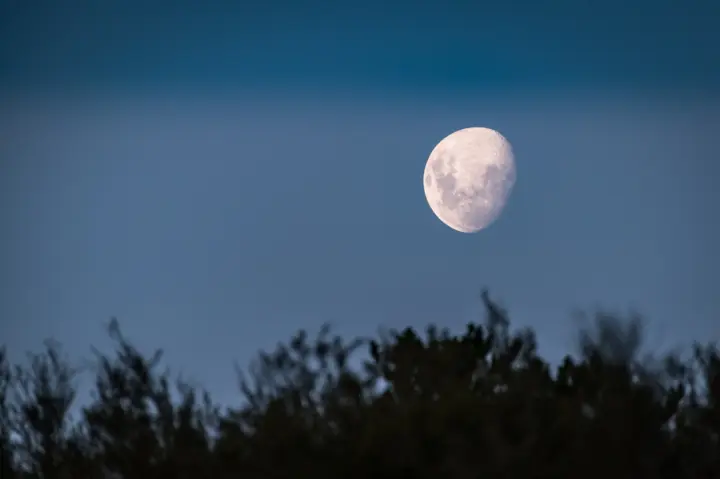
As the moon continues to move away from us, it will have several long-lasting effects on Earth. Chief among these is the continued prolongation of Earth Day. In 200 million years, scientists predict that the length of a day on Earth will reach 25 hours. In addition, as the moon moves away from us, its impact on the Earth's tides will decrease, weakening tidal forces. But the moon's distance from us will not last indefinitely. The Earth and the Moon are in a state known as "tidal balance," where the Earth's rotation period gradually approaches the moon's orbit. In theory, this process could eventually lead to a scenario where Earth becomes tides constrained by the moon, with one side of the earth facing the moon permanently, similar to how the moon is currently tidal constrained by Earth. But this outcome could happen billions of years into the future, and other cosmic events, such as the expansion of the sun to a red giant, are likely to disrupt this equilibrium before it can fully evolve.
Implications for life on Earth:

Gradually prolonging Earth Day has repercussions on the environment and life on our planet. A longer day means longer periods of daylight and darkness, which can affect ecosystems and weather patterns. For example, prolonged daylight may lead to more extreme temperatures, as the planet will have more time to heat up during the day and cool down at night. This change in temperature patterns may affect plant photosynthesis, animal behavior and even the stability of some climates. In the distant past, shorter days likely influenced the evolution of life on Earth. Fast day-night cycles were creating different environmental pressures compared to today's slower cycles. The gradual increase in daylight length over geological time scales may have played a role in the evolution of more complex life forms, as organisms adapted to changing light and temperature conditions.
The end:
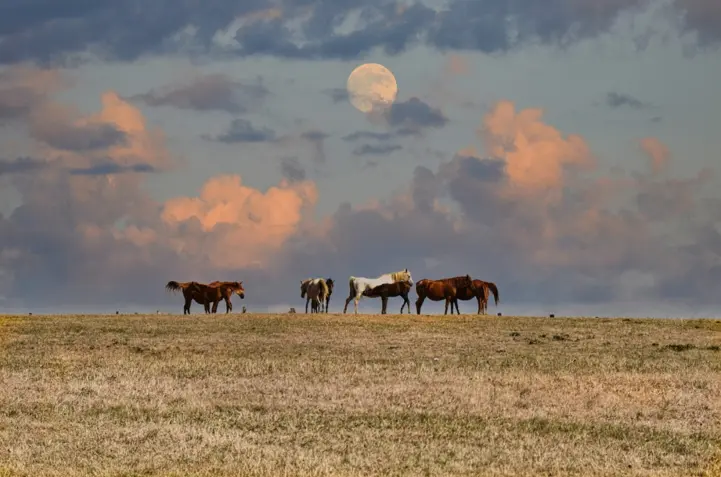
The gradual departure of the Moon from Earth and the prolongation of Earth Day as a result are testament to the dynamic nature of our planet's history. This slow but steady process has shaped the Earth and the moon for billions of years, affecting everything from the length of our days to tidal behavior. As we continue to study this cosmic dance, we gain a deeper understanding of the forces that govern our planet and its place in the universe. The story of the drifting moon is not just a tale of celestial mechanics; it is a reminder of the complex connections between all things in the universe, from the smallest living things on Earth to the vast expanses of space.
![]()
Why are there 24 hours a day and 60 minutes an hour?
Ever wondered why clocks have 12 hours? It traces back to ancient Egyptians and Babylonians who used finger joints to count and stars to track time. Their clever systems shaped the 24-hour day and 60-minute hour we still use today. Time, it turns out, is a gift from history! more- ADVERTISEMENT
![]()
How to price your product? Best Pricing Strategies
Finding the right price for your product is key to profit and customer satisfaction. Try different strategies—like cost-based, value-based, or psychological pricing—and stay flexible. There's no one-size-fits-all method, but aligning your price with customer needs and market factors is the smart move. more- ADVERTISEMENT
![]()
What is the coldest place in the solar system?
The coldest natural spots in our solar system might be double-shaded craters at the Moon’s south pole, with temperatures around 25 K—colder than Pluto. These craters avoid all sunlight, trapping extreme cold for billions of years and possibly preserving water ice and other volatile compounds. more- ADVERTISEMENT
![]()
Shocking fact: the moon is moving away from the earth!
The Moon is slowly drifting away from Earth—about 3.8 cm each year—due to tidal friction. This subtle shift has been proven through laser technology since 1969. While it won't escape Earth’s gravity, the distancing affects Earth's rotation, making days longer and altering tides and seasonal temperatures. more- ADVERTISEMENT
![]()
The most important job market skills - how to become a graphic designer?
Graphic design is a creative field where your imagination meets visual communication. It’s not just about art—it’s about problem solving, storytelling, and expressing ideas. With the right skills, passion, and patience, you can turn your love for design into a rewarding profession that AI can’t fully replace. more- ADVERTISEMENT
![]()
Alert from the Northern Lights: Sun's activity is at its highest level in 23 years with the Northern Lights
July 2024 saw a surge in sunspots—the most since 2001—boosting chances of stunning Northern Lights shows across North America. A G2 geomagnetic storm is expected this week, possibly lighting up skies as far south as New York and Idaho. Keep an eye out for those glowing waves! more- ADVERTISEMENT
![]()
Motivation: How to Start and Stay Motivated
Motivation: How to get started and staying motivated more- ADVERTISEMENT
![]()
Turkey: The country that heals hearts and steals souls
From Istanbul’s magic to Cappadocia’s dreamy skies, Turkey stirs the soul with ancient wonders, warm-hearted people, and unforgettable beauty. More than a destination, it's a journey through time and emotion that stays with you long after you’ve gone. more- ADVERTISEMENT
![]()
Simple ways to ascertain the nature of the curved ground
You don't need fancy tools or deep science to see Earth's curve—just use your camera, observe buildings, watch ships at sea, enjoy a flight, explore space photos, witness an eclipse, or study ocean tides. These simple experiences reveal the beautiful, curved nature of our planet in creative and exciting ways. more- ADVERTISEMENT
![]()
Negotiation skills for successful personal and practical relationships
Negotiation isn’t just for business or politics—it’s a vital life skill. It’s about finding win-win outcomes using communication, persuasion, and emotional intelligence. Whether you're a parent, partner, or student, mastering this skill strengthens relationships and helps navigate daily challenges with understanding, planning, and strategic thinking. more- ADVERTISEMENT