

Social entrepreneurship: How do your projects make a positive impact on society?



Social entrepreneurship is a driving force for positive change in societies around the world. It seeks to address social and environmental challenges through innovative, viable and scalable solutions, with a focus on achieving a sustainable positive impact on society, along with sometimes financial profit.
Show key points
- Social entrepreneurship uses innovative and sustainable business models to tackle social and environmental challenges while often generating financial profit.
- It differs from traditional entrepreneurship by prioritizing social impact along with financial sustainability, making a tangible contribution to community development.
- Through job creation, especially among marginalized groups like youth and low-income individuals, social entrepreneurship helps fight unemployment and social exclusion.
- ADVERTISEMENT
- It promotes economic development and resilience by attracting investment and fostering new opportunities within underserved sectors.
- Social entrepreneurship contributes to environmental protection by promoting the sustainable use of resources and championing eco-friendly practices.
- In the Arab world, there is growing interest and government support for social entrepreneurship, though challenges such as limited funding and low awareness persist.
- By empowering communities, encouraging innovation, and reviving cultural heritage, social entrepreneurship offers a promising path toward a fairer and more sustainable future.
It is a powerful tool for real positive change in the world. Through their treatments, they create jobs, promote economic development, and contribute to a better future for all.
What is social entrepreneurship?

Social entrepreneurship is defined as an approach that combines entrepreneurial initiative and innovation, along with business principles and a spirit of social responsibility to address social and environmental issues. Social entrepreneurs aim to create positive social value while achieving financial sustainability.
Recommend


Social entrepreneurship is defined as the practice of creating businesses that pursue social and environmental goals, as well as make a profit. Social entrepreneurs differ from traditional entrepreneurs in that they not only focus on maximizing profit, but also measure the positive impact of their projects on society.
How does social entrepreneurship affect society?
Make a profound impact on communities by:
Job creation: Social projects contribute to the creation of new job opportunities, especially in marginalized groups in some societies such as youth, women and low-income individuals.
Promoting economic development: Social entrepreneurship stimulates economic growth – especially domestic and global – by attracting investments and creating new business opportunities in economic sectors.
Addressing social challenges: offers innovative solutions to a wide range of social challenges, such as poverty, access to education, healthcare, and environmental protection.
Improving the quality of life: contributes to improving the standard of living and providing basic services to individuals.
Promoting sustainability: focuses on the sustainable use of resources and the protection of the environment.
Empowering local communities: Contributes to the empowerment of local communities by involving them in identifying their needs and developing solutions for them.
Community capacity building: contributes to building the capacities of community members and enabling them to participate in development.
Encouraging innovation: The social entrepreneurship ecosystem stimulates innovation and the development of new solutions to social challenges.
What are the benefits of social entrepreneurship?

Social Impact: Achieve tangible benefit to society by addressing social challenges and improving the quality of life. It contributes to reducing the gap between rich and poor and promoting social justice.
Economic benefit: contributes to the development of the local economy and the creation of new job opportunities.
Environmental benefit: focuses on sustainable resource use and environmental protection.
Ethical benefit: Promotes ethical values and principles by working to bring about positive change.
Examples of social entrepreneurship projects:

- Educational projects: providing educational opportunities for children in disadvantaged areas.
Health projects: providing health care services at reasonable prices.
Agricultural projects: developing sustainable agricultural practices and improving food security.
Renewable and clean energy projects: providing clean and sustainable energy to communities.
Environmental projects: protecting the environment from pollution and promoting sustainability.
Does social entrepreneurship have a real role in our Arab society?

Yes, there has been significant growth in this trend in recent years, with major Arab countries such as Egypt, Saudi Arabia, and the UAE encouraging the public and private sectors to do so. This is to bring about economic and social growth that goes hand in hand with significant economic growth.
For example, there are social entrepreneurship projects that help preserve Arab cultural heritage by reviving traditional crafts and professions. The same applies to encouraging volunteering of all kinds, spreading thought that is concerned with the social and human dimension, as well as financial education, and so on.
However, there are many challenges in the Arab world in general facing this type of entrepreneurship. Chief among them is the lack of funding as social entrepreneurs face difficulty in obtaining funding for their projects. Therefore, there is interest and government support for such projects in some Arab countries. Besides the lack of awareness, because whatever it is in any society, there is still a lack of awareness about the concept of social entrepreneurship and its benefits. The underlying trend often parallels more profitable projects.
Despite these challenges, social entrepreneurship represents great hope for a better future in the Arab world. By supporting social entrepreneurs and providing them with the right environment, we can turn challenges into opportunities and create more prosperous and sustainable Arab communities.
![]()
Tranquility and Beauty in Djerba Island in Tunisia
Djerba, or the "Island of Dreams," enchants with its pristine beaches and rich history. Combining the charm of the Mediterranean, its multicultural heritage, and the spirit of local life, it is an ideal destination for relaxation and adventure amidst breathtaking natural landscapes and authentic cultural experiences. more- ADVERTISEMENT
![]()
Black holes are common, so where are white holes?
White holes, theoretical opposites of black holes, may spit out matter but remain undetected. Though allowed by Einstein’s equations, they defy common physics and lack evidence. Some physicists now wonder if a dying black hole might transform into a white hole—an idea tied to solving deep cosmic mysteries. more- ADVERTISEMENT
![]()
Why is the oud so popular in the Middle East?
The oud, with its deep roots in ancient Persia and warm, resonant sound, inspired the development of Western instruments like the guitar. Its fretless design gives Arabic music a unique depth, and its influence reached Europe through Andalusia, where it shaped musical traditions far beyond the Middle East. more- ADVERTISEMENT
![]()
Many amazing things your nails can tell you
The Many Surprising Things Your Fingernails Can Tell You more- ADVERTISEMENT
![]()
In the age of private spaceflight, who can become an astronaut?
Becoming an astronaut used to be only for elite military pilots, but now private companies like SpaceX and Blue Origin are sending people to space—some even win seats through contests. While space travel is still rare and expensive, the dream is slowly becoming more reachable for regular people. more- ADVERTISEMENT
![]()
Despite software piracy - how to win Microsoft?
Despite Windows piracy, Microsoft thrives with massive profits from OEM deals, cloud services like Azure, Office 365, and products like Xbox and Surface. Its strong brand, user base, and constant innovation keep it ahead, while many users still prefer legal software for security and reliability. more- ADVERTISEMENT
![]()
Artificial Intelligence and the Future of Jobs: How to Adapt in the Age of Automation
Artificial intelligence is revolutionizing how we work and live, creating exciting new job opportunities while reshaping old ones. As AI grows, jobs needing creativity and critical thinking will thrive, while routine tasks may vanish. Embracing continuous learning and adaptability is key to staying relevant in this fast-changing world. more- ADVERTISEMENT
![]()
The 5 oldest ancient human monuments in Egypt
The 5 oldest ancient human monuments in Egypt more- ADVERTISEMENT
![]()
A Simple Guide to Introducing Yourself: Creating an Unforgettable First Impression
Introducing yourself is more than just saying your name—it’s a chance to show personality, goals, and values. By sharing achievements, teamwork skills, and even hobbies, you can make genuine connections and leave a strong impression, all while staying clear, honest, and adaptable in every interaction. more- ADVERTISEMENT
![]()
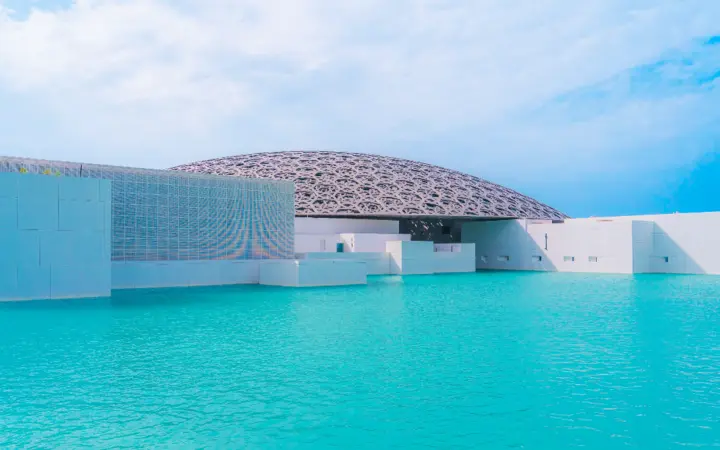
Louvre Art Museum in Abu Dhabi
Louvre Abu Dhabi blends global art with Arab heritage under a stunning dome that filters sunlight into artistic “rays of light.” With its current Post-Impressionism exhibition featuring van Gogh and Cézanne, and outdoor Art Here show for regional artists, it’s a unique, inspiring destination for creative exploration. more- ADVERTISEMENT