

A trip to the Roman ruins of Jerash in Jordan



Of all the Roman ruins and monuments scattered in the Middle East, the ruins of Jerash have a special place among them, as the ruins of Jerash are known as the best Roman monuments preserved outside Italy. The ruins of Jerash are located only an hour from Amman, the capital of the Kingdom of Jordan, about 48 km to the north, and the ruins of Jerash come right after Petra as the second most famous and visited tourist site in Jordan, making it an ideal day trip from Amman.When you visit Jerash, you will not be disappointed, many people think that it is just as impressive as the Roman ruins in Athens or Rome.
Show key points
- Jerash, often considered Jordan’s hidden gem, is home to some of the best-preserved Roman ruins outside of Italy and ranks as the second most visited site in the country after Petra.
- The city of Jerash blends Greco-Roman and Eastern architectural influences, making it a unique archaeological attraction rich in cultural history.
- Highlights of the ancient city include iconic landmarks such as Cardo Street, Hadrian’s Arch, the Temple of Artemis, and the Southern and Northern Theaters.
- ADVERTISEMENT
- With traces of human settlement dating back over 7,500 years, Jerash has seen various civilizations from the Semitic Arabs to the Romans and Byzantines.
- The city is easily accessible from Amman by car or bus, making it ideal for a day trip with convenient transportation options and low travel costs.
- Entry to Jerash’s ruins requires a 12-dinar fee, but includes access to the Archaeological Museum and comprehensive visitor facilities.
- Today, Jerash is a vibrant city standing 600 meters above sea level, inhabited by around 51,000 people and intersected by the historic Gold River.
If you're interested in a different cultural aspect of Jordan, be sure to visit one of Jordan's hidden precious gems.
Recommend


The ancient and modern city of Jerash
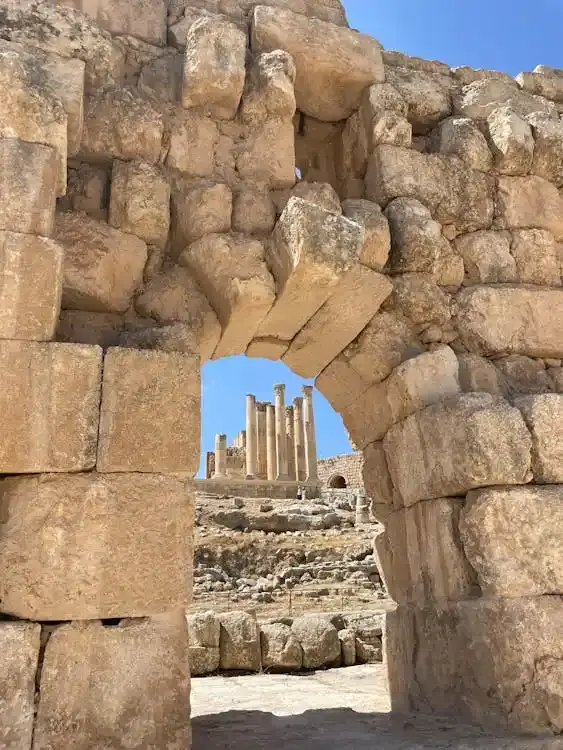
The city of Jerash was once famous, and many names were given to it such as the city of "a thousand columns", and it was called in Greek "Gerasa". The history of Jerash is not limited to the Greeks and Romans, but was inhabited by the first Semitic Arabs and in the first millennium BC and they called it "Jerash", but its history extended much earlier, as some traces indicating a human presence were found in Jerash more than seven thousand five hundred years ago.
In the modern era, the city of Jerash is inhabited by 51,000 people living at an altitude of 600 meters from sea level, and the city is crossed by a river called the "Gold River", which is crossed by some ancient Roman bridges in an attempt to connect the east and west of the city of Jerash in the past.
The ruins of Jerash ... One of Jordan's hidden gems
Jerash is the second most visited place in Jordan after Petra. As one of the best Roman ruins, you will experience a completely different side of Jordan. Although it is one of Jordan's hidden gems, it is also one of the largest and best-preserved sites for Roman architecture in the world. Jerash will be a perfect addition for any type of road trip through Jordan. Characterized by a stunning blend of Greco-Roman and Eastern influences, the ruins are really worth a visit. Explore buildings such as Hadrian's Gate, horse racing or places like the Temple of Zeus or the Temple of Artemis. As you tour the site, you'll also find a really well-preserved theatre. As one of the hidden gemstones, Jerash was one of our highlights during the discovery of Jordan.
The most famous Roman monuments in the ruins of Jerash
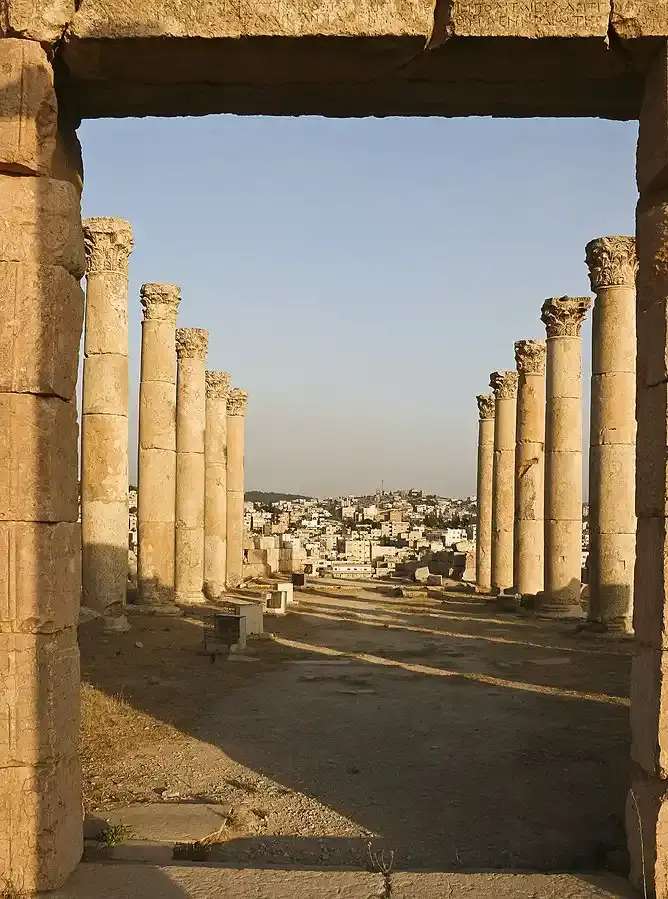
Street of Columns or Cardo:
Cardo Street is the main street in the ancient city of Jerash, with a length of about 800 meters, and includes about a thousand archaeological columns, and this is one of the reasons why the city of Jerash was named the city of a thousand columns in the past.
Southern Theater in Jerash:
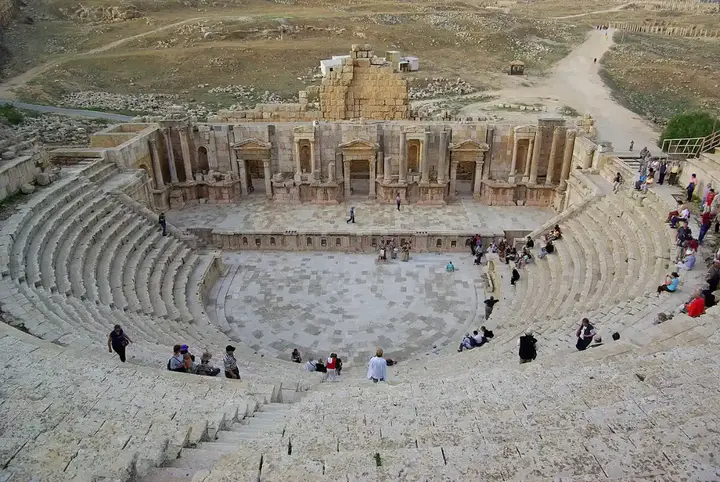
It is the largest theater in the city of Jerash, and was completed in the first century AD, and can accommodate about 3,000 - 5,000 spectators. The Southern Theatre is designed to fit the sound system in all its corners, which continues to function as it was at the time of its creation. Today, it is also used for cultural and artistic events, such as the Jerash Festival, which is held annually in the city.
The North Theater in Jerash:
It was erected in 165 AD after the Southern Theater. Although slightly smaller, it has a capacity of about 3,000 spectators, and it has been designed to fit the sound system at all angles like its predecessor, which still serves as it was at the time of its construction. Today it is also used in cultural and artistic events as before.
North Tetrabelon Building:
It is an ancient Roman building, the word tetrapelle means that it consists of four towers or columns that intersect on four roads .
Nymphs Pathway:
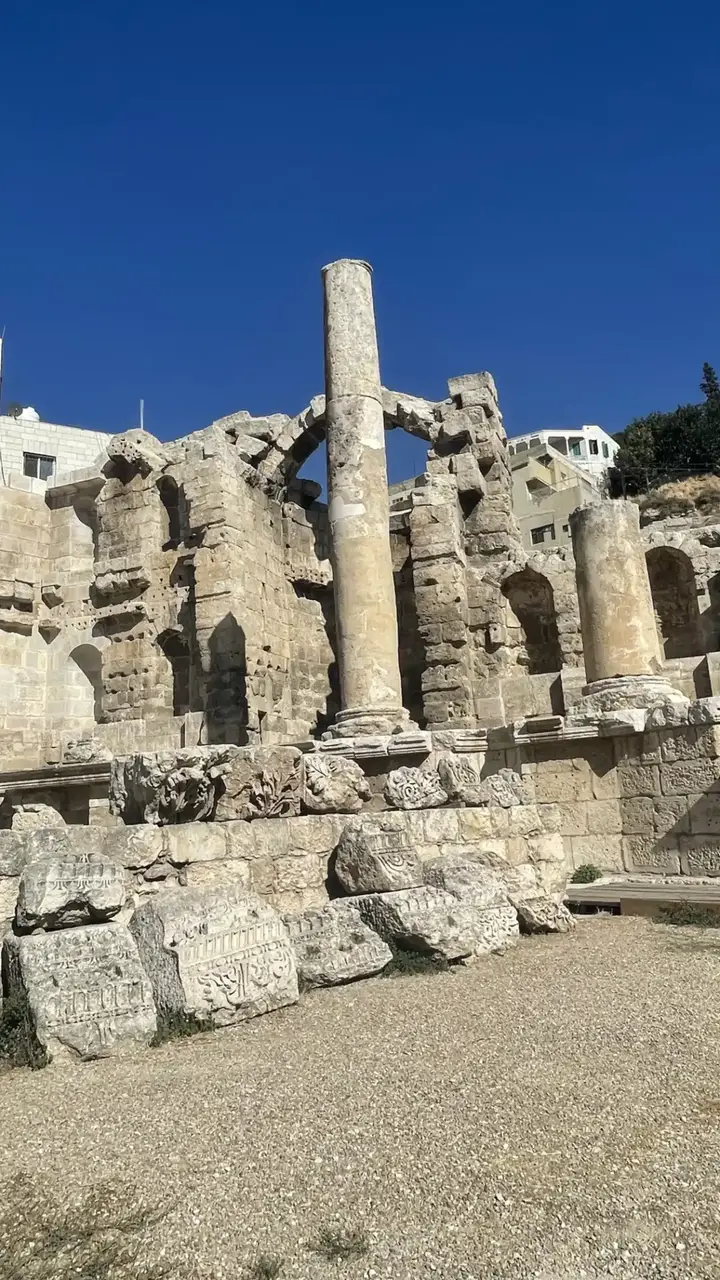
It is a gathering of water fountains erected for water nymphs in the late second century AD. The sabil, known as (Nemphium), which was built in 191 AD, still excites the imagination of visitors and tourists because of its distinctive design, and it is a luxurious two-story marble basin with marble adorning the lower part of its exquisite facades while the top is decorated with wonderfully formed geometric motifs.
Hadrian's Arch (or Hadrian's Gate or Arc de Triomphe):
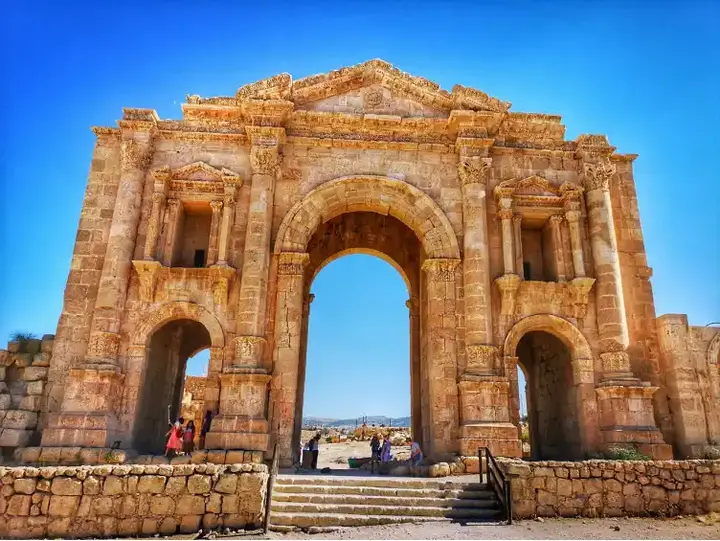
Hadrian's Gate or the Arc de Triomphe is one of the most famous landmarks of the ancient city of Jerash, and it is located on the southern side of the city, and it is a gate with three arches with a current height of 11 meters, but in the course some [Hath] indicate that the height was about 22 meters. Hadrian's Gate was erected to celebrate the visit of the Roman Emperor Hadrian to the city in the winter of 129-130 AD, which was a great event at that time.
Temple of Artemis:
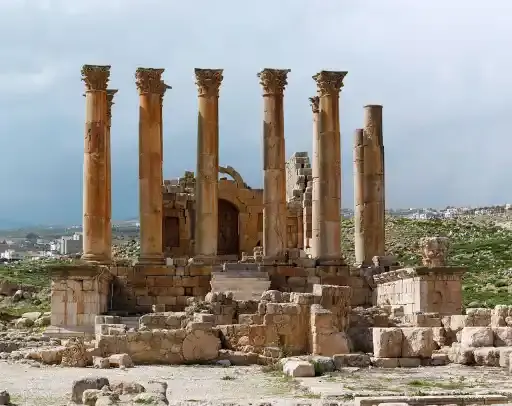
It is also called the temple of the guardian gods of the city, and was erected in the II century AD. The Temple of Artemis is one of the most luxurious and glamorous historical landmarks of Jerash.
Horse Field (Hippodorm):
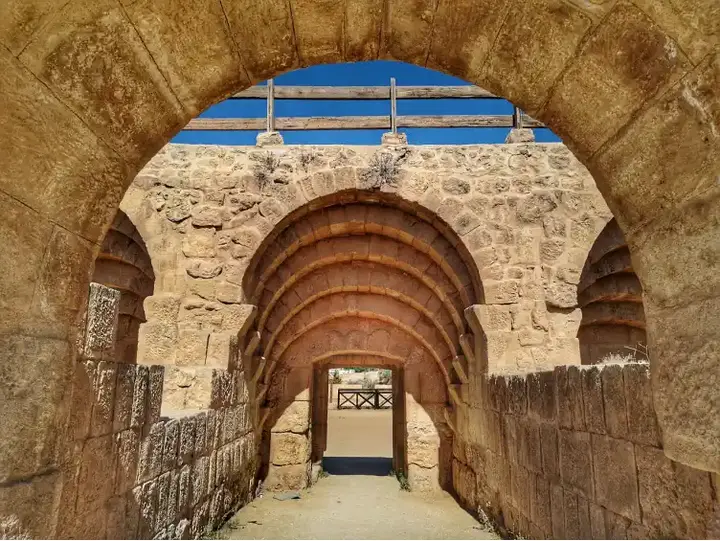
It is originally a horse playground and a Roman circus, built in the archaeological area of Jerash next to Hadrian's Arch, which is in the shape of the letter (U), consisting of two walls and terraces on three sides raised on vaults. In the past, it was used in horse racing and carriages with two or four horses.
Seminar Venue:
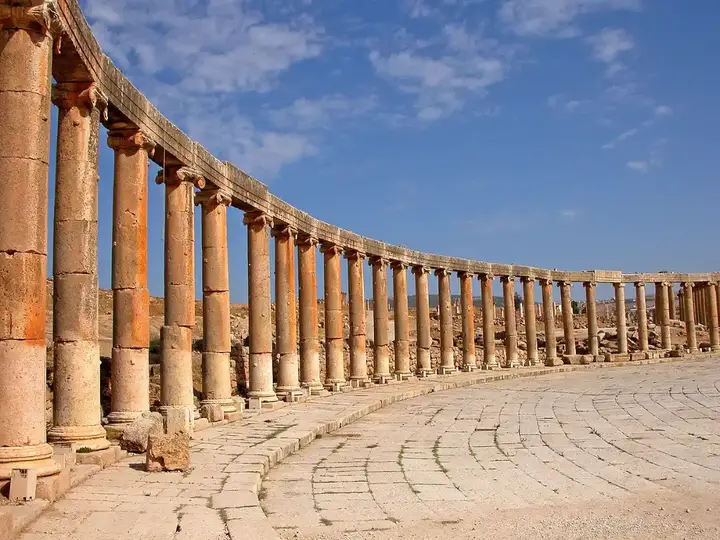
It is an open square in the center of Jerash, it has an oval shape and is surrounded by Greek archaeological columns.
Cathedral with stone gate (formerly Temple of Dionysus):
It is a huge cathedral rich in carved images that captivate the hearts, and it is the most beautiful religious building in Jerash and was originally the temple (Dionysus) Rumi, which was erected in the second century AD and was rebuilt as a Byzantine church in the fourth century AD after the Byzantine control of Jerash.
The two water pools in Jerash:
The two ponds served as the headquarters of the Romans' celebrations of the arrival of spring and one of the main sources of supplying the city of Jerash with water, as its water flows within the ancient city walls, and the Romans built the two ponds to transport water to the heart of the city with a system that includes clay pipes and stone channels and the two pools are surrounded by a stone amphitheater.
Umayyad Mosque in Jerash:
Located on one of the corners of the intersection of the main street El Cardo with the secondary street Dikmanus, the mosque was discovered in 2002 AD, and dates back to the second quarter of the eighth century AD, probably to the reign of the Umayyad caliph Hisham bin Abdul Malik between 724 and 734 AD.
Oriental baths in Jerash:
The city of Jerash embraces inside it the eastern baths, which have witnessed during the past few years great interest from the government in terms of paying attention to the place, as it was developed as part of the tourist city of Jerash, and its floors and squares extending from the Roman bridge to Port Said Street were paved, and a theater overlooking the course of the Gold River was built on its western edge overlooking the course of the Gold River, a theater overlooking those beautiful spacious spaces and on its flank, the facades of the Hashemite Mosque, which was ordered to be built and built during the reign of King Abdullah, were restored.
How to get to Jerash, Jordan
By car
The journey time from Amman to Jerash is just under an hour if you travel by car. During this short car, you will see how the beautiful vast landscapes of Jordan present itself.
By bus
You can also take the bus from Amman's North Station bus station. Bus rides in Jordan are really affordable, and a one-way trip from Amman to Jerash will cost around one dinar.
Jerash entrance fees
When it comes to entering the Roman ruins of Jerash, you will have to pay an entrance fee of 12 dinars. This includes your entrance to the Archaeological Museum. The site opens at 7:30 a.m. and closes at 7:00 p.m.
While entering the site, you pass through a mini-market where you have the opportunity to buy food and drinks and make use of the free restrooms. The Government of Jordan provides all amenities to make your visit to the ruins of Jerash an unforgettable experience.
![]()
Due to lack of funding, old NASA may be on an unsustainable path
Underfunded, aging NASA may be on unsustainable path more- ADVERTISEMENT
![]()
How to deal with difficult people and people with a capricious mood?
How to deal with difficult people and people with a capricious mood? more- ADVERTISEMENT
![]()
Discover the Impossible: Turning Deserts into Dense Forests – Dream or Reality?
Desert greening is turning deserts into lush forests using smart water techniques, solar and wind farms, and fertile soil solutions like pyrogenic carbon. Projects like the Sahara Forest Project aim to fight drought, boost agriculture, and even combat climate change, turning drylands into thriving ecosystems. more- ADVERTISEMENT
![]()
Is the Nile the longest river in the world? Amazon would like the word.
The Nile is the world’s longest river- The Amazon would like a word more- ADVERTISEMENT
![]()
Bermuda Triangle Puzzle
The Bermuda Triangle remains a thrilling mystery filled with tales of vanishing ships, eerie time loss, and ghostly weather. Despite scientific theories and advanced research, the true cause of these disappearances continues to puzzle and intrigue the world. more- ADVERTISEMENT
![]()
A piece of the earth's crust is missing, and scientists are discovering its whereabouts!
A piece of the earth's crust is missing, and scientists are discovering its whereabouts! more- ADVERTISEMENT
![]()
Negotiation skills for successful personal and practical relationships
Negotiation isn’t just for business or politics—it’s a vital life skill. It’s about finding win-win outcomes using communication, persuasion, and emotional intelligence. Whether you're a parent, partner, or student, mastering this skill strengthens relationships and helps navigate daily challenges with understanding, planning, and strategic thinking. more- ADVERTISEMENT
![]()
Habits that distinguish men from boys
Habits that distinguish men from boys more- ADVERTISEMENT
![]()
5 color effects on how much you eat
Colors around you can sneakily influence how much you eat. White, red, orange, and yellow can trigger overeating, while blue, purple, black, and brown might help you cut back. Green invites healthy choices. So, your plate and wall color might just be helping—or hurting—your diet without you knowing it. more- ADVERTISEMENT
![]()
Arabian Desert: What's there to see there?
The Arabian Desert, home to the vast Empty Quarter, is one of the world's driest and hottest places. In Dubai, desert safaris offer thrilling adventures like dune bashing, quad biking, sandboarding, and camel rides—topped off with starlit camping, music, and delicious food for a truly unforgettable experience. more- ADVERTISEMENT