

The most important discoveries we have made through the exploration of Saturn



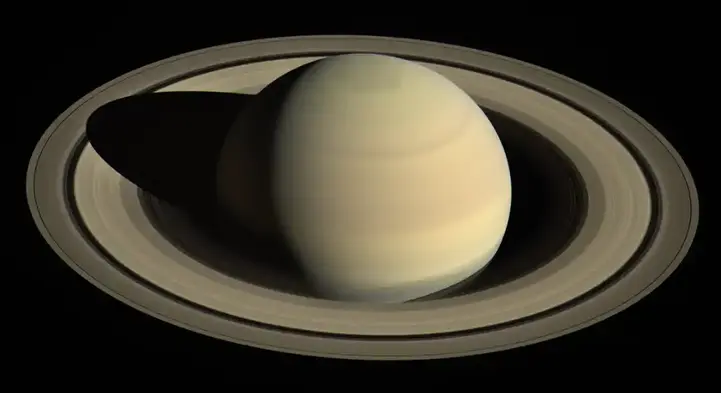
Saturn is second only to Jupiter in many respects in terms of size, age and line prominence, but in terms of scientific excitement, it is certainly capable of superiority. Saturn is arousing scientific interest not only as a planet, but as a system. Among its attractive qualities, Saturn has a dense ring and seductive moons that may harbor life. Space scientists from different disciplines, from geologists to atmospheric scientists to those studying the possibility of life on other worlds, can find their place in the study of a corner of the Saturn system.
Show key points
- Saturn's unique system, including its striking rings and intriguing moons, offers exceptional scientific opportunities across multiple disciplines.
- Enceladus, despite being a small moon, has a subsurface ocean heated by tidal forces, making it a key location in the search for extraterrestrial life.
- Titan mimics Earth in topography and atmospheric processes, except its surface is shaped by methane-based rivers and a dense nitrogen-rich atmosphere.
- ADVERTISEMENT
- Saturn's massive storms, which erupt roughly every 30 years, are powered by deep-seated water vapor acting like a planetary pressure valve.
- A persistent hexagonal storm at Saturn's North Pole exhibits remarkable symmetry and has perplexed scientists since its discovery through Voyager images.
- Unlike other planets, Saturn's magnetic and rotational axes align perfectly, complicating efforts to determine its precise rotation rate.
- The patterns and waves in Saturn's rings not only suggest their origin from a destroyed moon but also provide insights into the planet's internal structure.
1. Enceladus is a major site for the search for extraterrestrial life
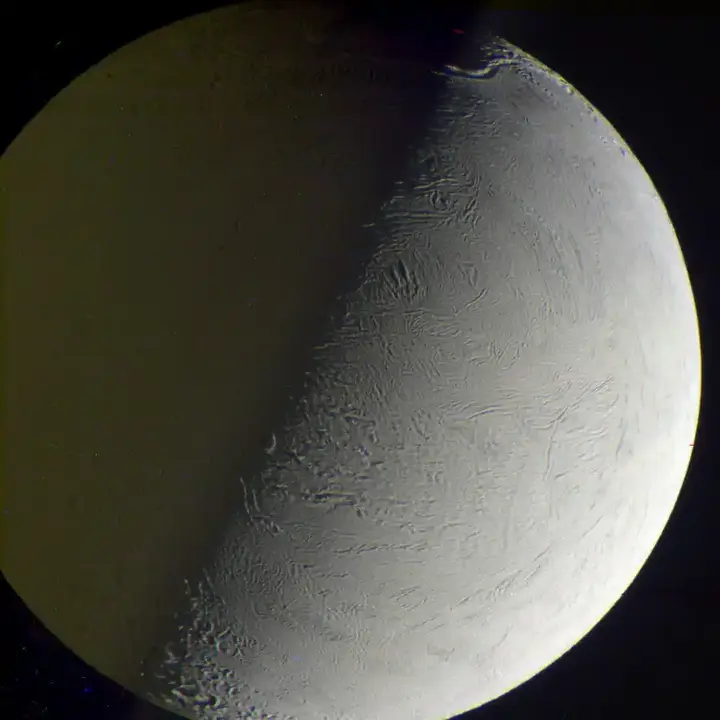
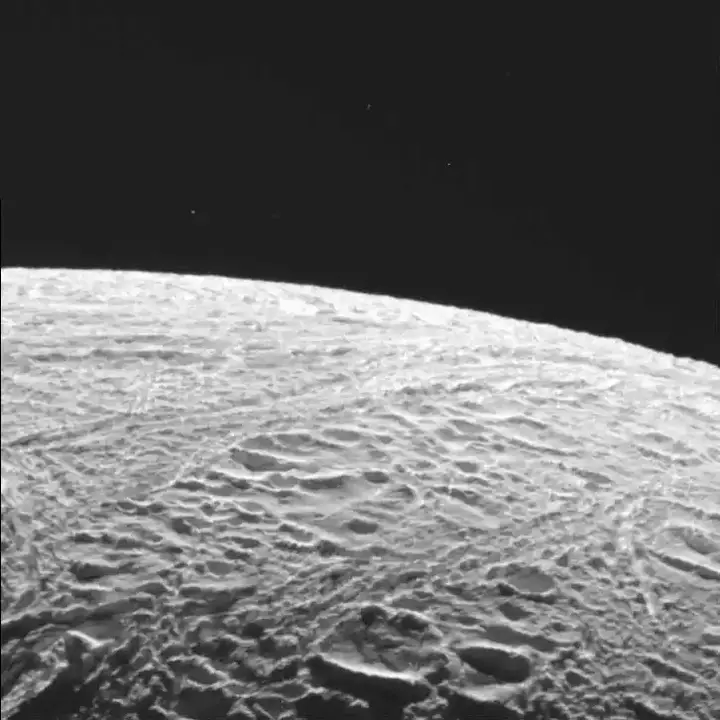
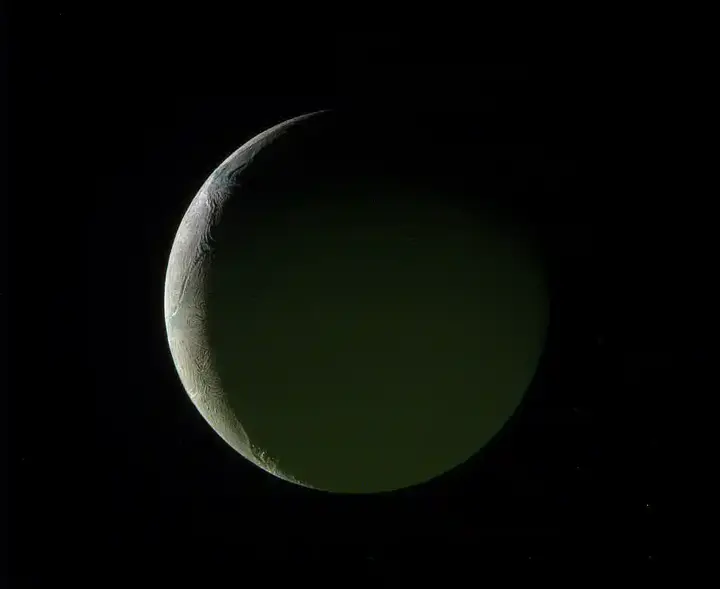
The small moon, no larger than Arizona or Colorado, has caused a sensation among scientists. The frozen spot hides a formidable secret: under its ice shell there is an ocean of liquid water. "Snow" comes from liquid water that escapes from Enceladus and falls on the moon in the form of ice particles. Although the surface experiences a cold temperature of minus 330 degrees Fahrenheit, the interior of Enceladus is blessed with a temperature of about 200 degrees Fahrenheit, thanks to the tidal heating from Saturn. The enormous gravity of the mother planet pulls the small moon and constantly pushes it until the interior is warm. As a result, the interior is warm enough to contain liquid water.
Recommend


2. The topography of Titan is similar to that of the Earth, with one fundamental difference
Like Little Enceladus, Titan, Saturn's largest moon, is also a humid world and a candidate for habitation. An ocean of liquid water hides inside the moon, and on the outer surface, rivers, lakes, and seas flow with liquid methane instead of water. Kelly Miller, a planetary scientist at the Southwest Research Institute, says the moon has a methane cycle that in many respects mirrors Earth's water cycle. She and other scientists believe that the same atmospheric phenomena that occur on our planet occur on Titan, except that they are driven by methane. Like Earth, Titan has retained a large atmosphere, and is the only moon in our solar system that holds it. The atmosphere is mostly made up of nitrogen, like Earth, but it also contains complex organic molecules that paint the world with orange fog. These huge hydrocarbons, inhaled by Cassini's Huygens probe on the moon in 2005, eventually settle out of the atmosphere and cover the Earth, like a soot crust. The carbon compounds on Titan's surface are hundreds of times equivalent to Earth's fossil fuel reserves.
3. Crazy storms run on unexpected fuel
Every 30 years or so, a planet-sized storm forms in Saturn's atmosphere. Storms can last for months, but their effects can last for centuries. Research by University of Michigan planetary scientist Cheng Li has discovered the common culprit behind Saturn's storms: water. The molecule, which is heavy between the enormous body of hydrogen and helium that make up most of Saturn's weight, prevents heat from dissipating from the core, until it accumulates enough energy to lift the molecule from the depths in the form of steam. Lee says the mechanism is like a pressure cooker, where heavy water acts as a release valve. Eventually, the collective energy released is enough to feed a hurricane orbiting the globe.
4. Pistol crowns the North Pole
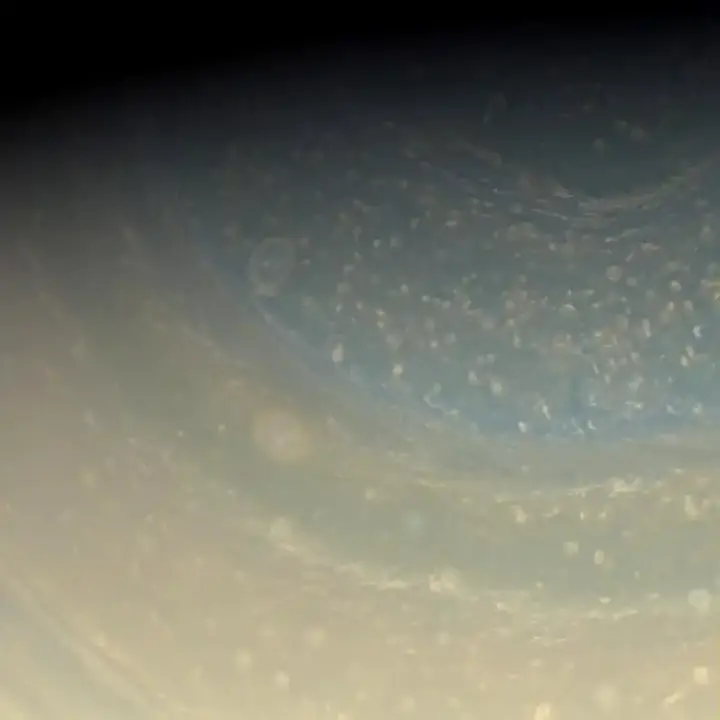
A long-lived jet stream covers Saturn's North Pole, with the edge of the cloud following a latitude of 77 degrees. Scientists believe that the hexagonal edge has characterized the northern tip of Saturn for centuries. A central cyclone rotates directly on the pole, while smaller vortices are scattered across the rest of the hexagonal space, many of which rotate in opposite directions. The six-sided vortex was first photographed by Voyager's flights in the early eighties – almost by chance, capturing fragments and pieces of hexagon in each shot. But the existence of the hexagon only emerged when scientists revisited the images in 1988. Since then, Cassini has taken high-resolution images that unequivocally show the engineering storm in all its glory. It reveals a hurricane that extends 20,000 miles in its vicinity, reaches a height of 180 miles and rises at a speed of 300 miles per hour. The most unusual feature is the amazing symmetry of the storm. The hexagonal shape of the storm puzzled scientists.
5. The axis of the magnetic pole corresponds to the axis of rotation
Of all the planets in the solar system, Saturn is the only planet whose magnetic pole axis corresponds to the planet's axis of rotation. On other planets with a magnetic field, including Earth, the axis of the magnetic pole and the axis of rotation are tilted away from each other and intersect like an X. On Saturn, what you have is a perfect I. This lack of displacement hinders attempts to calculate the planet's rotational speeds using traditional methods. Researchers usually use the magnetic field to tell the time on gas giants, but they haven't figured out how to do so with Saturn's unique composition. While the length of a day on Jupiter has been determined with an accuracy of up to milliseconds, estimates of Saturn's rotation vary by 20 minutes.
6. Saturn's rings give a glimpse of the interior of the planet
Saturn is famous for its stunning rings, which stretch 175,000 miles from the planet. Scientists believe that Saturn's rings are a torn remnant of a moon that was very close to it. Ice fragments the size of mountains or as small as grains of sand circulate around the planet, constrained by its enormous gravity. This narrow gravitational handlebar makes the icy particles in the ring sensitive to rolling below. Waves in rings can reveal clues about the planet's atmosphere and inside the planet. During her lifetime, Cassini collected notes about the spirals in the episode that revealed two major discoveries. First, Saturn consists of stable gas layers and likely has a diffuse rock core. Second, layers are likely to rotate at different speeds.
![]()
A Simple Guide to Introducing Yourself: Creating an Unforgettable First Impression
Introducing yourself is more than just saying your name—it’s a chance to show personality, goals, and values. By sharing achievements, teamwork skills, and even hobbies, you can make genuine connections and leave a strong impression, all while staying clear, honest, and adaptable in every interaction. more- ADVERTISEMENT
![]()
The AI Revolution: The Impact of Artificial Intelligence on the Labor Market
AI has shaken the job market, replacing routine tasks and saving hours of work. From graphic design to marketing, many roles have evolved or vanished. Still, it’s not the end for humans—AI creates new job opportunities and pushes people to grow, although competition and job security have become tougher than ever. more- ADVERTISEMENT
![]()
The ten most lonely things in the world
The loneliest whale in the world sings at a frequency no other whale can hear. The only tree in a 400 km stretch of desert was hit by a drunk driver. A little robot named Curiosity sings “Happy Birthday” to itself every year on Mars. more- ADVERTISEMENT
![]()
Elon Musk's Brain Chip - Facts and Oddities
Elon Musk's Neuralink has stirred buzz with its brain chip, Brain-Link, aiming to let humans control devices with their minds. Though still experimental, early tests show promise—like a paralyzed person using it to control a computer—while sparking ethical concerns over privacy, safety, and equality. more- ADVERTISEMENT
![]()
Tips to increase productivity while working from home
Working from home offers comfort and flexibility, but staying productive needs clear goals, a proper workspace, and strong self-discipline. Organizing your day, taking short breaks, and creating work-life balance are key. A good chair is worth it—and so is setting boundaries between work and personal time. more- ADVERTISEMENT
![]()
Our cosmic neighborhood may be ten times larger than we thought.
A massive discovery suggests our Milky Way may belong to a cosmic structure far bigger than we thought—possibly ten times larger than the Laniakea supercluster. Galaxies travel like rivers in a gravity basin, flowing toward the enormous Shapley concentration, challenging everything we thought about the universe’s scale. more- ADVERTISEMENT
![]()
Discover the Impossible: Turning Deserts into Dense Forests – Dream or Reality?
Desert greening turns dry, barren land into fertile areas using water-saving tech, solar and wind energy, and special soil treatments. One major project, the Sahara Forest Project, aims to fight drought and climate change while boosting local economies by transforming parts of the Sahara and Sahel into green spaces. more- ADVERTISEMENT
![]()
The botanical marvel of the Andean ecosystem at high altitudes
The Andes are home to rare, exotic plants that have adapted to extreme climates with stunning shapes and colors. From insect-trapping fleshy plants to breathtaking orchids and mythical species like the giant vernie, these botanical wonders mesmerize with their beauty and resilience, yet face serious threats from climate change and human exploitation. more- ADVERTISEMENT
![]()
Best Professional Development Documentaries - A Must See List
“Becoming Warren Buffett” offers a rare, honest look at the billionaire’s simple lifestyle, patient investing, and deep belief in self-growth. “Jiro Dreams of Sushi” fascinates with its pursuit of perfection. “Minimalism” challenges the need for stuff, showing happiness comes from experiences, not possessions. more- ADVERTISEMENT
![]()
10 things smart people never share with anyone
Smart people often keep quiet about their true knowledge, finances, personal struggles, and future plans. It’s not secrecy—it’s strategy. By choosing what to share, they protect their peace, maintain control, and keep life’s noise at bay. more- ADVERTISEMENT