

Fusion energy: a future 30 years away, but the benefits will be reaped much earlier



Fusion energy, the process of combining atomic nuclei to release enormous amounts of energy, has remained the holy grail of energy research for more than half a century. Although the dream of a fully functional fusion power plant always seems "thirty years away," the journey toward this goal has yielded significant progress that promises to benefit long before the merger becomes a commercial reality. This article explores the principles of fusion energy, its development history, the current state of fusion research, recent achievements, the short-term benefits that can be expected, and the future of this pioneering technology.
Show key points
- Fusion energy is based on combining light atomic nuclei, like deuterium and tritium, to release vast amounts of energy, mimicking the process that powers the Sun
- Since the 1950s, fusion research has evolved through milestones like the development of the tokamak and international projects including ITER
- Although there are no commercial fusion power plants yet, projects such as ITER and the National Ignition Facility aim to achieve net energy gain within the next few years
- ADVERTISEMENT
- Recent breakthroughs, including energy-positive fusion reactions and advancements in plasma confinement, mark critical steps toward sustainable fusion energy
- Fusion research has already led to innovations in superconducting materials, high-power lasers, and plasma physics, benefiting various fields beyond energy
- Global collaboration, particularly through projects like ITER, fosters scientific exchange and prepares new generations of engineers and scientists
- Even before fusion plants are realized, the ongoing development brings widespread innovation and practical applications, making the investment valuable today.
1. The principle of fusion energy.

Fusion energy depends on the process that supplies energy to the Sun and other stars. Fusion involves, in essence, the fusion of two light atomic nuclei – usually hydrogen isotopes, such as deuterium and tritium – into a heavier nucleus, releasing huge amounts of energy. This energy comes from converting a small fraction of the mass of nuclei into energy, as shown in Einstein's famous equation E = m.c2 (energy = mass sum squared at the speed of light). Unlike fission, which splits heavy atoms to release energy, fusion promises a clean, safe and virtually unlimited energy source, with minimal radioactive waste and no risk of catastrophic failure. According to one newspaper, fusion energy is like putting the sun in a flask.
Recommend


2. Temporal evolution of fusion energy.
The search for fusion energy began in the fifties of the twentieth century, driven by the discovery of nuclear fission and the subsequent development of nuclear weapons. Early research focused on understanding the conditions needed for fusion – extremely high temperatures and pressures, similar to those found in stars. The sixties saw the development of the tokamak reactor, a rifle-shaped magnetic confinement device, which remains the most promising design for controlled fusion.
Over the decades, research efforts have expanded globally, with important projects such as the Joint European Torus JET in the UK and the Tokamak Fusion Test Reactor TFTR in the US. These efforts laid the foundation for the International Thermonuclear Experimental Reactor, an international collaboration launched in 1985 and is still under construction in France today. ITER represents the most ambitious attempt to date to demonstrate the feasibility of large-scale fusion energy.
3. Current state of fusion energy.

To date, fusion power is still in the pilot phase, and there are no operational fusion power plants. ITER, which is expected to achieve its first plasma by 2025, aims to be the first fusion device to produce more energy than it consumes, providing a critical milestone known as "net energy gain". Other projects, such as the National Ignition Facility NIF in the United States, and private projects such as those run by companies such as TAE Technologies and Commonwealth Fusion Systems, are exploring alternative ways to achieve integration, including idle confinement and advanced tokamacs.
4. Recent achievements in fusion energy.
The past decade has seen remarkable progress in fusion research. In 2022, the National Ignition Facility made a breakthrough by producing a fusion reaction that briefly generated more energy than was used to start it, a key demonstration of the concept of inertia confinement. At the same time, tokamac-based research has seen improvements in plasma confinement times and temperatures, bringing scientists closer to meeting the conditions for sustainable integration.
In addition, advances in materials science, superconductor magnets, and computational modeling have accelerated fusion research. These developments not only bring commercial fusion energy closer, but also lead to direct applications in other fields, such as medical imaging, material processing, and the development of advanced electronics.
5. Current achievements and benefits of fusion energy.
While the current situation is still decades away from the operational fusion power plant, the journey toward this goal is already yielding tangible benefits. Research and technology developed for integration are applied in different sectors, driving innovation in the fields of superconductive materials, plasma physics and high-power lasers.
Moreover, fusion research promotes international cooperation on an unprecedented scale. Projects such as ITER bring together scientists, engineers and policymakers from around the world, promoting the exchange of knowledge and experience that benefit other areas of science and technology.
Another direct benefit of fusion research is its ability to inspire and train the next generation of scientists and engineers. The complexity and scale of integration projects also provide unique opportunities for qualification and skills development in areas critical to addressing major challenges, such as climate change and energy security.
6. The future of fusion energy.
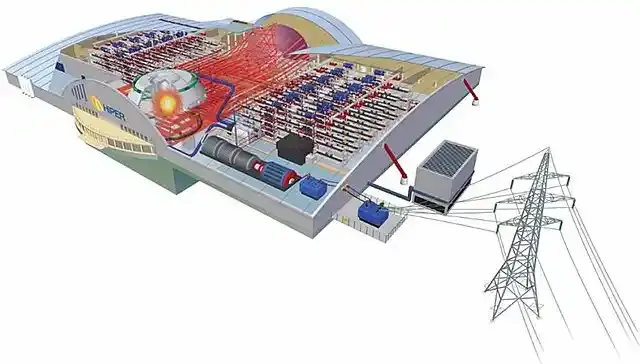
The future of fusion energy is promising, though still uncertain. If ITER and other projects succeed in demonstrating net energy gains, the next step will be to develop pilot power plants that can deliver fusion power to the grid. This phase will require solving remaining technical challenges, such as energy acquisition and conversion efficiently, as well as developing materials that can withstand harsh conditions within the fusion reactor.
Looking to the future, fusion energy commercialization could revolutionize the global energy landscape. The merger provides an almost unlimited source of energy, with the potential to replace fossil fuels and significantly reduce global greenhouse gas emissions. Widespread adoption of fusion energy can drive economic growth, create new industries, and enhance energy security around the world.
7. Reap the benefits before the construction of fusion power plants.
While the full diffusion of fusion energy is still decades away, ongoing research and development in this area is already generating benefits that will affect life in the short term. Advances in technology, materials science, and international cooperation are driving progress in multiple fields beyond energy. While the dream of fusion energy continues to be pursued, its parallel benefits continue to grow, ensuring that investment in fusion research pays off long before the first fusion power plant is operational.
Fusion energy remains an attractive prospect, with the potential to transform energy systems and help solve some of the world's most pressing challenges. While the goal of commercial fusion energy may still be thirty years away, the journey toward that goal is already yielding significant benefits. From technological innovations and international cooperation to the training of scientists and engineers of the future, the pursuit of fusion energy lays the foundation for a brighter and more sustainable future. While continuing to push the boundaries of what is possible, the promise offered by fusion energy, both as a source of energy and as an engine of scientific and technological progress, remains a powerful motivation to continue investment and research.
![]()
Is the universe still making new galaxies?
Is the universe still making new galaxies? more- ADVERTISEMENT
![]()
The cave beneath Pembroke Castle and the fate of the early Britons
A hidden cave beneath Pembroke Castle has revealed ancient secrets, including animal fats and tools that trace the journey of early Britons from hunters to farmers. This incredible find brings new light to prehistoric life and the evolving habits of those who lived beneath the castle centuries before it was built. more- ADVERTISEMENT
![]()
Characteristics of scientists who have won Nobel Prizes
The Nobel Prize honors brilliant minds whose passion, creativity, and perseverance bring lasting benefits to humanity. From Einstein to Curie, it celebrates visionary thinkers who challenge norms, pursue curiosity, and collaborate to solve big questions—all while staying humble and focused on making a difference in the world. more- ADVERTISEMENT
![]()
Can companies avoid Kodak's future fate?
Can Companies Evade the "Kodak" Destiny in The Future? more- ADVERTISEMENT
![]()
Life lessons that I realized after the age of forty and wished I had learned them at twenty: Is it too late to arrange your life in the forties?
Life Lessons I Realized After I Turned 40 That I Wish I Learned at 20- Is it Too Late to Get Your Life Together in Your 40s more- ADVERTISEMENT
![]()
Eastern musical maqams and western stairs
Eastern musical maqams and western stairs more- ADVERTISEMENT
![]()
A book that may interest you - stop pleasing others
A book that might interest you - Stop People Pleasing more- ADVERTISEMENT
![]()
Artistic touches at Azadi Tower in Tehran Ira
Built from 8,000 pieces of Isfahan marble, Azadi Tower stands as a powerful symbol of Iran’s cultural revival. Designed by 24-year-old Hossein Amanat, it blends ancient and modern architecture, honors freedom, and reflects national pride—earning awards and a place on the 200-rial coin. more- ADVERTISEMENT
![]()
The Other Side of the Business World - 3 Movies You Must Watch
These dramas dive into the dark side of business, exposing greed, betrayal, and ethical compromise. From Zuckerberg's ambition in *The Social Network* to *Boiler Room*’s stock fraud and *The Founder*’s ruthless empire building, they reveal how success can come with a moral cost. more- ADVERTISEMENT
![]()
Makkah: A Journey of Faith to the Most Holy Place on Earth
Makkah is more than a city—it’s a powerful spiritual journey. Standing before the Kaaba, climbing Jabal al-Nur, or praying at Mount Arafat offers a deep connection to history, faith, and humanity. For any traveler, Mecca promises a unique and unforgettable experience rooted in timeless Islamic heritage. more- ADVERTISEMENT