

Will AI be able to design itself?



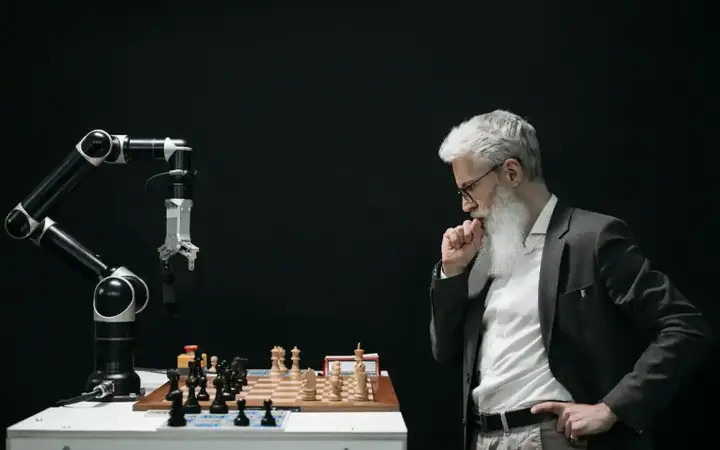
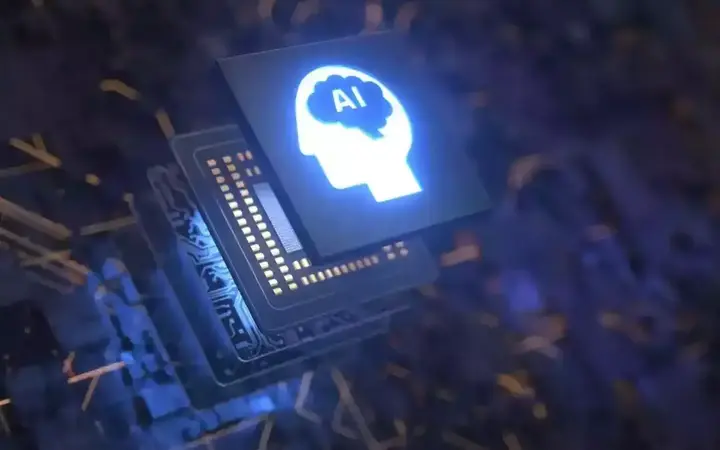
The topic of AI's ability to design itself is a hot topic of discussion among experts. Some see it as inevitable in the near future, while others see it as far-fetched or even undesirable. This topic is an active area of research, and perspectives are constantly changing as new discoveries emerge. Specialists in human sciences believe that it is important to discuss the potential risks and benefits of AI openly and honestly to ensure its responsible development.
Show key points
- There is no clear consensus among experts on whether AI will eventually be capable of designing itself, making it one of the most debated topics in the field.
- While some researchers welcome the idea of self-designing AI as a scientific breakthrough, others strongly oppose it due to possible moral and existential consequences.
- The development of self-learning, evolutionary algorithms, and competitive models shows potential paths through which AI might learn to design improved versions of itself.
- ADVERTISEMENT
- Critics argue that current AI lacks true understanding, humanitarian values, and may amplify ethical issues such as biases and loss of human control.
- The potential for self-designed AI raises fears reminiscent of dystopian science fiction scenarios like those in The Terminator, turning past fantasy into plausible concern.
- Beyond technical and ethical challenges, the enormous financial cost of developing advanced AI systems poses a major barrier to their autonomous evolution.
- Economic, infrastructural, and talent acquisition challenges also influence the pace and direction of AI development, making self-design far more complex than it might appear.
We try to review the different points of view to answer this important question.
The shocking answer
Yes, you will be shocked by the answer!
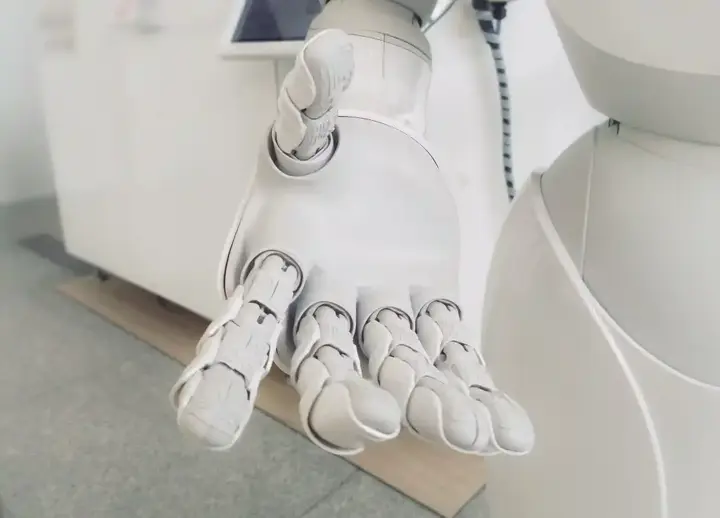
There is no definitive answer to the question of whether artificial intelligence will be able to design itself or not. It depends on future developments in the field of artificial intelligence, as well as on the values and principles that will guide the development of this technology. Not even the most powerful experts in the field have a definitive and frank answer.
Recommend


Some scientists aspire to be yes to reach self-sufficiency by feeling euphoria about this scientific achievement, and to support many intellectual theories of the theory of formation, creation, and so on. These theories have many immoral and non-spiritual dimensions, fundamentally contrary to most religions, especially the heavenly ones.
At the same time, we see many scientists with a human and moral dimension trying as much as possible not to reach this result, because of the expected results and their impact on the human world and nature in general.
For example, a series of films like The Terminator – once a fertile fantasy – is now like a nightmare.
Insights and reasons for AI's ability to design itself
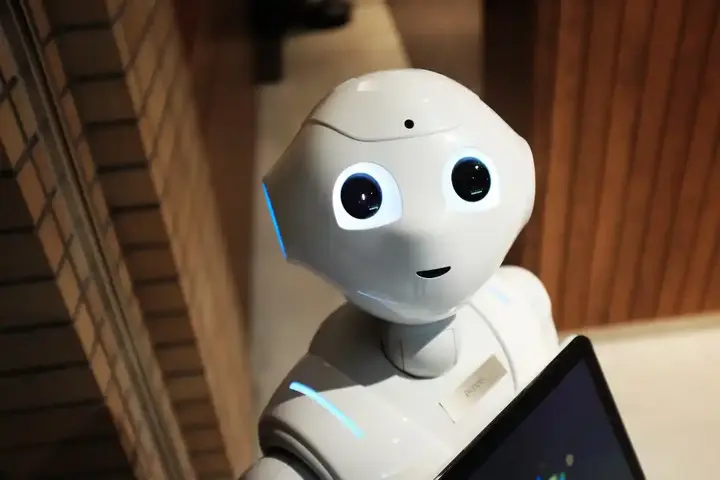
- Self-learning: Artificial intelligence has a tremendous ability to learn from data and experience. They can analyze vast amounts of information, detect patterns, and modify their behavior based on what they learn. As self-learning technologies continue to evolve, AI may be able to learn how to design new derived AI systems.
Evolution: AI systems show remarkable ability to continuously improve their capabilities. By making changes to their own codes. These systems can test different methods and determine which ones are most effective, and over time, this process may lead to the development of more complex and intelligent AI systems.
Competition: In a competitive environment, AI systems may be incentivized to design better versions of themselves. These systems can "compete" with each other by solving problems or completing tasks more efficiently. Over time, this competition may lead to the development of AI systems with advanced capabilities.
Creative: Some AI systems have proven their ability to create new content, such as writing scripts or composing music.
Insights and reasons for opponents of AI's ability to design itself
- Lack of understanding: AI systems still lack a deep understanding of the world and how it works.
Ethical limitations: The possibility of AI designing itself raises many ethical concerns, such as bias and discrimination.
Biased data: Systems rely on the data they are trained on. If this data is biased, it may reflect on the designs, which can lead to unfair or harmful results.
Control: Some fear that designing an AI for itself will lead to a loss of control over these systems. It is important to ensure that these systems remain under human control, and that they do not become autonomous or able to make decisions that affect humans without human intervention.
Goal and purpose: Systems currently lack the capacity to understand humanitarian values and goals. Without this capability, it may be difficult or impossible for AI to design AI systems that match human needs and values.
Dream, cost and lust for science
Among the dreamers of a better future or a selfish view of humanity through the idea, and the lust of scientists, we find an obstacle that not everyone mentions. It is in itself the biggest obstacle behind the desired development, so you will see many dream-minded writers favoring the idea and promoting that artificial intelligence will one day be independent, without taking into account the economic and social factor.
It's the cost and you don't know what the cost is!
We mean the material cost, not just the cost of AI's independence, or its impact on humans.
The costs of AI development for large companies vary greatly and depend on many factors, such as:
Project size and complexity: Large and complex projects that require a large amount of data and computational resources will be more expensive than small and simple projects. And don't look at free templates and apps, for example, a company like OpenAI incurs a high cost for an application like Chat GPT, estimated at thousands of dollars a day, and we are talking here about the free model! What about more complex systems?
Type of AI technology used: Some AI techniques, such as deep learning, require expensive computing resources and are therefore more expensive than other techniques. Despite the recent involvement of a company such as NVIDIA in these technologies, the cost is still astronomical for the dream, which oscillates between the dimension of attainment and the lust for fulfillment.
Required employee skills: Hiring highly skilled AI experts can be expensive, especially for companies competing to attract talent from the same field. This is one of the main reasons why AI and its derivatives learning has been promoted in recent times.
Infrastructure: Companies may need to invest in new infrastructure or improve existing infrastructure to support AI technologies. Imagine how many years it took the world to spread the idea of the mobile phone, and how much economic, cultural and social cost brought us to the situation now. Of course, we are talking about another dimension entirely, marred by risks more than just acquiring technology that facilitates life and communication!
Data: Collecting, preparing, and cleaning data for AI purposes can be an expensive and time-consuming process.
![]()
Jobs that will disappear and others that are needed due to artificial intelligence
AI is evolving fast, replacing many jobs that involve routine tasks like data entry, customer service, and even accounting. But instead of fear, this shift brings new opportunities in fields like AI development, cybersecurity, and creative innovation—where human skills in critical thinking and empathy are more needed than ever. more- ADVERTISEMENT
![]()
The Dream of Getting Rich Quick: Stories of Turning Good Fortunes into Millionaires Overnight
Overnight Millionaires: People Who Got Rich Quick more- ADVERTISEMENT
![]()
Scientists wonder if the universe looks like a donut cake
Scientists are exploring the universe’s shape and structure, searching for signs of cosmic loops and mirrored galaxies. Using improved CMB maps and powerful telescopes, they aim to uncover if the universe is finite—and perhaps one day map it all, like a cosmic version of Google Earth. more- ADVERTISEMENT
![]()
Can you get into Svalbard's seed vault?
Tucked inside a remote Arctic mountain, the Svalbard Global Seed Vault stores over 930,000 crop varieties as a backup for global food security. It's a quiet champion, preserving biodiversity and standing ready when disaster or conflict strikes, like it did for Syria’s lost gene bank. more- ADVERTISEMENT
![]()
75% of the global diet is produced by just 12 plants and 5 different animals
75% of the global diet is produced by just 12 plants and 5 different animals more- ADVERTISEMENT
![]()
How to learn German for free in 6 months
Learning German opens doors to job and study opportunities in Germany, Austria, and Switzerland. With dedication—three hours a day—you can reach intermediate level in six months. YouTube channels like Deutsch mit Mira, German with Mr. Shehata, and Khaled Bozan make learning fun and accessible for everyone. more- ADVERTISEMENT
![]()
The Historical Arch of Egyptian Blue: A Journey Through Time
The Historical Arc of Egyptian Blue- A Journey Through Time more- ADVERTISEMENT
![]()
For an unforgettable photo – your simplified guide to professional photography with minimal potential
You don’t need fancy gear for stunning photos—just train your eye, use natural light, and understand simple photography basics like composition and focus. With a bit of creativity and the phone in your pocket, you can capture amazing shots anywhere. more- ADVERTISEMENT
![]()
Polar bears and climate change: the threatened future of Arctic icons
Polar bears, majestic symbols of the Arctic, face a deeply troubling future as climate change melts their icy habitat, disrupts their food sources, and puts pregnant females at greater risk. With shrinking ice and rising temperatures, their survival grows harder, making urgent global action vital to protect these stunning creatures. more- ADVERTISEMENT
![]()
Elon Musk's Brain Chip - Facts and Oddities
Elon Musk's Neuralink has stirred buzz with its brain chip, Brain-Link, aiming to let humans control devices with their minds. Though still experimental, early tests show promise—like a paralyzed person using it to control a computer—while sparking ethical concerns over privacy, safety, and equality. more- ADVERTISEMENT