

Magnetism: discover the science behind the compass



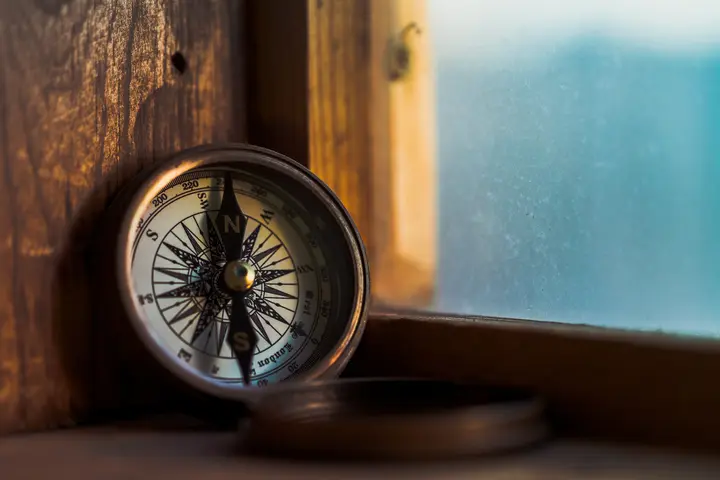
Magnetism is one of the amazing scientific phenomena that has surprised humans for many centuries. From the discovery of the first compass until today, magnetism continues to raise curiosities and questions about its action and impact on the universe around us. In this article, we will discover the science behind the compass and explore the strength and influence of the magnetic field.
Show key points
- Magnetism has fascinated humanity for centuries, with its mysterious origin still remaining largely unexplained despite scientific advancements.
- The magnetic field forms when electric charges or electrons are in motion, whether at the atomic level or through electric currents in wires.
- Ancient civilizations like the Greeks associated magnetism with supernatural forces and were among the first to study its unique properties.
- ADVERTISEMENT
- A compass operates by aligning its magnetic needle with Earth’s magnetic field, effectively guiding users by pointing to magnetic north.
- Magnetism has a wide range of applications in daily life, powering devices like electric motors, medical scanners, speakers, and computer storage.
- Although gravity and magnetism may seem similar, they are distinct forces, and the scientific relationship between them is still under investigation.
- Future magnetic technologies promise major breakthroughs in renewable energy, medicine, transportation, and electronics by enhancing efficiency and innovation.
Magnetism and its mysterious origin

Magnetism has been a surprising scientific phenomenon for centuries. Since ancient times, man has observed a mysterious force that attracts some ferrous materials to electromagnetic stones, now known as magnetism. And it is very difficult to explain the origin of this mysterious phenomenon so far.
Recommend


The mysterious origin of magnetism may go back hundreds of years BC, when humans used magnetism for their everyday purposes. The ancient Greeks were among the first peoples to study the phenomenon in depth. They believed that there were supernatural forces controlling magnetism, and they considered magnetism sacred.
As science and technology developed, seventeenth-century scientific studies began to reveal new aspects of magnetism. Scientists have discovered many exciting details, such as the laws of magnetic gravity and their effect on surrounding objects.
Despite significant advances in the study of magnetism, its true origin is still unknown. Scientists don't know exactly what causes this magnetic force, and how magnetism interacts with gravity and electricity.
The mystery of the origin of magnetism continues to arouse interest and questions among scientists even today. However, our understanding of magnetism continues to evolve and improve, and in the future scientists may reveal more startling secrets of this mysterious scientific phenomenon.
How is a magnetic field formed?
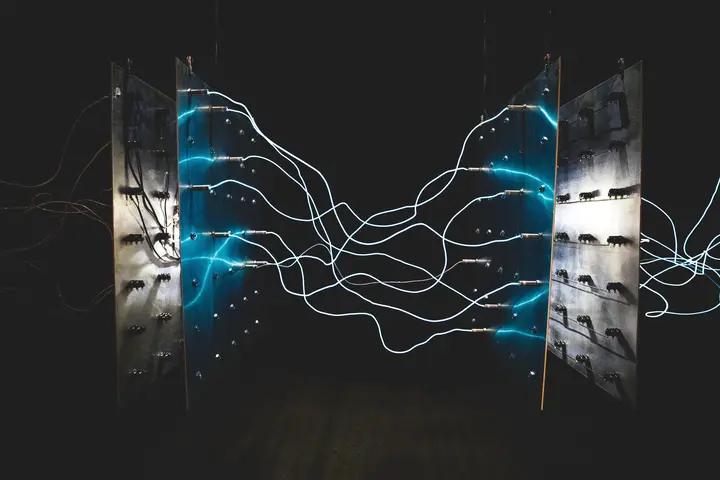
Magnetism is a mysterious and complex phenomenon by which living organisms and inanimate objects infer their interaction with the magnetic field. But what is the composition of this magnetic field and how is it formed? Let's explore this wondrous scientific phenomenon.
The formation of a magnetic field comes from the presence of electric charge in an object or molecule. When electric charge moves, whether on an atomic scale or on a large scale such as electrical objects, it generates a magnetic field around it.
Small atomic masses inside an atom affect the distribution of electric charge, which leads to the formation of the nucleus. Electrons move around the nucleus at specific orbits, and this movement causes a small electric current. This electric current is produced when the electron moves continuously around the nucleus, and this perpetual movement generates a magnetic field around the body.
The formation of a magnetic field occurs not only in atoms, it can also occur when electric current interferes with wires. When electric current passes through the wire, a magnetic field is generated around the wire. The stronger the electric current, the stronger and dense the magnetic field as well.
In short, a magnetic field is formed when electric current or electrons move. These movements generate a magnetic effect that can be measured and understood through many experiments and scientific research. Our understanding of this amazing effect helps us to use it in many practical applications in everyday life.
Compass: Magnetism-based steering tool

The compass is one of the most used and practical tools in our daily lives. The compass is used to determine directions with extreme precision and is completely based on magnetism. The compass contains a sensitive magnetic needle that responds to the Earth's magnetic field and points in the direction of magnetic north. The needle moves freely to always point towards the magnetic north pole.
The process of work of the compass is based on the principle of attraction and magnetic repulsion. The Earth has an enormous magnetic field consisting of the magnetic north and south poles. When the compass works, the Earth's magnetic field interacts with the needle's magnetic field and a gravitational force or repulsion occurs that causes the needle to be pointed in the appropriate direction.
A great feature of the compass is that it works reliably and is not affected by external factors such as wind and weather. This makes the compass an important tool for anyone who needs to determine directions, whether in outdoor activities such as camping and hiking or even in everyday uses such as guidance on maps or even determining directions in buildings and parks.
The use of a compass in navigation and exploration is one of its most important benefits. The compass has contributed significantly to the discovery of the world and maritime trade. Through the use of the compass, the direction of north and south can be determined and thus the direction towards the desired destination with high accuracy.
With this unique property of the compass, it became possible for humans to head and navigate uncharted lands and mysterious seas. It is a simple and effective tool that relies on the science behind magnetism to achieve this. Whether you are planning a trip with the family or climbing a mountain with friends, don't forget to bring your compass and use it to guide and enjoy your trip.
Applications of magnetism in everyday life
Magnetism is not just an amazing scientific phenomenon, it has numerous and tangible applications in our daily lives. Whenever we look around, we find that the technology, devices and tools we use take advantage of the strength of the magnetic field. Here we will look at some of those practical and amazing applications of magnetism:
1. Electric motors: The function of electric motors is to convert electrical energy into mechanical motion. What makes this main converter work is the magnetic field that is created inside the motor. Thanks to magnetism, we can power many appliances around us such as cars, washing machines, fans and refrigerators.
2. Magnetic cards: You'll find them all over us, credit cards, bank cards, and even building access cards. These cards are based on a magnetic strip that holds our important personal information. When you pass the card through the reader, the information it carries is read using the technique of magnetism.
3. TVs and computers: To be honest, we cannot imagine our daily lives without these modern devices. Surprisingly, magnetism has a role in the work of these devices. Inside televisions and computers, there are many magnets that generate and direct electric currents to power different parts.
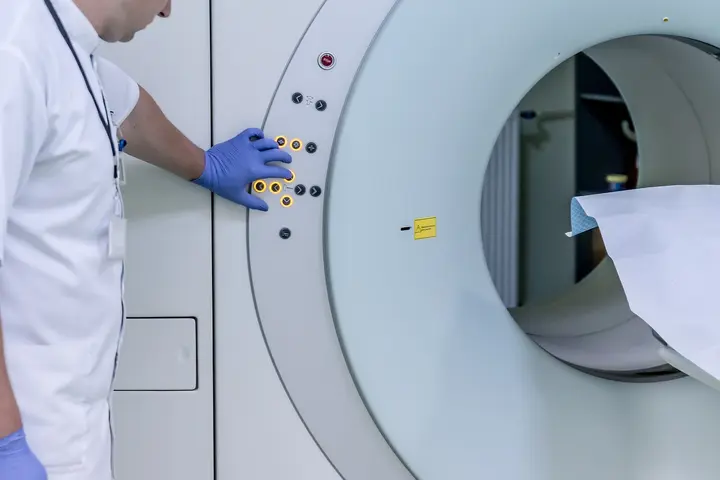
4. Magnetic resonance scanning: This technique is used in medical diagnosis to detect internal diseases and injuries. A strong magnetic field is created inside the resonance scanner, and when the body is exposed to this field, three-dimensional images of organs and tissues are produced. It is a valuable technique that helps doctors accurately diagnose diseases and provide appropriate treatment.
5. Speakers and speakers: A few of us may not realize that the speakers and speakers we use in our daily lives are based on magnetism. Electric current flows through the coils of magnets in these devices, generating sound frequencies and allowing us to listen to music and sounds clearly.
6. Magnetism in stationery: Even in our everyday tools such as iron chalk and small magnets on the refrigerator, we find applications of magnetic forces. Magnetic stationery is useful at many times, whether for hanging notes or repairing broken devices.
The multiple applications of magnetism in our daily lives really show us the importance of this scientific phenomenon. Magnetism helps develop new technology and contributes to our comfort and ease of life. Let's enjoy harnessing this power and explore more discoveries in this amazing field.
Gravity and magnetism: do they share secrets?
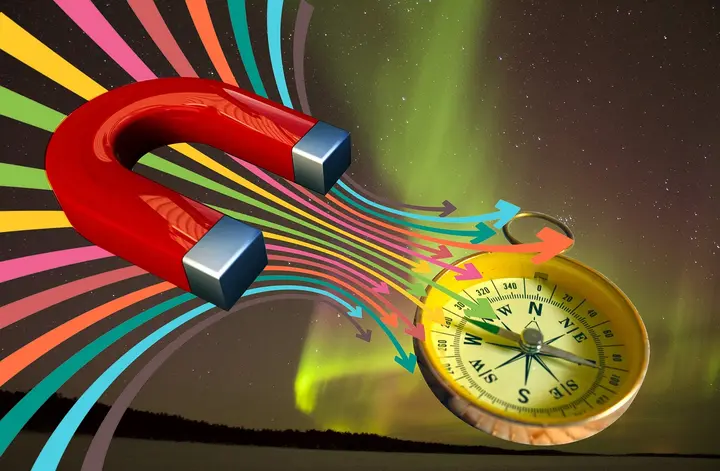
Gravity and magnetism are surprising and questionable natural forces. Gravity and magnetism look similar in some respects, which raises the question: is there a connection between them?
When we talk about gravity, we recall Newton's famous law that could explain the motion of falling planets and objects. Gravity is a force that attracts all things, including living things, as a result of their mass. But does gravity arise from a magnetic field? Is there a relationship between them?
Magnetically, iron objects are attracted to each other because of their magnetic influence. Magnetism depends on the presence of the magnetic field that is produced by objects. And here the question arises: is there a magnetic field in the Earth that causes the force of gravity?
Although gravity and magnetism are similar in some respects, we must understand that they are phenomena that are different in nature and effects. Gravity depends on the mass of objects and their effect on each other, while magnetism depends on the presence of a magnetic field and the interaction of objects with it.
But is there a link between gravity and magnetism in relation to their source? Some theories may suggest a link between them, and some scientific research suggests that the magnetic field surrounding the Earth may contribute to the force of gravity, but this topic needs more study and research to confirm the validity of these hypotheses.
Thus, we can say that gravity and magnetism are astonishing and mysterious forces in the world of science. Understanding their impact and work is an ongoing challenge for scientists and researchers. Although their interpretation and sources may be different, they share our curiosity and exploration of the wonders of this amazing universe in which we live.
Future magnetic technologies: what's new?
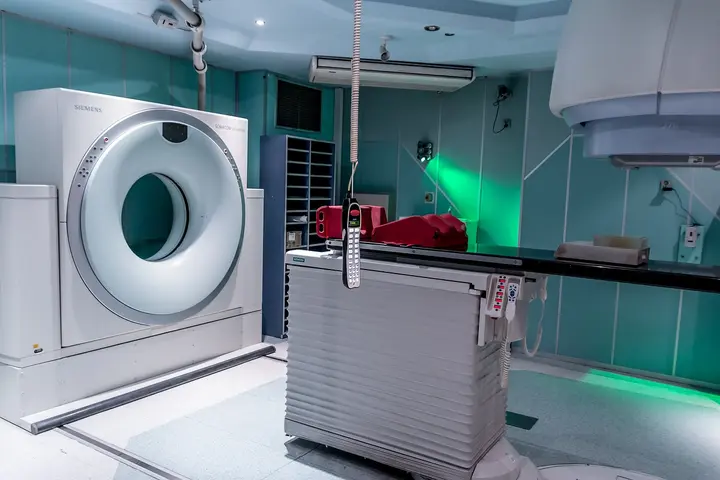
Future magnetism technologies will be developed in the field of energy and electricity. These technologies will contribute to improving energy efficiency and providing new and innovative ways to generate sustainable energy. We may see innovations in electric vehicles that rely on the magnetic field to achieve better performance and faster charging. Magnetic technologies will help us make significant progress in areas such as solar, wind and rechargeable batteries.
In the field of medicine, future magnetic technologies may see tremendous improvements in the diagnosis and treatment of diseases. We may see the emergence of devices that use the magnetic field to detect and fight cancerous tumors in non-intrusive and effective ways. Innovations in this area may help us provide a quick and accurate diagnosis of diseases such as strokes and MS.
For technology and communications, advances in the magnetic field may lead to the development of more sensitive sensors and larger and faster storage devices. We will have new technologies in the field of computers, mobile phones and consumer electronics. We may see the development of bendable magnetic displays and small electronic devices powered by magnetic energy.
As future magnetic technologies advance, there will be new opportunities in various fields. We may see a transformation in the transportation industry, medicine, energy and technology. Magnetism will play a crucial role in shaping our future and improving our lives. These futuristic technologies will be a hub for discovery and innovation and will revolutionize the modern technological world.

Exploring magnetism and its interaction with the compass, we can realize that the world we live in is full of scientific wonders and phenomena that still challenge our understanding. The compass is not just a tool for determining directions, but an inference of the strength of the presence of a magnetic field in our planet and universe. Let's enjoy our knowledge of magnetism and explore more of those secrets that await revelation in the future. Science never ends, and magnetism is just the beginning.
![]()
The best ChatGPT alternatives, including what is free
ChatGPT is an advanced language AI revolutionizing communication and creativity with human-like conversations and text generation. Alongside it, impressive free alternatives like Google's Bard, Jasper Chat, Bing AI, and Perplexity AI offer unique features—from creative writing to fact-based search—making AI tools more accessible, powerful, and tailored to user needs. more- ADVERTISEMENT
![]()
Iranian carpet industry ... History and economic significance
Persian carpets, woven with stunning detail and rich history, have long symbolized beauty and prestige. Once essential for warmth, they evolved into luxurious art pieces admired in royal courts. Today, they remain a global symbol of elegance and superior craftsmanship, cherished for their unique patterns and cultural legacy. more- ADVERTISEMENT
![]()
The historic citadel of Aleppo ... One of the largest and oldest castles in the world
Aleppo Citadel, one of the world’s oldest castles, stands proudly in Syria’s ancient city. Once a temple and fortress, it saw civilizations from Greeks to Ottomans. Its restored Mamluk throne hall, with marble and basalt details, remains a key highlight, offering insight into the citadel’s rich and layered history. more- ADVERTISEMENT
![]()
What are smart laptops? Is it really practical?
What are smart laptops? Is it really practical? more- ADVERTISEMENT
![]()
Topkapi Palace ... The largest palaces of Istanbul in Turkey
Topkapi Palace, once home to Ottoman sultans, dazzles with over 12,000 porcelain pieces and secretive chambers. Known as the "Palace of Happiness," it’s now a UNESCO World Heritage Site and ranks among Europe's most visited museums, drawing millions into its rich blend of history, culture, and architectural beauty. more- ADVERTISEMENT
![]()
How can I stop wasting time?
Distractions like phones and social media eat up your time. Create routines, set priorities, and work in focused time blocks. Keep your phone silent, avoid multitasking, and believe in yourself to overcome procrastination. Small changes can make your days much more productive. more- ADVERTISEMENT
![]()
Tips to increase productivity while working from home
Working from home offers comfort and flexibility, but staying productive needs clear goals, a proper workspace, and strong self-discipline. Organizing your day, taking short breaks, and creating work-life balance are key. A good chair is worth it—and so is setting boundaries between work and personal time. more- ADVERTISEMENT
![]()
The Five Great Scandals in Climatology
Climate science has faced serious issues, from fake datasets in top journals to the use of extreme, unrealistic emission scenarios. Political pressure often blocks correction, making it hard to fix flawed research. These scandals show how climate science can struggle when science and politics mix too closely. more- ADVERTISEMENT
![]()
7 physical cues that can help you read someone like an open book
Body language reveals more than words—handshakes, smiles, and even foot movements hint at confidence, stress, or honesty. A dominant handshake may suggest control; sincere smiles reach the eyes; fidgeting signals anxiety. Pay attention to these subtle cues, but always consider context—it's the key to truly understanding someone. more- ADVERTISEMENT
![]()
A book you may be interested in: Dopamine fasting
A book that might interest you - Dopamine Fast more- ADVERTISEMENT