

Human population growth: where are we now?



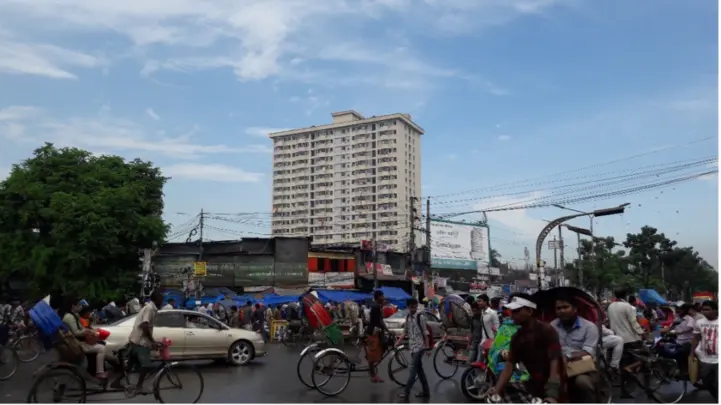
The human population has evolved over millions of years. We are now standing at eight billion, and we are still growing. But what are the causes of population growth? Is there a limit or "carrying capacity" of the land? In 2100, the world will see a growing population, stabilizing around 10.5 billion and then declining. Most countries outside Africa will face a different problem: population aging. There will be only minor differences between countries like Bangladesh and Germany. India will become the most populous country with a population of 1.5 billion after a peak of 1.7 billion, while China will join Pakistan, Nigeria and the United States as the most populous group after India. Developing countries, particularly in Asia, experienced significant increases in food production during this period. Having suffered famine and food insecurity, countries such as India and China are self-sufficient in producing staple food and can now export food. However, our problems are far from being solved. Poverty and malnutrition persist in certain regions today, and population growth has added more to the issues we need to address.
Recommend


Show key points
- The global population is projected to peak at around 1
- 5 billion by 2100 before beginning to decline.
- While many developing countries have achieved food self-sufficiency, issues like poverty and malnutrition still persist in various regions.
- ADVERTISEMENT
- Economic development, education, access to contraceptives, and cultural values are among the diverse factors influencing population growth.
- Climate change and environmental degradation, including biodiversity loss, remain major threats that require both mitigation and adaptation strategies.
- Increased food production is essential, but doing so without further harming the environment is a critical challenge for the future.
- Transitioning to a low-carbon economy that still supports human prosperity requires widespread use of renewable energy and electrification.
- Achieving sustainability involves balancing scientific findings with social, cultural, and economic interests across different regions.
Factors affecting population growth
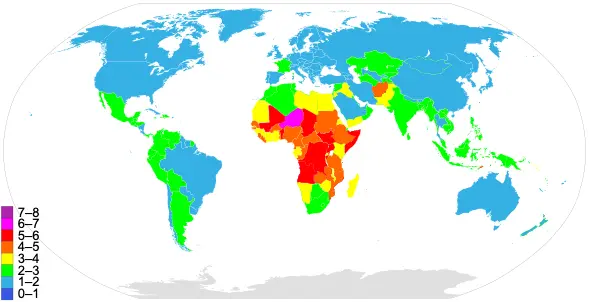
• Economic development.
• Availability of contraceptives.
• Education and the future of children.
• Social welfare payments/government pensions.
• Female participation in the labour market.
• Immigration levels.
• Historical factors/war.
• Religion, traditional values and social and cultural attitudes
Increasing population with greater prosperity is perhaps the most important factor in reducing fertility, but it also means more environmental side effects. To be sure, we face complex challenges in feeding and prospering 10.5 billion people at its maximum. These challenges include food security, climate change and environmental degradation. Food security remains a major concern for humanity. Although we have made tremendous strides through initiatives such as the Green Revolution, nearly a billion people still lack adequate access to nutritious food. We must meet this crucial challenge. Climate change threatens the planet, with its long-term effects that are often invisible to everyone. Rising global temperatures, rising sea levels, and biodiversity loss are indicators that action is necessary. We will need mitigation and adaptation measures.
In addition, environmental degradation and pollution remain ongoing challenges, and we have to conserve our natural resources and combat pollution. The loss of biodiversity disrupts ecosystems, making them less resilient to environmental changes.
Understanding dependencies

Before addressing climate change and overuse of resources, let's look at our food needs. We use about 50 percent of arable land for agriculture alone, far exceeding what we use for urban and built-up land and we have also reduced wild animals to 4 percent of the mammal mass while we have 34 percent, and the rest are livestock. However, we should also note that mammals still make up a small percentage of all animals and animals make up a small percentage of all organisms in the mass. We need to disengage here: more food with less land use, less suffering for animals, and less impact on the environment. The Food and Agriculture Organization of the United Nations estimates that we need to increase food production by 70 percent and the reality is that we cannot do this as efficiently as we do now without destroying what is left of nature. We seem to have passed the peak of farmland.
Resource Usage
The market cannot separate resource use from GDP. That's where regulations by responsible governments come in. It needs to put in place the necessary framework to achieve this. Finally, if we want to target lower emissions that cause climate change, we have two options. We can only stop using fossil fuels and replace them appropriately, which will not go down well with any region of the world that wants to sustain prosperity.
To address both climate change and human prosperity, we need to move to a low-carbon world with less negative environmental impact while maintaining, if not increasing, the standard of living. If we want to reduce or even reduce carbon emissions to zero, we must use all available technologies. Let's start generating electricity, where we have to use all our low-carbon options. There are many solutions we could resort to in the future, and apart from that, given the use of a large amount of energy outside of electricity, such as steel and cement production, alternatives to fossil fuels are needed. Electrification should be considered where possible, which requires more electricity generation. For agriculture, another source of emissions, solutions such as eating a non-animal diet also reduce emissions, such as methane from livestock. Restricting the options available to us is the worst we can do. Of course, science does not dictate measures. We need to consider many other interests and agree on the goal. If the goal is the prosperity of humanity and the preservation of the environment as a societal goal, we can determine what we should and should not do. Actual measures should be improved based on all interests in each region. We have the tools to support ten billion people with good lives on a changing but livable planet.
![]()
How do I increase my confidence at work? Proven practical tips and exercises
Self-confidence helps you speak clearly, connect better with coworkers, solve problems, and grow in your career. It's a skill you can build with small steps—know your strengths, improve communication, stay positive, take care of yourself, and reward your progress. Confidence is a journey, not a destination. more- ADVERTISEMENT
![]()
Sudden asteroid lights up the sky of the Philippines
A Surprise Asteroid Lit Up the Sky Over the Philippines more- ADVERTISEMENT
![]()
A book that may interest you - Influence: The Psychology of Persuasion
A book that might interest you - Influence_ The Psychology of Persuasion more- ADVERTISEMENT
![]()
How to develop your self-confidence?: The journey of character building and self-development
Self-confidence is a powerful inner force that grows through experience, reflection, and personal development. It's not inherited but built over time. With positive thinking, healthy habits, and clear goals, anyone can strengthen their self-worth and face life with courage and resilience. more- ADVERTISEMENT
![]()
Success Guide - How to Create Your Own Charisma?
Success Guide - How to Create Your Own Charisma? more- ADVERTISEMENT
![]()
The botanical marvel of the Andean ecosystem at high altitudes
The Andes are home to rare, exotic plants that have adapted to extreme climates with stunning shapes and colors. From insect-trapping fleshy plants to breathtaking orchids and mythical species like the giant vernie, these botanical wonders mesmerize with their beauty and resilience, yet face serious threats from climate change and human exploitation. more- ADVERTISEMENT
![]()
A book that may interest you: pistachio theory
A book that might interest you - Pistachio Theory more- ADVERTISEMENT
![]()
Neolithic revolution
The Neolithic Revolution more- ADVERTISEMENT
![]()
The concept of financial liberalization - how can you achieve it?
The Financial Freedom Concept - How can you achieve it more- ADVERTISEMENT
![]()
The epic story of the Valley of the Kings in Luxor
Hidden under Egypt's desert sands, the Valley of the Kings holds grand tombs built to protect pharaohs like Tutankhamun and Seti I. Rich in secrets and treasure, it offers a journey into ancient history, where engineering genius met sacred beliefs in the afterlife. A mesmerizing destination for any explorer. more- ADVERTISEMENT