

Why is um Kulthum known as Our Lady of Egypt?



Tremendously popular throughout the Arab world, Oum Kulthum is the most accomplished singer of her century and a national symbol in her native Egypt; she has been dubbed the "Voice of Egypt" and the "Fourth Pyramid of Egypt". Her biography has been translated into 97 different languages. In 2023, Rolling Stone magazine ranked Oum Kulthum as the 61st on its list of the 200 greatest singers of all time.
Show key points
- Oum Kulthum, often called the "Voice of Egypt" and the "Fourth Pyramid," was a legendary Egyptian singer and cultural icon admired across the Arab world.
- Her career, spanning over five decades from village weddings to international fame, was deeply rooted in traditional Arabic music and Islamic education.
- By the late 1920s, she had become Cairo’s leading musical figure, and her monthly radio concerts attracted millions of listeners throughout the Middle East.
- ADVERTISEMENT
- Fusing local musical traditions with Western influences, she crafted a unique style characterized by emotional depth and elaborate improvisation.
- During her lifetime, she was deeply involved in Egypt’s cultural and political scenes, serving as a cultural envoy and supporting national causes including the 1952 revolution.
- Her post-1967 war tour raised substantial funds for Egypt, highlighting her role as both a patriotic figure and unofficial ambassador.
- Oum Kulthum's powerful voice, poetic expression, and lasting influence have made her a symbol of authentic Arab identity, commemorated by millions even after her death.
A brief overview of the "Star of the East"
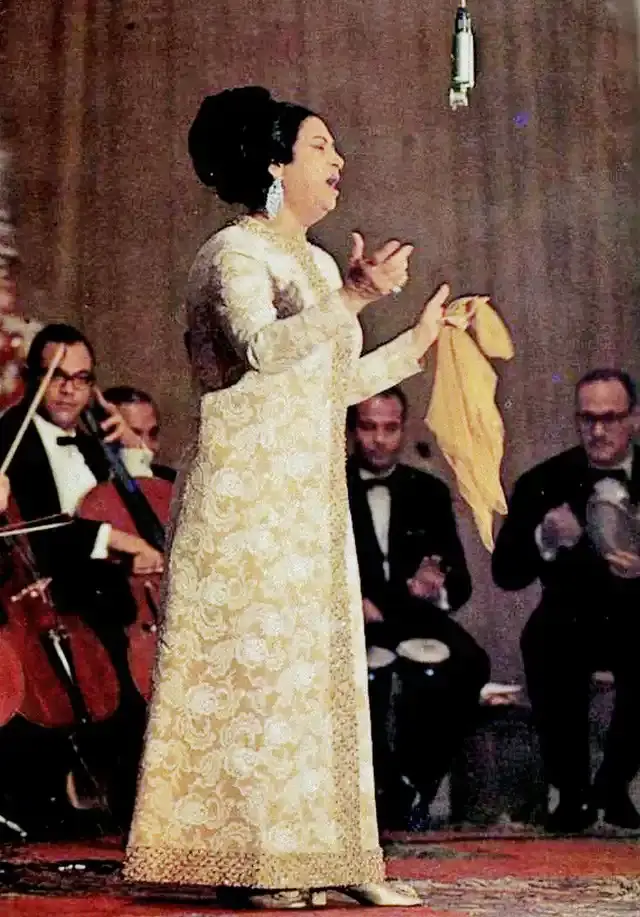
um Kulthum (4 May 1904 – 3 February 1975) was an Egyptian singer, songwriter and film actress active from the twenties to the seventies. It was dubbed the planet of the East. Born to a poor Quran reader and his wife in a small village, um Kulthum grew up to become, for many, "the voice and face of Egypt." Her career spanned more than 50 years, from about 1910, when she began singing with her father at weddings and special events in villages and towns in the eastern Delta, until her last illness in 1973. For nearly 40 years, her monthly Thursday night concerts were broadcast live, until her radio audience reached millions across the Middle East. She was president of the Egyptian Musicians Union, a member of government committees for the arts, and a cultural envoy to other Arab countries. She remains a very important figure in Arab musical life. Oum Kulthum said, "My background is no different from most of my countrymen." Like many Egyptians, she was born into an agricultural society and educated in a Koranic school; she maintained deep ties to the land. She carried this background and her values into her public life and wore them like banners. "We are all peasants," she said, despite the wealth and fame she had.
Recommend


Career
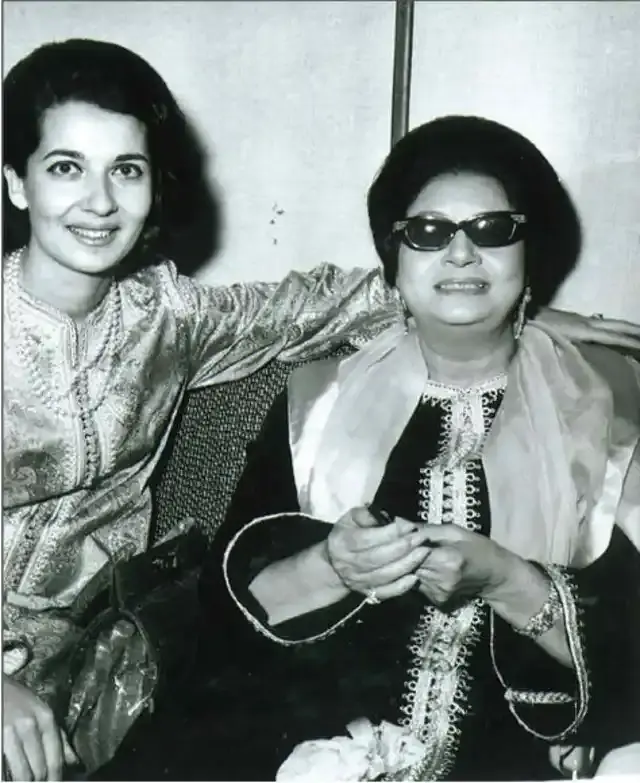
Her career in Cairo flourished in the twenties, where she recorded commercial recordings that were sold in the thousands. In that cosmopolitan city, according to historian Hussein Fawzy, one can hear adaptations to the latest French plays and European opera, um Kulthum faced this international formation in a sophisticated Egyptian-Arab lyrical style, inspired by new voices and instruments from the West, but mainly local. By 1928, Oum Kulthum was at the top of the city's ranks of artists. With the founding of the Egyptian Radio in 1934, her career took off. In 1937, she cleverly arranged for her monthly concerts to be broadcast live. Almost everyone watched Radio um Kulthum, and as the station grew stronger, so did its audience. With the advent of the transistor, um Kulthum reached the smallest villages, camps and tents. Oum Kulthum's early religious training paved the way for the singer's delicate and flawless style.
"Born to a poor family," at that time Egypt was under British occupation, and madrassas were the only schools available or encouraging. Because what I learned was to recite the Qur'an, it tended to give people a deep appreciation of the sound of language. Of course, the Qur'an is written in very elegant Arabic. um Kulthum had a very powerful voice, powerful from the lowest to the highest part of her range, and was very musically creative. She taught herself musically by learning to control the Arab music system and learning to improvise in this system the way a jazz player improvises using the Western system." um Kulthum highly appreciated beautiful hair. She had the ability to relate musical improvisation to the meaning of the words she was singing in a way that made listeners truly feel meaningful. Many scholars say that poetry is the art of the Arabs, so singing poetry well is something that tends to gain great appreciation among Arabic-speaking listeners." She was at the peak of her vocal power during the forties of the twentieth century, singing songs that will remain in the minds for a long time, especially colloquial love songs that echo the language and music of the working class. It was said of um Kulthum: "Her voice was full of our daily lives." She also sang elegant and sophisticated poems in literary Arabic, loaded with historical and religious images. She sang many poems written by Ahmed Shawky earlier in the century, who used classical poetry to comment on contemporary events. The songs, composed specifically for by neoclassical Riad al-Sunbaty, carried political tones in support of social justice and Egyptian autonomy.
um Kulthum Offers
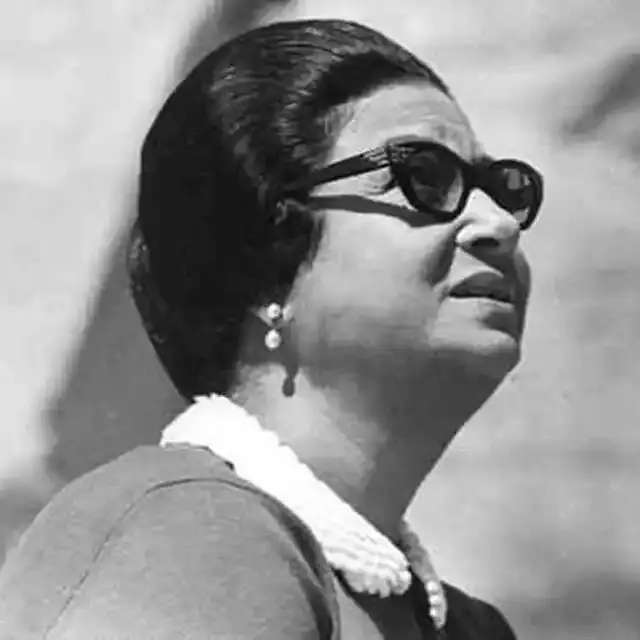
um Kulthum's performances helped shape Egyptian cultural and social life and her musical style helped reinforce the ideology of Egyptian identity. She and her repertoire were called "Aseel", meaning authentic Egyptian and Arab. One musician said of the translation of the poem she recorded: "It not only sings the rubaiyat, it instills meaning in them." Her performances have taken the works of the best poets and composers of her time to a whole new dimension: in Arabic singing historically, listeners help create a song with carefully timed expressions of approval. She stood in front of her audience, repeating phrases and passages at their request; people said she had not sung a line in the same way twice. With her mastery of the historic Arabic melodic system and hundreds of colors and vocal motifs, um Kulthum has managed to extend her twenty-minute musical compositions into two-hour performances. The crowds cheered her up, and listeners at home cheered.
When the Egyptian revolution broke out in 1952, um Kulthum supported her initiatives and recorded many songs celebrating the new republic and its leader. But the most dramatic political effort of her life occurred after her country's defeat in the Six-Day War, when she toured the Arab world on behalf of Egypt and donated the proceeds of her concerts, amounting to about two million dollars, to the Egyptian government. Those trips had all the characteristics of official visits. One Egyptian intellectual said, "When we look at it, we see fifty years of Egypt's history. She's not just a singer." um Kulthum was a village girl who became a cultural icon of a nation, an efficient professional who made her difficult way through the Egyptian music industry, and represented in a complex and power-laden political environment, representing for many Egyptians local values in the face of powerful colonial powers and neo-colonial "foreign" powers. Perhaps most of all, she is remembered as a musician. She is an Arab artist who was and still is considered a contemporary model of ancient and appreciated Arab art. Together, her musical skills and listeners contributed to the creation of twentieth-century Arab talent. Her funeral in 1975 drew a crowd of more than 4 million people, the largest human gathering in Egypt's history, surpassing even President Nasser's.
![]()
We paint it wrong: the sun is not orange
The sun isn’t just orange—it’s a masterpiece of shifting colors. From pale reds and soft blues at dawn to radiant whites at noon, its beauty changes with time and weather. Films and culture fooled us, but nature tells a richer, truer story full of color and mystery. more- ADVERTISEMENT
![]()
Post-pandemic travel: reshaping the future of tourism
The pandemic reshaped travel, pushing people toward local, safer, and more personalized adventures. Technology now guides safer journeys, while hotels and airlines adapt with flexible and health-focused options. As the world reopens, travelers seek meaningful, sustainable experiences—reflecting a new era of conscious and responsible tourism. more- ADVERTISEMENT
![]()
The Shintoan Value Behind Japanese Aesthetics
Japanese aesthetics isn’t just about fleeting beauty like cherry blossoms—it's about creating harmony between nature and human touch. From food that enhances natural flavors, to tatami mats crafted from carefully chosen straw, to beauty trends that embrace imperfections, Japan finds beauty in making things feel naturally perfect. more- ADVERTISEMENT
![]()
Life lessons that I realized after the age of forty and wished I had learned them at twenty: Is it too late to arrange your life in the forties?
Life Lessons I Realized After I Turned 40 That I Wish I Learned at 20- Is it Too Late to Get Your Life Together in Your 40s more- ADVERTISEMENT
![]()
Sacred places in the Andes: 7 secrets of Machu Picchu
Machu Picchu isn't truly the lost city of the Incas, and it's not as forgotten as once believed—locals were living there when rediscovered. Many marvels are hidden underground, and if you're up for a sweaty climb, you can skip the pricey bus and enjoy epic views for free. more- ADVERTISEMENT
![]()
9 reasons why small businesses fail
9 reasons why small businesses fail more- ADVERTISEMENT
![]()
6 terrible inventions that killed their inventors
6 terrible inventions that killed their creators more- ADVERTISEMENT
![]()
The most important job market skills - how to become a graphic designer?
Graphic design is a creative field where your imagination meets visual communication. It’s not just about art—it’s about problem solving, storytelling, and expressing ideas. With the right skills, passion, and patience, you can turn your love for design into a rewarding profession that AI can’t fully replace. more- ADVERTISEMENT
![]()
Discover the Impossible: Turning Deserts into Dense Forests – Dream or Reality?
Desert greening turns dry, barren land into fertile areas using water-saving tech, solar and wind energy, and special soil treatments. One major project, the Sahara Forest Project, aims to fight drought and climate change while boosting local economies by transforming parts of the Sahara and Sahel into green spaces. more- ADVERTISEMENT
![]()
The Seven Years' War: A Global Conflict Defining a New Era
The Seven Years' War, fought from 1756 to 1763, was the first true global war, reshaping power across Europe, North America, and beyond. It marked Britain's rise as a colonial giant and set the stage for revolutions to come, with Frederick the Great and key battles leaving lasting impacts. more- ADVERTISEMENT