

Shocking fact: the moon is moving away from the earth!



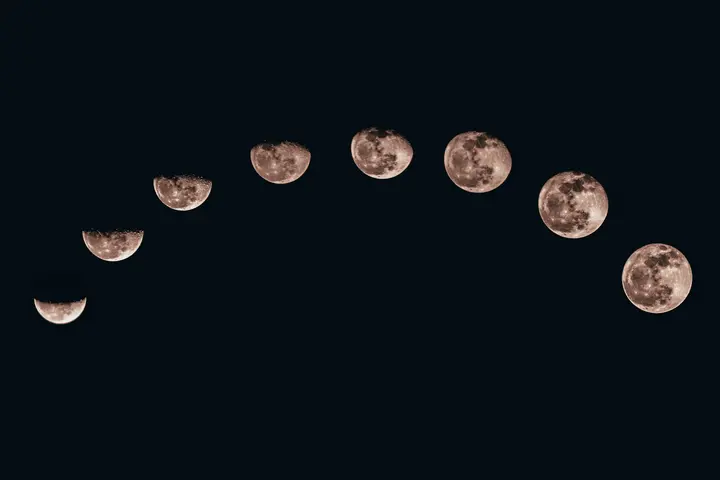
It's a fact: the moon is moving away from Earth, but does this amount to the moon escaping (or escaping) from its orbit? Scientists investigate the possible causes of this event through our geological past and other methods. Find out how this will affect our planet.
Show key points
- The Moon is gradually moving away from Earth at a rate of approximately
- 8 centimeters per year, a process first detected with laser measurements starting in 196
- This lunar recession is largely attributed to tidal friction, which slows Earth's rotation and transfers angular momentum to the Moon, pushing it farther from the planet.
- ADVERTISEMENT
- Edmund Halley was the first to observe signs of the Moon’s increasing distance using historical eclipse records nearly three centuries ago.
- Geological evidence in sedimentary layers from Western Australia supports the theory of lunar distancing and reflects patterns linked to ancient Milankovic cycles.
- The Milankovic cycles, specifically Earth's axial precession, not only affect climate trends but also indicate that the Moon was previously closer to Earth when this cycle occurred more frequently.
- As the Moon continues to drift away, Earth’s rotation will slow down, causing longer days and leading to more extreme seasonal temperatures.
- Despite the Moon moving away, scientists confirm it won't escape Earth's gravity entirely; eventually, a stable orbital distance will be reached.
The Moon's distance from our planet is imperceptible to the human eye.

If you think that the Moon orbits the Earth without changing its course and that it will continue to do so for thousands of years to come, today you will know that this is actually not true. Our natural satellite is gradually moving away from the planet, and we've been able to see this since 1969, when NASA installed reflective panels on the moon during the Apollo missions. Since then, laser beams have been released from Earth, enabling accurate determination of the annual rate at which the moon moves away from us.
Recommend


The first scientist to notice this peculiarity was Edmund Halley nearly 300 years ago, who, after studying ancient eclipse records, was able to come to this conclusion. This decline is thought to be due to tidal friction in the oceans, which affects the speed of the Earth's rotation: by slowing it down, the resulting angular momentum loss (burst) is compensated for in the moon's acceleration, making it move further and farther away.
It has now been shown that the moon moves away from Earth at a rate of about 3.8 cm per year. Researchers at Utrecht University and the University of Geneva have implemented various methods to determine the moon's past. The decline of the moon has been studied several times: in addition to various theories, there are some new developments. The last signals are found in the layers of ancient rocks on Earth.
The relationship between sediments and Milankovic cycles
Scientists in Western Australia have found 2.5 billion years old geological evidence. In the sedimentary layers of the Karijini National Park, which had been deposited on the ocean floor and are now present in the earth's crust, regular periods of rocks of different thickness and shades have been identified. These differences in rock patterns may be associated with the "Milankovich cycles".
In addition to affecting Earth's climate over long periods of time, Milankovic cycles influence the moon's distance, specifically through the climate precession. The motion of the Earth, or the direction of the Earth's axis of rotation around itself, has changed over time. As the study shows, the role of this proactive motion is currently 21,000 years, but this period was shorter in the past when the moon was closer to Earth.
How does lunar distancing affect Earth?
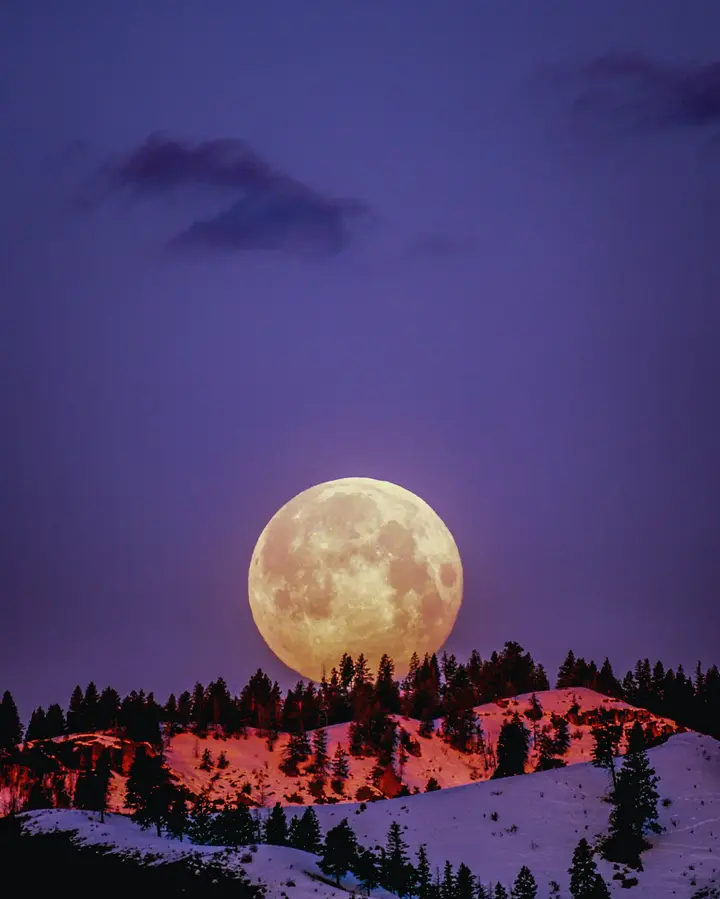
First, as the Earth's rotation speed decreases, the days on Earth will become longer and longer. On the other hand, winters will be colder and summers hotter. Because of the low impact of the moon's gravity on the planet, the tides will not be as strong, however, they will still exist, albeit slightly, due to the influence of the sun.
NASA says sea level rise due to climate change, coupled with the impact of the lunar nodal cycle, will cause a significant increase in the amount of flooding by 2030.
One thing is certain: you don't have to worry about the moon's absence, because it will never escape Earth's gravity. At a certain point, the Moon and Earth will reach equilibrium and the Moon will stop moving away.
![]()
The Five Great Scandals in Climatology
Climate science has faced serious issues, from fake datasets in top journals to the use of extreme, unrealistic emission scenarios. Political pressure often blocks correction, making it hard to fix flawed research. These scandals show how climate science can struggle when science and politics mix too closely. more- ADVERTISEMENT
![]()
Reading useless books: Here's a better way to read
Reading books can be slow, outdated, and too passive for today’s fast-paced world. Active learning—like discussing, questioning, and applying knowledge—plus modern tools like podcasts and online courses, make learning faster, deeper, and more fun. more- ADVERTISEMENT
![]()
Personal Success: Practical Steps Towards Achieving Goals
Personal success is about finding happiness in your own growth and goals, not just wealth or fame. It's a journey shaped by your values, efforts, and ability to adapt. Success comes from setting clear goals, staying motivated, and learning from every step along the way. more- ADVERTISEMENT
![]()
Nemo Point: the most isolated location on the planet
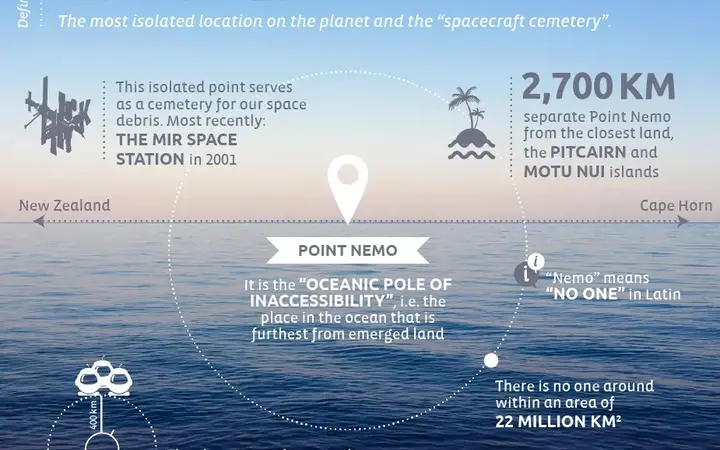
Point Nemo, the ocean’s most remote spot, lies in the South Pacific, 2,700 km from any land. It’s so isolated that astronauts are often the closest humans. Known as a spacecraft graveyard, it’s also inspired fiction from Jules Verne to Gorillaz’s Plastic Beach album. more- ADVERTISEMENT
![]()
LI-FI: where the Internet travels at the speed of light
LI-FI, created in 2011 by Prof. Harald Haas in Scotland, uses light instead of radio waves for data transfer. It offers ultra-fast speed and strong security, making it ideal for sensitive environments. Despite its promise, challenges like high costs and dependency on constant lighting limit its widespread use. more- ADVERTISEMENT
![]()
Career path in the age of technology: strategies for choosing the right specialty
Technology is reshaping careers, making it vital to align personal passion with future trends. Choosing the right major now demands strategic planning, continuous learning, and adapting to rapid changes. Fields like AI, cybersecurity, and data science offer great promise for those ready to embrace innovation and flexibility. more- ADVERTISEMENT
![]()
Success Guide - How to leave any bad habit?
Getting rid of bad habits takes time, effort, and patience. Focus on one habit at a time, understand your triggers, and replace the habit with a positive alternative. Stay realistic, reward progress, and don’t be discouraged by setbacks—just get back on track and keep going. more- ADVERTISEMENT
![]()
The most expensive mistakes in history
The most expensive mistakes in history more- ADVERTISEMENT
![]()
Alert from the Northern Lights: Sun's activity is at its highest level in 23 years with the Northern Lights
July 2024 saw a surge in sunspots—the most since 2001—boosting chances of stunning Northern Lights shows across North America. A G2 geomagnetic storm is expected this week, possibly lighting up skies as far south as New York and Idaho. Keep an eye out for those glowing waves! more- ADVERTISEMENT
![]()
Habits that make you smarter
Becoming smarter isn’t about talent—it's about building habits that boost your brain. Exercise, mindfulness, learning new skills, and reading can sharpen your mind. Add good sleep, social interaction, and goal setting, and you're on your way to a smarter, healthier you. Intelligence grows with consistent practice. more- ADVERTISEMENT