

Is time travel possible? Astrophysicist explains the science behind science fiction



Have you ever dreamed of time travel like characters in science fiction movies do? For centuries, the concept of time travel has captured people's imaginations. You may have seen in the movies characters using special machines, magic devices, or even jumping in a futuristic car to travel backwards or forwards through time.
Show key points
- The concept of time travel has fascinated people for centuries and is a common theme in science fiction.
- According to the second law of thermodynamics, time moves in a single direction and cannot be reversed.
- Einstein’s theory of relativity shows that time can pass at different rates depending on speed, as demonstrated by astronauts like Scott Kelly.
- ADVERTISEMENT
- Wormholes are a theoretical possibility for time travel, but they remain undetected and may not be suitable for human travel.
- Time travel introduces puzzling paradoxes, like the grandfather paradox, which challenge the logic of altering the past.
- Physicist Stephen Hawking once held a party for time travelers as a test, but no one attended, suggesting time travel may be impossible.
- Telescopes allow scientists to look back in time by observing light from distant celestial objects, effectively viewing the universe’s past.
But is this just a fun idea for movies, or can it actually happen?
The question of whether time is reversible remains one of the biggest unsolved questions in science. If the universe follows the laws of thermodynamics, this may not be possible. The second law of thermodynamics states that things in the universe either remain the same or become more disturbed over time.
Recommend


It's a bit like saying you can't break eggs apart after they've been cooked. According to this law, the universe cannot completely return to what it was before. Time can only move forward, like a one-way street.
Time is relative
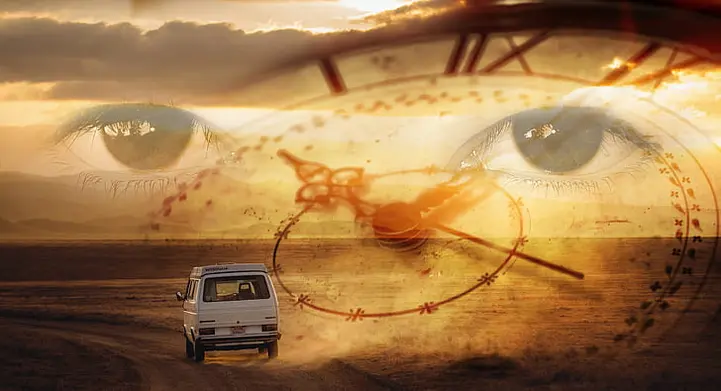
However, the special theory of relativity of physicist Albert Einstein suggests that time passes at different rates for different people. A person traveling at speed on a spacecraft moving at a speed close to the speed of light - 671 million miles per hour! - He will live a slower time than anyone on Earth.
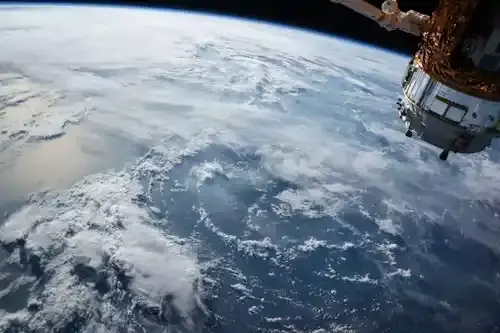
People haven't yet built spaceships that can move at speeds close to the speed of light, but astronauts visiting the ISS orbit Earth at speeds approaching 17,500 miles per hour. Astronaut Scott Kelly spent 520 days on the International Space Station, and as a result he grew older a little slower than his twin brother — and fellow astronaut — Mark Kelly. Scott was six minutes younger than his twin brother. Now, because Scott has been traveling much faster than Mark for several days, he is 6 minutes and 5 milliseconds younger than him.
Some scientists are exploring other ideas that might theoretically allow time travel. One concept involves wormholes, or virtual tunnels in space, that can create shortcuts to journeys across the universe. If someone can build a wormhole and then figure out a way to move one end of it at a speed close to the speed of light – such as the virtual spaceship mentioned above – the moving limb will age more slowly than the fixed end. The person who entered the moving limb and exited the wormhole through the fixed limb will come out in their past.
However, wormholes remain a theory: scientists have not yet been able to detect them. It also seems that it would be very difficult to send humans through a wormhole space tunnel.
Paradoxes and failed dinner parties
There are also paradoxes associated with time travel. The famous "grandfather paradox" is a hypothetical problem that can arise if someone travels through time and accidentally prevents their grandparents from meeting. This would create a paradox as you were never born, raising the question: How could you have traveled time in the first place? It is a mind-boggling mystery added to the time travel puzzle.
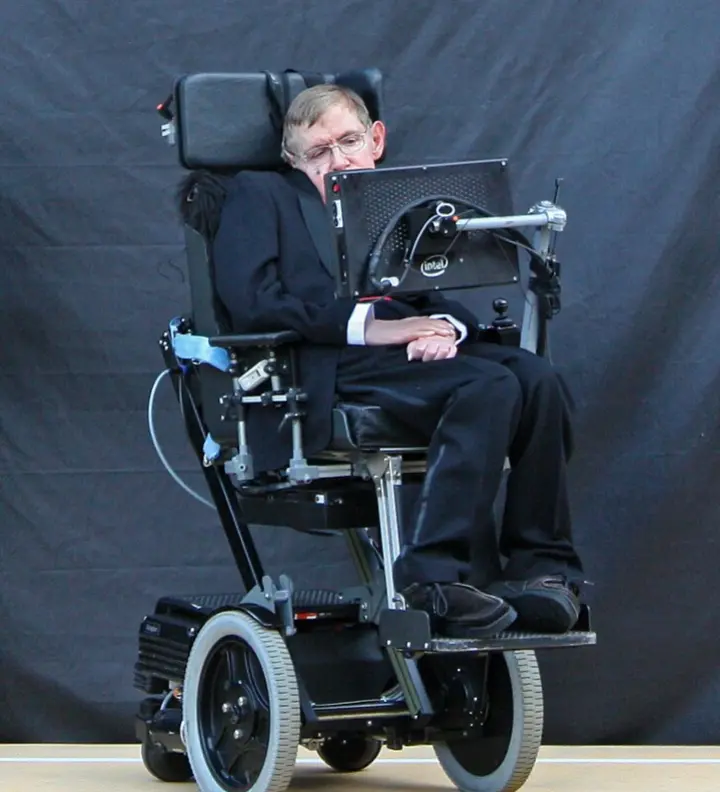
It is known that physicist Stephen Hawking tested the possibility of time travel by holding a dinner party that invitations indicating the date, time and coordinates were sent only after it happened. He hoped that his call would be read by someone who lives in the future and has the ability to travel through time. But no one showed up.
"The best evidence we have that time travel is not possible, and will not be, is that we have not been invaded by hordes of tourists from the future," he noted.
Telescopes are time travel machines
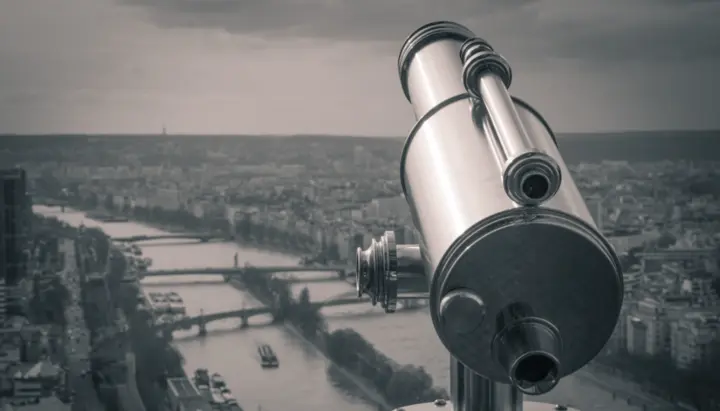
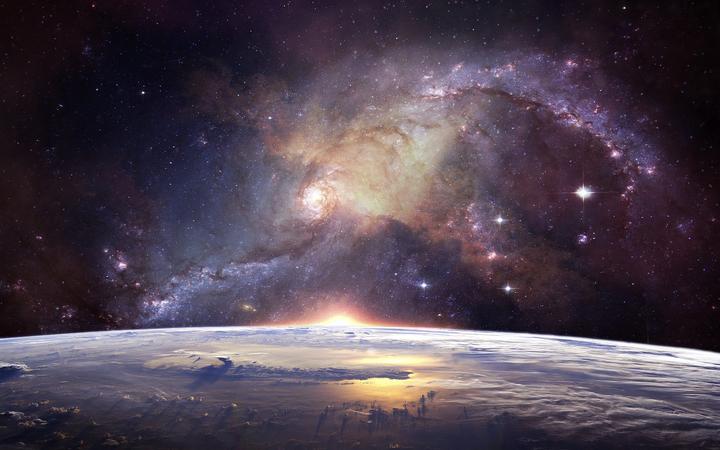
Interestingly, astrophysicists armed with powerful telescopes possess a unique form of time travel. When they look at the vast expanse of the universe, they gaze at the universe's past. Light from all galaxies and stars takes time to travel, and these rays carry information from the distant past. When astrophysicists observe a star or galaxy through a telescope, they don't see it as it is at present, but rather as it existed when light began its journey to Earth millions to billions of years ago.
NASA's newest space telescope, the James Webb Space Telescope, looks at galaxies that formed at the beginning of the Big Bang, about 13.7 billion years ago.
Although it's unlikely that we will have time machines like those in movies anytime soon, scientists are constantly researching and exploring new ideas. But for now, we'll have to enjoy the idea of time travel in our favorite books, movies and dreams.
![]()
The Enigmatic Universe: 8 Astonishing Facts about Space and Time
Black holes might be gateways to parallel worlds, and time itself could possibly be reversed—just theories for now, but thrilling ones that stir curiosity. Dark energy and matter, though unseen, dominate our universe. And yes, UFOs still spark debate. The cosmos remains full of mysteries waiting to unfold. more- ADVERTISEMENT
![]()
5 ways to change your mindset today
Only 8% of people actually reach their goals, and what sets them apart is their powerful mindset. Instead of chasing new skills, start by flipping negative thoughts and setting small, achievable goals. Massive change begins with consistent tiny steps—and yes, you can train your mind for success. more- ADVERTISEMENT
![]()
The mysterious abandonment of Cahokia: The Lost City of Ancient America
Once a bustling hub near the Mississippi River, Cahokia was North America's largest pre-Columbian city, known for its massive Monks Mound and smart urban planning. By the 14th century, it was mysteriously abandoned, leaving behind ruins that still intrigue archaeologists and visitors today. more- ADVERTISEMENT
![]()
The most impressed Japanese techniques in modern times
Japan keeps surprising the world with weird yet useful inventions—like heated toilet seats and noise-canceling forks. One standout? Healthcare robots that assist the elderly, making life easier and healthcare smarter. Also, karaoke, born in Japan, totally changed entertainment. It's clear: Japan knows how to mix fun, tech, and innovation. more- ADVERTISEMENT
![]()
The historic citadel of Aleppo ... One of the largest and oldest castles in the world
Aleppo Citadel, one of the world’s oldest castles, stands proudly in Syria’s ancient city. Once a temple and fortress, it saw civilizations from Greeks to Ottomans. Its restored Mamluk throne hall, with marble and basalt details, remains a key highlight, offering insight into the citadel’s rich and layered history. more- ADVERTISEMENT
![]()
10 signs that you are mentally stronger than the average person: conclusions of psychology
Mentally strong people embrace change, stay optimistic, manage stress calmly, and bounce back from failure with confidence. Their self-discipline, emotional control, and ability to set healthy boundaries help them grow through challenges while maintaining strong, supportive relationships. more- ADVERTISEMENT
![]()
Due to lack of funding, old NASA may be on an unsustainable path
Underfunded, aging NASA may be on unsustainable path more- ADVERTISEMENT
![]()
Mount St. Helens blast and rebirth
Mount St. Helens, once the site of a devastating eruption in 1980, has become a powerful symbol of nature’s resilience. Despite the destruction, life slowly returned, turning a barren land into a thriving ecosystem once again. Today, it stands as both a natural wonder and an educational destination. more- ADVERTISEMENT
![]()
5 financial habits to improve your finances better than 99% of people
Pay yourself first, spend less than you earn, and avoid emotional decisions—these simple habits can boost your financial health and set you apart. Small steps like saving 10% of your income and thinking before spending pave the way toward lasting financial stability and a more secure, stress-free future. more- ADVERTISEMENT
![]()
Debate about colors: does matter or brain determine?
Color isn’t just a property of objects—it’s a mix of light, brain interpretation, and even emotion. The dress debate proved we don’t all see the same thing, and for some animals, "red" doesn’t even exist. Turns out, what we see may be more illusion than reality. more- ADVERTISEMENT