

How would you describe the title of the Earth in the universe?



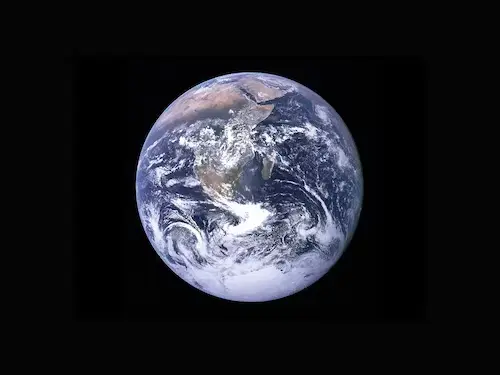
The stars whisper in the sky and the planets pop up in a spot of infinite darkness called the universe. The world of astronomy and space is one of the most intriguing fields and scientific questions in the hearts of humans. While many mysterious cosmic mysteries exist in this vast world, the question of how to describe the title of the Earth in the universe tops the list of controversial questions. Knowing the Earth's position and role in the universe is very important, can we categorize it by its current address and will there be any changes in the future?
Show key points
- Earth holds a unique position in the universe not because it is specially favored, but due to its rare ability to support life with features like water and a stable atmosphere.
- While there is no cosmic hierarchy placing Earth at the top, its exceptional characteristics and role in harboring intelligent life, including humans, make it stand out among billions of other planets.
- Several factors influence Earth's position in the universe, including its location in the solar system, gravitational interactions with other celestial bodies, and protection from space threats like asteroids.
- ADVERTISEMENT
- Although altering Earth's location in the universe remains a theoretical concept, human advancements in space exploration and technology hint at the potential for future cosmic mobility.
- Earth's relative position teaches us humility and the necessity of preserving our planet, reminding us that it is just a small, albeit vital, part of a massive cosmos.
- The ongoing evolution of the universe, including galactic expansion and possible cosmic collisions, continuously influences Earth's orbital path and long-term environmental conditions.
- Reflecting on Earth’s cosmic role encourages deeper exploration, scientific inquiry, and a sense of responsibility about our future in the universe.
1. Classification of the Earth in the universe: do we occupy a special place?
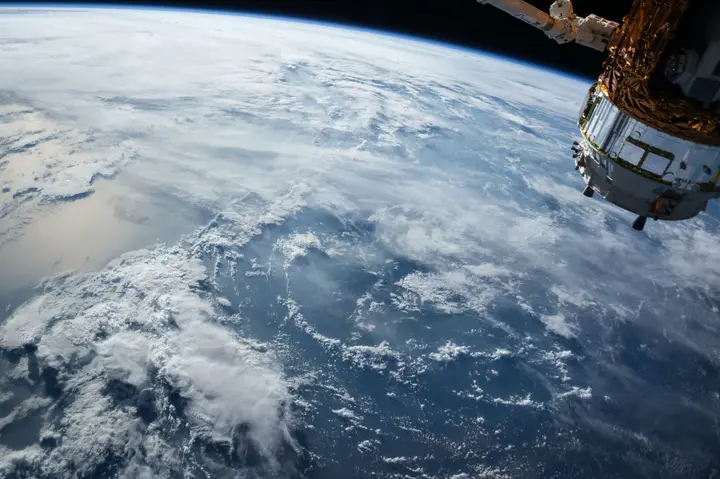
In the majestic and vast world of the universe, planets and stars race to rank high in the cosmic classification. But does the land occupy a privileged place in this classification? Are we a shining and distinctive part of this vast planet? Let's take a closer look at the position of the Earth in the universe and explore whether there are facts that confirm that we occupy a privileged place among other planets and stars.
Recommend


First of all, we must recognize that the universe does not recognize our human ideas of preference and distinction. It doesn't have a taxonomic pyramid that puts us at the top. However, we can anticipate the importance of the Earth and its position in the universe through some physical and cosmic factors that may favor this lucky and excluded planet.
We must grasp the fact that Earth is one of just billions of planets in our galaxy, the Milky Way. But even though we're a small part of this galaxy, Earth has unique features that make it remarkably distinctive.
Second, the blue planet is the latest successful outcome of the universe's evolution processes over millions of years. Our ability to host life and favorable climatic conditions have made Earth play a vital role in ranking a habitable planet. The presence of water and a protected atmosphere brings life and gives the Earth a privileged position in the planetary world.
On the other hand, Earth is also the source of the only space city we know so far: man. Through technology and space exploration, man has revealed cosmic secrets and reimagined his place in the entire universe. Our ability to understand, interpret and find answers to our cosmic questions puts us in a privileged position and makes us a real player in the universe.
We can acknowledge the exceptionality of the Earth and the important role it plays in the universe. Although we do not have a specific measure of cosmic classification, our existence of life and knowledge gives us a special and privileged position.
2. Factors affecting the position of the Earth in the universe.

Earth is famous as the only planet that embraces life in the known universe. But what factors made it occupy such a unique position in the universe?
First of all, let's look at the basic components of the universe. The universe is made up of galaxies, stars, planets and comets, each of which plays a role in determining the Earth's position in this vast world.
The solar system containing the Sun and its planets and other celestial bodies, including Earth, is one of the most important factors determining our position in the universe. The Sun, being a star, gives the Earth the energy needed to support life and is anchored in the circle of life known as the "planetary bioregion." Our other solar commonalities also contribute to determining the location of Earth, as the enormous gravitational forces of Jupiter and other purchases can affect Earth's path and orientation in the universe.
Another factor influencing the location of the Earth is the general cosmic structure. The planets are famous for orbiting their own axis, and the Earth must revolve around the sun. Scientists believe that the Earth's axis plays an important role in its stability in space and the occurrence of the seasons.
Of course, other celestial bodies cannot be ignored in this debate. Asteroids and comets passing near Earth are key factors in determining their location. There may be possibilities for Earth to collide with these celestial bodies, affecting their trajectory and position in the universe.
So, by reviewing these factors influencing Earth's position in the universe, it becomes clear that there are several interrelated factors that affect its unique position. Knowing and studying these factors contributes to deepening our understanding of Earth's place and role in the universe.
3. Can man change the location of the Earth in the universe?
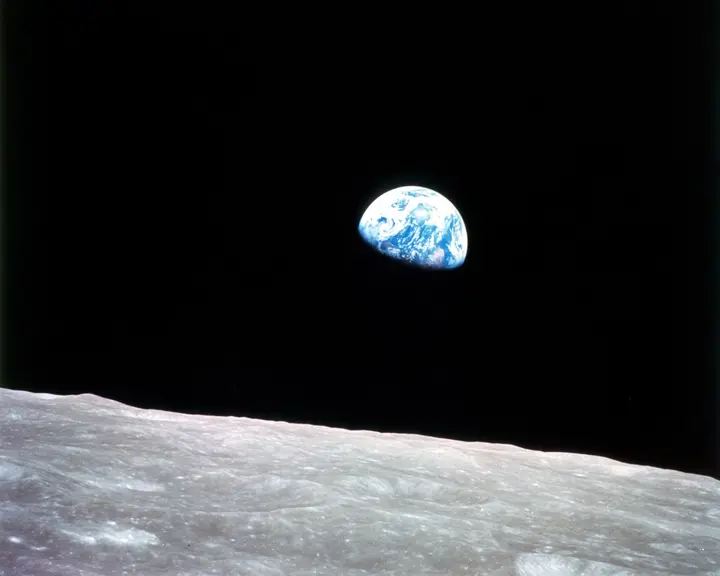
In a world characterized by tremendous scientific and technological progress, this phrase raises several questions that raise curiosity and questions. Can humanity actually change the location of the Earth in the universe? If possible, what factors can help? And what is the motivation behind the desire of humans to change the location of the Earth? Let's take an objective look at this.
Mankind began to rethink its position in the universe long ago. Growing scientific evidence has played a large role in highlighting man's ability to influence his environment. There are several ways humans can use to achieve a change in the Earth's position in the universe.
One possible approach is the use of advanced technology to develop space transport. Humans could exploit this technology to escape Earth's gravity and move elsewhere in the universe. However, humans must overcome the many technical and economic challenges, as well as the health and psychological conditions to survive and be absorbed into new environments.
Moreover, humans' ability to change the Earth's position in the universe could require the development of technology beyond our current capacity. For example, travel to distant planets requires superfast speeds and space transportation capable of moving safely in outer space. Despite significant advances in space, this technology is still complex and needs more research and development.
Changing the Earth's position in the universe is clearly a formidable challenge. The most important question is what drives human beings to want to achieve this change? Is it about the desire of humans to explore the universe and discover new keys to survival and prosperity? Or are they just aspirations for adventure and fulfillment of human desires to move to new places?
Regardless of possible causes and explanations, it is a controversial and attention-grabbing issue. Despite the great difficulties that must be overcome, the possibility of changing the Earth's position in the universe cannot be ruled out entirely. Exploring this topic will remain interesting and may lead us to a deeper understanding of our place in the universe and other cosmic dimensions that we have not yet realized.
Questions about changing the Earth's position in the universe involve many scientific, technological and philosophical aspects. Achieving this change may be possible in the future, and the answer may lie in humanity's continued discovery, innovation and evolution.
4. What can we learn from the location of the Earth in the universe?

When we look at the amazing universe and navigate its endless depths, we find ourselves wondering about the place and role of the Earth in this vast world. What lessons can we draw from our position in the universe?
First of all, we can learn that we are a small part of this huge universe. Although Earth is our only known place and home, it expresses a very small share of the diverse galaxies and stars in the universe. This simple fact reminds us of the importance of preserving our planet and maintaining the balance of the ecosystem that supports Earth's life.
Second, we can learn moderation and humility from Earth's position in the universe. Earth occupies a balanced position between the sun, the moon and other planets, and this balance allows life to flourish on its surface. It reminds us that when we maintain our inner balance and cooperate as individuals and communities, we empower ourselves to succeed and be stable.
Third, we can conclude that there is a lot we don't yet know about the universe, and this prompts us to explore more. Despite the scientific and technological advances we have made, there are still many secrets to be revealed. This humility and curiosity helps us expand human knowledge and develop in the fields of astronomy and space.
Finally, it can be concluded that the Earth is not only a place of life but also a signal of hope and the future. The presence of life on Earth suggests that life can exist elsewhere in the universe. Earth can serve as a model for living and developing in the universe, and this discovery could affect the way we think and look forward to the future.
5. The influence of the evolution of the universe on the status of the earth.
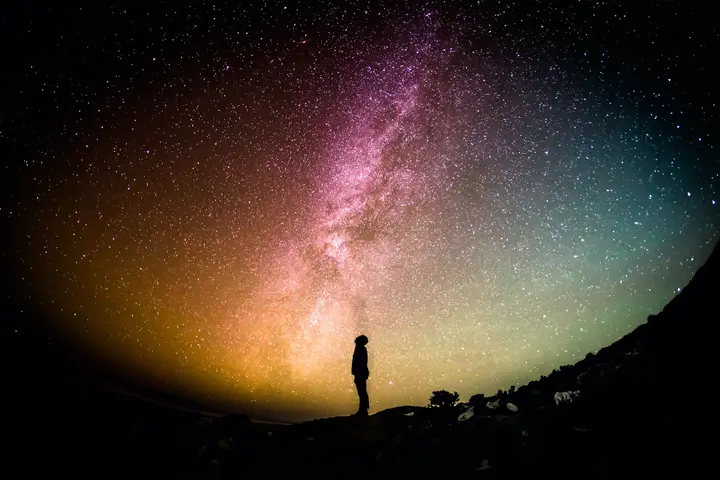
Over time, the universe has undergone tremendous changes from the Big Bang that occurred about 13.8 billion years ago to the present. Stars, galaxies, planets, and other celestial bodies form over this long period of time, which means that the universe we live in today is completely different from the proto-planetary universe in which the planets originated.
The evolution of the universe affects the status of the Earth in many ways. As galaxies and planets form, the distribution of mass and energy in the universe may change and thus the effect of gravity on Earth may change. This may lead to changes in our orbit around the Sun but may cause changes in climate and environmental conditions on Earth's surface.
As the universe evolves, so does a massive expansion of space. This means that galaxies and celestial bodies are diverging from each other. This cosmic expansion leads to an increase in the distance between galaxies and can therefore affect communication and interaction between planets and stars. This effect could have implications for Earth's relationships with other galaxies and potential organisms in the universe.
It is worth noting that there are forces that may also affect the position of the Earth in the universe. Collisions between space objects such as comets and asteroids may occur, and these collisions may lead to changes in Earth's motion and orbit. Although these collisions are rare, they pose a real threat that needs constant monitoring and analysis.
The influence of the evolution of the universe on the status of the Earth remains a subject of constant research and exploration. Although we don't know exactly how Earth's position will change in the future, understanding the effects of the universe and its modifications can help us prepare for any potential changes. We are still at the beginning of our journey to discover the secrets of the universe and the place of the Earth in it, and as scientific progress continues, we hope to find answers to our persistent questions on this strange and complex topic.
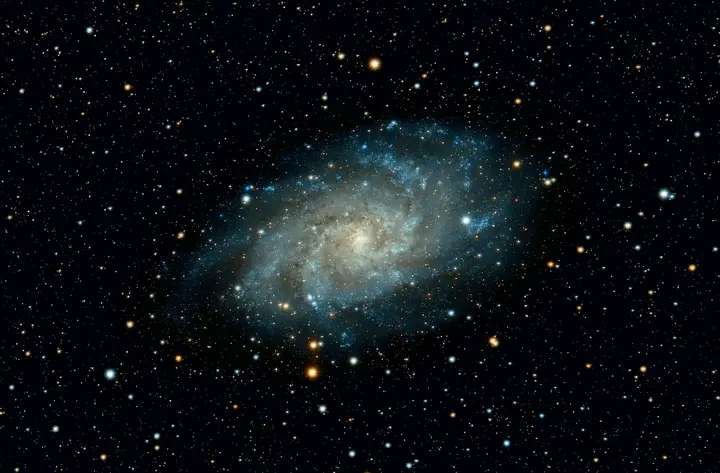
In the end, when we contemplate the endless titles of heaven and compare them to Earth's position in the universe, we can only remain silent in the presence of this miraculous wonder. If there are limited facts that reveal Earth's place in the universe, the larger truth may lie in man's ability to explore and understand this mysterious sea of galaxies and celestial bodies. Let us remain vigilant and continue to question and participate in this eternal journey in the search for answers to our cosmic questions. Thanks to scientific and technological advances, we may still be amazed by the mysteries and wonders of the universe for a long time to come, and perhaps the time is coming to reveal Earth's place and future address in the universe.
![]()
Debate about colors: does matter or brain determine?
Color isn’t just a property of objects—it’s a mix of light, brain interpretation, and even emotion. The dress debate proved we don’t all see the same thing, and for some animals, "red" doesn’t even exist. Turns out, what we see may be more illusion than reality. more- ADVERTISEMENT
![]()
Valuable life skills gained from mountaineering
Mountaineering is more than climbing; it’s a journey that builds resilience, self-reliance, and teamwork. It teaches us to accept failure, embrace challenges, and grow through every step. The real reward isn’t reaching the summit, but gaining the strength and wisdom needed to navigate life itself. more- ADVERTISEMENT
![]()
The history of the city of Samarra ... Iraq's Hidden Gem
Samarra, once a grand Abbasid capital, still stands with its iconic spiral minaret and rich Shia heritage. Though chosen as the capital of Islamic civilization in 2020, the city remains dusty and neglected, holding untold stories within its historic ruins. more- ADVERTISEMENT
![]()
Black holes are common, so where are white holes?
White holes, theoretical opposites of black holes, may spit out matter but remain undetected. Though allowed by Einstein’s equations, they defy common physics and lack evidence. Some physicists now wonder if a dying black hole might transform into a white hole—an idea tied to solving deep cosmic mysteries. more- ADVERTISEMENT
![]()
5 ways to change your mindset today
Only 8% of people actually reach their goals, and what sets them apart is their powerful mindset. Instead of chasing new skills, start by flipping negative thoughts and setting small, achievable goals. Massive change begins with consistent tiny steps—and yes, you can train your mind for success. more- ADVERTISEMENT
![]()
The botanical marvel of the Andean ecosystem at high altitudes
The Andes are home to rare, exotic plants that have adapted to extreme climates with stunning shapes and colors. From insect-trapping fleshy plants to breathtaking orchids and mythical species like the giant vernie, these botanical wonders mesmerize with their beauty and resilience, yet face serious threats from climate change and human exploitation. more- ADVERTISEMENT
![]()
How to price your product? Best Pricing Strategies
Finding the right price for your product is key to profit and customer satisfaction. Try different strategies—like cost-based, value-based, or psychological pricing—and stay flexible. There's no one-size-fits-all method, but aligning your price with customer needs and market factors is the smart move. more- ADVERTISEMENT
![]()
Why does my mood change when I'm hungry?
Feeling hungry can mess with your mood—fatigue, anger, confusion—all thanks to low glucose. As levels drop, stress hormones like cortisol and adrenaline kick in, making you irritable. Even fish get aggressive when hungry! So grab a healthy snack, keep calm, and maybe save your relationships along the way. more- ADVERTISEMENT
![]()
Career path in the age of technology: strategies for choosing the right specialty
Technology is reshaping careers, making it vital to align personal passion with future trends. Choosing the right major now demands strategic planning, continuous learning, and adapting to rapid changes. Fields like AI, cybersecurity, and data science offer great promise for those ready to embrace innovation and flexibility. more- ADVERTISEMENT
![]()
How to overcome obstacles and detect obstacles
Mindshift is all about changing your mindset to grow and overcome life’s challenges. By shifting from a fixed to an evolving mindset, facing fears, and using critical and creative thinking, you unlock hidden talents and new possibilities. It’s not easy, but with effort and support, it’s truly worth it. more- ADVERTISEMENT